Curious Christian

Exploring life, art, spirituality, and the way of Jesus

Christian Zodiac

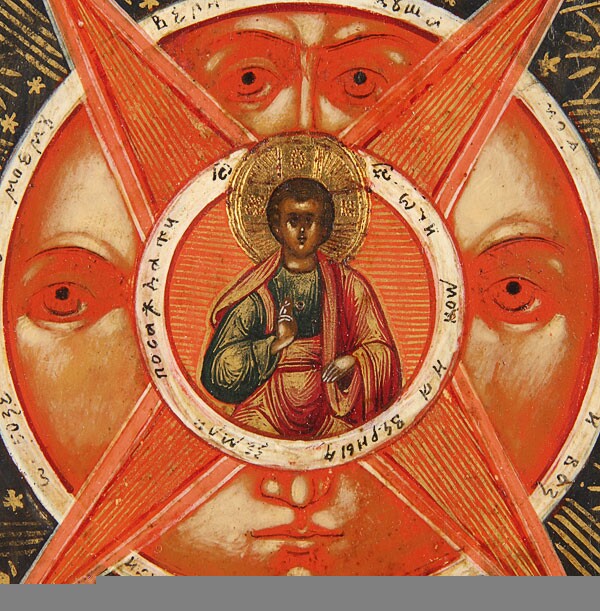
I am thinking this could be a very interesting image to introduce into conversations about Christianity and astrology. I found it at paradisoastrology.com along with these comments:

“In the Middle Ages and Renaissance, there was a standard palette of astrological images that are used throughout the period, girding and expanding on their views on astrology. One of my favourite images is of the ceiling of a church in Croatia. As it should be, the central image is that of Christ enthroned as the King of Heaven. His size and centrality shows his place in the world. He’s in a circular orb, the circle being a sign of perfection, surrounded by saints. To the left, and I assume to the right if the mural weren’t so damaged are the familiar signs of the zodiac. I talk more about this image on a discussion on religion and astrology. In this philosophy, astrology is part of the traditional Christian religion, though it’s place is off to the side of the living heart of the faith, which is Jesus. He’s the centre of the circle, the singular point that all are drawn to and defined by. The Sun and Moon, stars, the signs of the zodiac are all there, but only as part of His creation. Their place is to show his divine Providence in the creation as a sign of his wisdom and power.”

As I understand it, the problem with astrology is not the suggestion that stars can act as signs (after all, consider the Genesis and Gospel stories where they are spoken of as being exactly that), its the suggestion that they govern our fate.

5 responses to “Christian Zodiac”

  1. Sally Avatar

    Interesting Matt, much food for thought!

  2. Agy Yudhistira Avatar

    Ramalan Zodiak Hari Ini – Astrology serves as a reminder of the mysteries and wonders that surround us. It encourages us to look beyond the surface of things, to delve deeper into the hidden layers of meaning that shape our lives.

  3. Jay Villarreal Avatar
    Jay Villarreal

    In regards to the zodiac picture depicting Jesus in the center, the stated location is incorrect. The church is located in Georgia, not Croatia. The church is called Svetiskhoveli. It is located in Mtskheta, Georgia, near the Georgian capital Tbilisi. 

  4. Wayne McMichael Avatar
    Wayne McMichael

    Yes, early Christianity was a sun religion. The Jesus character represents the sun as it goes through the precession of the equinoxes. Genesis is the story of the beginning of our solar system, not the infinite universe, and why early Christianity was a sun religion. The Light of the world:) The Romans turned that fiction story into a Satanic blood cult, the fake Christianity we have today.

    1. Matt Stone Avatar

      There are certainly solar and light metaphors in Christianity, but that is a very different claim from saying that early Christianity was a sun religion. The historical evidence doesn’t really support that. The earliest Christian sources we have present Jesus as a Jewish Messiah rooted in Israel’s Scriptures, and the resurrection is central to the movement from the beginning. Christianity also emerged in a Jewish context that was pretty resistant to identifying God with the sun or any other created thing.

      I also think the precession-of-the-equinoxes theory is one of those ideas that can make almost anything look like evidence once the symbolism has been mapped onto it. There is no good evidence that the Gospel writers constructed Jesus as an allegory for the sun moving through the zodiac. In John particularly, the imagery of light is embedded in Jewish creation, wisdom and Temple traditions. John presents Jesus as the dwelling place of God’s presence — essentially a Temple Christology — so when Jesus says, “I am the light of the world,” we don’t need to turn him into a symbol of the physical sun. The imagery already has a rich theological context within Judaism.

      Genesis certainly isn’t an account of the origin of the entire infinite universe in the modern scientific sense, and I’m quite comfortable reading it as ancient theological literature rather than a scientific description of cosmology. But that doesn’t make it a coded account of the formation of our solar system either. And calling Christianity a “Satanic blood cult” because later Christians developed particular understandings of atonement seems to me to throw away far too much history and nuance. You can criticise later Christian developments without having to replace one simplistic origin story with another.

Leave a Reply