Churches today are increasingly fractured by political allegiances, with religious nationalism being one of the most visible and troubling expressions of that division. What we’re witnessing isn’t just a disagreement over policy or leadership, it’s a theological crisis. When nationalism is baptized in Christian language, the gospel is distorted, and God is misrepresented.

Religious nationalism confuses the kingdom of God with the kingdoms of this world. It often replaces the crucified Christ with a triumphant Caesar, exchanging Jesus’ self-giving love for coercive power. In doing so, it reveals a deficient understanding of God, not as the One who dwells with the poor and oppressed, but as a cosmic enabler of national greatness. This god looks less like the Lamb who was slain and more like a tribal deity who ensures victory for “us” and vengeance for “them.”
At its core, this is a gospel issue. The good news of Jesus is not about securing power, preserving culture, or defending borders. It is about the inbreaking of a new kingdom that is not of this world, where enemies are loved, swords are beaten into plowshares, and the last are first. Christian nationalism, by contrast, recasts salvation in civic terms: loyalty to nation, cultural conformity, and fear of outsiders. Grace becomes earned. The church becomes a voting bloc. Discipleship becomes indistinguishable from partisanship.
The theological underpinnings of this problem run deep. Our eschatology is often triumphalist rather than cruciform. Our ecclesiology too often centers the strong rather than the servant-hearted. Our Christology bends toward a warrior-king rather than a suffering servant. Even our doctrine of creation can be warped, fostering an exploitative, consumer-driven worldview instead of one rooted in stewardship and solidarity.
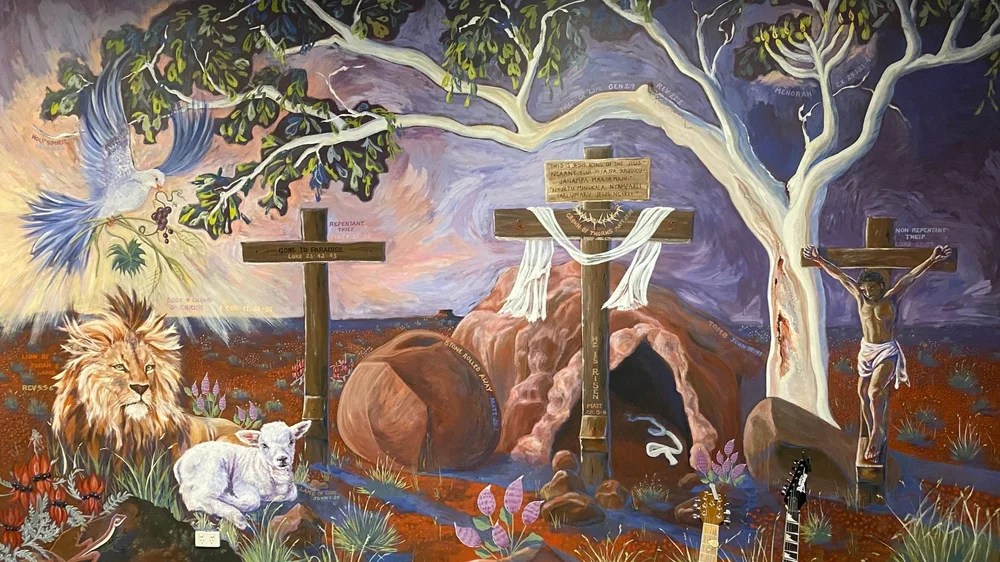
This crisis calls for repentance. Not just from political idolatry, but from the shallow theology that made it plausible. Churches must reclaim a God who blesses the peacemakers, not the powerbrokers. We must return to a gospel that liberates rather than dominates, that speaks truth to power rather than courting it. The church is not called to take control of the state but to bear witness to another way of being human. One shaped by the cross and empowered by resurrection hope.
If we are to find unity in the midst of political division, it won’t come by papering over our differences or demanding silence. It will come by going deeper: rediscovering who God is, what kind of kingdom Jesus proclaimed, and what kind of people we are called to become. The church’s witness depends not on aligning with the right side of history, but on embodying the story of the crucified and risen Christ, together.







 Curious Christian
Leave a comment