In a recent post (Just a mess…see if you can make sense of it…), Hamo was chewing the cud on a number of questions about church: What really constitues a church? Is structuring a church our idea or God’s idea? Can two families be a church? and Can we learn from New Age networks? And there have been a number of follow up comments that take the questioning further. For what it’s worth, here’s how the living Word speaks to me on the issue…
I don’t think we need to do away with church structure so much as dethrone it.
My thinking has evolved over a number of years, from a totally anarchist perspective to something that I hesitate to put a label on. The Catholicism of my youth nurtured in me a complete distain for dictatorial leadership. So much so that I could not bring myself to trust a minister for well over a year after turning back to Christ as an adult. Believe it – I used to feelings of physical sickness just at the thought of it. Even now I struggle to stay within mainstream church. In the intervening years (as a new ager) I was involved in green politics and some less than peacefull peace demonstrations, I read up on some anarchist litrature and loudly cried f*** authority. I say this at the risk of appearing crass to demonstrate that I have no reflexive, instinctual, drive to defend ‘structure’. So when I question calls to do away with structure, don’t take this as just another conservative critique.
What I have learned (through experience and reading God’s word) over the years is that humans need structure. If there is no structure then we will create it. Yes there will be liminal, transitional phases when structure is at a low ebb, and this can be a good thing, but it is transitory. We can see this in the alternate spirituality circles that Hamo mentions. Within the ten-twenty years since the the New Age tsunami hit our cultural shores we have seen a lot of fads fizzle and froth, but the stuff that’s had longer term traction has had elements of structure (eg Sannyassins, Wicca).
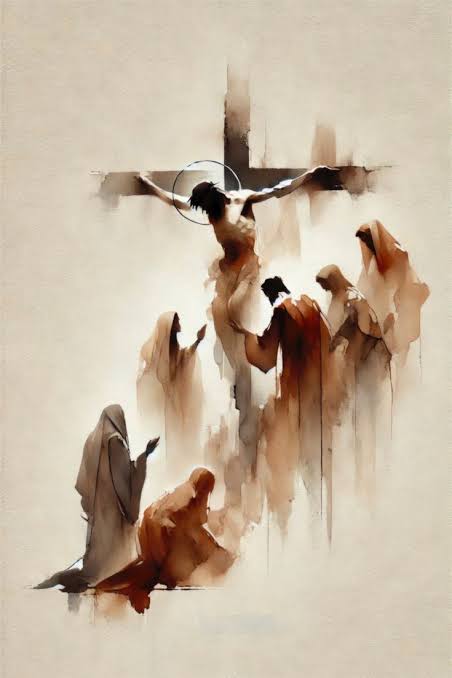
I found John H. Yoder’s “Politics of Jesus” to be insightful in its ruminations about structure. Basically, structures are not inherrently evil; order is part of God’s good creation. But structures, like everything else, have been twisted by the fall. In his crucifixion and resurrection Jesus said to the structures of the world, do your worst, and triumphed over them, dethroning every power and principality, both “spiritual” and “worldly”. The church, as the body of Christ, is to be a testimony against the claims to godhood of these structures.
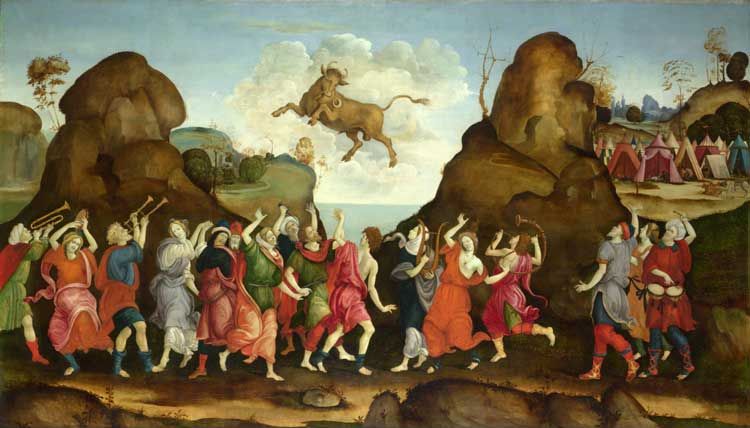
But what happens when the church, idolises itself? What happens when the finger that is supposed to be pointing outwards towards christ becomes turned inwards? I think this is the problem we face. An idolitry of church. Like the idolisation of the calf by Aaron and the Israelites in the Sinai desert, we have bowed down to structures instituted by men of God.
The implications.
1. Our task is not to tear down structures as some inherrant evil but to relativise their goodness as we attune ourselves to cultural ebbs and flows in step with the Spirit.
2. The best way to reform church is to spend less of our community time focussing on it, and instead shifting our focus outward. Face it, the best thing Christianity has to offer the world is Christ, not our institutions. And it will always be that way. Even low structured house churches have their leadership issues. So we need to cure ourselves of the addiction of dreaming of a golden church and, like the author of Revelation, shift our dreams to visions of the golden One. We need to recover the true purpose of church – which is not church growth.
3. Our focus should be on faithfulness not survival. People seem to get this at an personal level (hints of individualism?)but often fail to seem the implications for institutions. It does not matter if church as we know it dies out in the West. Revival of Christendom or the Western church is not the be all and end all. What matters is whether, whatever happens, we are living as a community of faith, hope and love. My fear is that we sacrifice too many of our own in the drive for institutional survival. Let’s loosen up.
In summary, what I am saying is that we should take care we don’t universalise the structured-unstructured issue. Structure is partly a reflection of cultural dynamics, personality types and a host of other issues. I do not think there is a perfect level of structure for all time. There might be an appropriate level for this moment in this place, but in different moments and different places we can expect it to be different. My critique of the mainstream church is not that they have structure, it is that they have held their version up as golden. Their calls to unity have been based on a non-universal.



 Curious Christian
Leave a reply to Matt Stone Cancel reply