Curious Christian

Reflections on culture, nature, and spirituality from a Christian perspective

Is abortion the only political issue that should count for Christians as we decide who to vote for in elections? Should the church be a single issue community?

Beyond that, what does it mean to be pro-life? I am pro-life, but I ask, is there a broader way of looking at the issue, one that includes care for the lives of “born” children as well as “unborn” children?

Beyond that, is any politician God’s anointed? Can’t we not recognise that the political process is, like us, fallen. That even our favourite politicians are fallen, and so, can’t we respect the right of other Christians to vote contrary to us? Should our voting decisions be interpreted as THE litmus test of orthodoxy or heresy? Or should we look deeper?

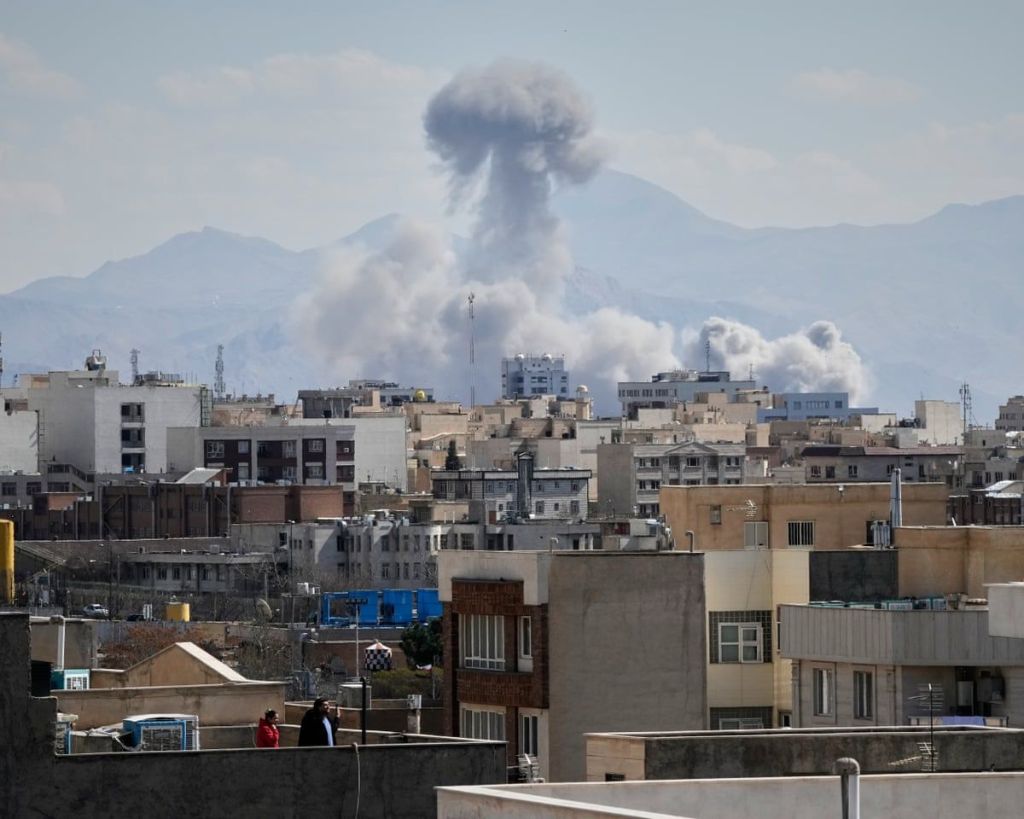
As for me, I am happy to listen to other Christians who disagree with me over the politics of national defence. But please, please, explain to me how you justify your stance in a way which does not marginalise the significance of the life, death and resurrection of Jesus. And please, please explain to me, how “hawkish” political platforms which lead to photos like the one you see on your left are so much more “pro-life”.

Postscript: I note that Janet at Secret Women’s Business has also launched a post on abortion following the Forgotten Ways conversation, if you want to check that out too. Bloggers, any more want to join us in an impromptu syncroblog on the politics of abortion?

52 responses to “Abortion, Politics and Christianity”

  1. Janet Avatar

    Thanks Matt… actually the two posts compliment each other well, in that I’ve invited discussion about the ethics of abortion itself, and and you’re focusing on the (also messy and complex!) issue of abortion (“pro-life”) as a political issue.
    Politically speaking, I find it a little bizarre that the most strident voices of the anti-abortion movement can be advocates of capital punishment and the euphemistically named “war on terror”. (How the invasion of Iraq helped stop terrorism is beyond me… but that’s an aside).

    Like

  2. Matt Stone Avatar

    Yes, terrorism is a tactic, not a cause. A war on terrorism is just as nonsensical as a war on flanking manoeuvres.
    As for the strident voices, I am inclined to say that the paradoxical juxtaposition of pro-life and pro-war says a lot about the privatization of religion and, in an ironic sort of way, the advance of secularism within evangelicalism. But there is more to it than that, as this sort of split-level thinking emerged way before modernity. Modernity just intensified it.

    Like

  3. Steve Hayes Avatar

    In the “Christians and Society” forum at
    http://groups.yahoo.com/group/chris_soc/
    we recently had a straw poll on “How pro-life are you?” and found that few people were consistently prolife.
    The thing that most agreed was immoral was reckless or negligent driving.
    I found it difficult to interpret the photo on the left, though. What’s it supposed to be?

    Like

  4. Steve Hayes Avatar

    For what it’s worth, my contribution to the impromptu synchroblog is here:
    http://tinyurl.com/59tz88

    Like

  5. Matt Stone Avatar

    Checked out your post. “Has the number of abortions in the US diminished significantly over the last 8 years?” Good question.
    As for the photo, that thing in the rubble, unfortunately it was once a human child. The legacy of a pro-life government.

    Like

  6. Mis Eagle Avatar

    Not feeling too well at the moment – otherwise I have a bit to say on this issue. However, I wish to make one simple point. Jesus never mentioned abortion. And abortion is nothing new. One can be pretty sure that way back then there would have been “women who helped women”. I remember what Richard Rohr once wrote about Jesus and sexuality. Sexuality was not the topic he talked about the most – not by a long way. Rohr said he thinks that Jesus probably had the view that, if we got the really big things right, then we would get the sexuality issues right too. Similarly, with the abortion issue, if we get other things right – preaching the good news to the poor (have we really got good news for the poor these days?); putting God before mammon; trusting God’s provision in all things; walking in The Way – then we will get the issues around fertility right too.

    Like

  7. Fr. John D'Alton Avatar
    Fr. John D’Alton

    Good discussion. For those who value the church’s learnings over 2000 years more than current faddishness, you may be inerested that the early church was extremely pro-life/anti-abortion (as evidenced in the Didache) and was also against war in general especially unjust war (as evidenced by the penance given to any Christian who killed in war). ISTM that most Protestant Christians today are either “left” or “right” and support either one cause of the other, forgetting that the historic church maintained a both-and stance. (Which, btw is still maintained in the Orthodox church- see the denunciation of Bush’s Iraq escapades as well as abortion in USA). But most Christians today just want to re-invent the wheel and continue in the same old false dualisms and ignore the historic church 😦

    Like

  8. Steve Hayes Avatar

    Matt,
    Looking at it on my laptop, I can see the picture a bit more clearly (as I can also see the antispam letters a bit more clearly).
    Miss Eagle,
    Do you really think it is about sexuality? Yes, I believe there are sadists who get sexual pleasure of a sort by killing or inflicting pain on other people, but that is surely not what it is all about. It is not someone’s sexual pleasure that makes killing morally wrong. It’s just as wrong if they kill “in cold blood” with no passion, no emotion, no pleasure whatsoever.

    Like

  9. Eric Avatar

    There are a lot of things in politics that could be called a choice between pro-life and pro-choice (which maybe are echoed in the links above). If only I could draw up two columns here…
    Pro-life: laws against abortion v Pro-choice: the choice to abort
    Pro-life: no capital punishment v Pro-choice: courts may choose to apply death penalty
    Pro-life: govt contributes much aid $$ to poor countries v Pro-choice: govt leaves it to individuals to choose whether to give aid
    Pro-life: vaccinations applied widely v Pro-choice: only for those who want it
    Other things in the pro-life category would be a strong public health system.
    The pro-choice category would include permissive gun laws.

    Like

  10. Timothy Wright Avatar
    Timothy Wright

    Hi,
    Jesus never talked about slavery, incest, human sacrifice, etc.
    Jesus did talk about sexuality. He said the normal way for sex was to be in marriage between a man and a woman.
    Matthew 19:4-6
    4″Haven’t you read,” he replied, “that at the beginning the Creator ‘made them male and female, 5and said, ‘For this reason a man will leave his father and mother and be united to his wife, and the two will become one flesh’? 6So they are no longer two, but one. Therefore what God has joined together, let man not separate.”
    Jesus also said do not murder; Abortion is murder.
    Matthew 19:19
    Jesus replied, ” ‘Do not murder, do not commit adultery, do not steal, do not give false testimony, 19honor your father and mother,’ and ‘love your neighbor as yourself
    As to whether it is a person in the womb. Consider how the Bible sees it.
    Its a baby! No words, just facts. Jesus considers it a person!
    “The Lord called me before my birth. From within the womb he called me by my name…He said to me, `You are my servant’…” Isaiah 49:1,3
    “For you created my inmost being; you knit me together in my mother’s womb” Psalm 139:13.
    Jeremiah 1O: 5
    5 “I knew you before I formed you in your mother’s womb.
    Before you were born I set you apart
    and appointed you as my prophet to the nations.”
    Tim

    Like

  11. Matt Stone Avatar

    Tim, I wouldn’t disagree with you there, I am conversant with the teaching of Jesus on marriage and I consider it authoritative. But consider, just as Jesus did not specifically teach on human sacrifice, lets be honest, he also did not specifically speak on abortion. What he did speak on extensively though, was love.
    This teaching should of course powerfully shape how we approach conversations about abortion, but it should also shape, I would add, how we approach conversations about war, exploitation, violence … and I could go on. Christ was not a single issue guy; love is a multifaceted teaching.
    If people choose to vote Repulican over the abortion issue, I respect that, but I still ask, how do you reconcile a pro-life stance with Republican policy and practice on capital punishment, pre-emptive war, etc. Is the love of Jesus irrelevant to those issues?

    Like

  12. Matt Stone Avatar

    I was just reading Andrew’s comments over at Forgotten Ways, which I found very powerful. He wrote:
    Thought I might add some additional comment of my own to Matt Stone’s comment about capital punishment.
    30 years ago my sister was murdered alongside her boyfriend overseas. About 10 years ago my best friend’s son was also murdered. All were innocent victims who happened to just be in the wrong place at the time.
    We all felt the loss deeply. However, none of us support the death penalty.
    Certainly we needed justice to be duly served for some of our closure. The judicial system gaoled the murderers.
    But all the families concerned agreed that revenge in the terms of seeking the death penalty was not Jesus’s way.
    There are much better ways to love your enemies than kill them through judicially-mandated means.
    Under George W Bush’s Republicans and Bill Clinton’s Democrats incidences of legally-sanctioned capital punishment escalated to record highs.
    I think this is one issue I would clearly like to hear both Presidential candidate’s views on if I was in the USA voting.
    It is a bona-fide pro-life issue, albeit a quite different one from the abortion issue.
    Also, last week on TV I saw thousands of Virginians massed at one place to receive free healthcare from some medical volunteers. They were there because they could not afford or were ineligible for health insurance because they were so poor or deemed high risk sick people. Most came from the poorer margins of society. In such a rich society like the USA no one should be denied access to quality and proper health care. The rich get better, but the poor get sick and die because they can’t afford the care they need. Surely this is also a pro-life issue that we need to hear Obama and McCain address.
    Also in Australia, we have no guns, because a conservative (Liberal Party) Prime Minister, John Howard made laws after a Tasmanian Port Arthur massacre to ban guns and thus prevent further carnage of that type in Australia. He had massive support for it. We are much better off for that decision.
    In the USA, its no wonder you have one of the highest gun killing rates in the world. Even kids can get guns easily. Who wants that in their society? Those who live by the gun die by the gun (Jesus said “sword” in the Gospels, but “gun” is today’s context). Another very important pro-life question… viz Palin (a Gun enthusiast).
    What about Government-sanctioned torture “for the sake of domestic security”? Well, I think its an important pro-life and ethical question I’d like clarified with Obama and McCain. Because I just cannot see how you can justify torture of anyone as “righteous, just and the true American way”.
    I’m glad Alan spoke about a political issue/issues.
    I’m believe it should be okay in the Body of Christ – supposably a loving community of people – to express dissenting views and still be respected and loved, not judged and condemned harshly, because “they don’t hold the righ view”.
    I’m tired of arrogant bigots who always have to be “right” about things and are so narrowminded that they can’t respect, but brutally condemn, and unfairly sideline or ostracise those others holding opposing views about things like theology and politics.
    To truly love one another in Christ includes loving people with different opinions, and perhaps listening to their voices of genuine dissent, questions or concerns. Perhaps there may be an element of truth in what they are saying that we might have missed somehow.
    To some extent some of the blogs above remind me of the bitter factionalism that occurred in 1 Corinthians between opposing groups of Christians allied to one religious [political] party or another.
    It seems that some of you need to just “chill out” a bit about having to be “right”, properly listen to and respect views differing to own, and agree to disagree where necessary in the interests of creating better form of community dialogue. Sure say “the hard things if you must”. But don’t sacrifice grace in doing so

    Like

  13. Brett Avatar

    Thanks for this discussion Matt.
    One of the best lines of argument I have heard recently in the abortion debate is one that seeks to work for the rights of women. It tries to get beyond the pro-life and pro-choice deadlock by looking at the practical steps that need to happen.
    For many women, they feel that they simply have no option other than abortion, that a child will virtually end their life, or bring so many problems that they feel they can’t face.
    I believe fundamentally that children are all a blessing from God and the helpless should always be protected.
    But a first step in this direction is providing the structures and supports socially so that women can see that keeping children is a viable option, and even the best option. Grassroots change is as far as I can see the best way to take positive steps forward.
    Organisations like Womens Forum Australia http://www.womensforumaustralia.com are some that are trying to do this in my neck of the woods.

    Like

  14. John Avatar
    John

    Matthew, I wonder if you have come across the challenging Open Letter To John McCain by Frank Schaeffer, the son of Francis Schaeffer?
    It (the letter) gives a unique perpective on the politics of abortion and of the psychotic USA “religious” right altogether. Thoroughly nasty people altogether.
    Refreshing stuff. Well worth a close reading.

    Like

  15. Janet Avatar

    I enjoyed the link Brett.
    I would also comment that quality sex education has to be part of the equation… one that incorporates both values and medical information on contraception, STD’s, fertilitiy and infertility, biological clocks etc., etc. etc. Most unplanned pregnancies actually are preventable.

    Like

  16. rpg Avatar

    Matt,
    “Also in Australia, we have no guns”
    That’ll be why we have no shootings and the police aren’t armed…?
    Seriously mate, we *do* have guns, there *are* legitimate uses, and knee-jerk banning of everything that can be put to evil use just leads to more criminals.
    I’m no gun nut, but I’m opposed to the mindless banning of everything in sight. Why not 5l V8s? They kill more people than guns.
    (just for the record, I oppose abortion as a routine method of contraception but sadly accept it has its place in this broken society. I also oppose the death penalty and the war in Iraq, although I supported my sister to the hilt when she was stationed there)

    Like

  17. Matt Stone Avatar

    Brett, “…providing the structures and supports socially so that women can see that keeping children is a viable option…” And isn’t that just what Christian community is supposed to be about. Instead of judgementalism I’d like to see some leadership by example, the embracing of pregnant teenagers and struggling women as loved by Christ and supported by Christians.

    Like

  18. Matt Stone Avatar

    John, do you have a link? Would be interesting to look up.

    Like

  19. Matt Stone Avatar

    RPG, I was quoting Andrew. His words, not mine. He was overgeneralizing a bit I know, but with the obvious exceptions I reckon it is by and large true. I accept that there are legitimate uses … and we licences for them. But by and large our population is unarmed. You’ve got to admit there is a vast difference compared to America. I support the actions of the conservative Howard government in introducing tough pro-life controls, and I think our society has been all the better for it. Blessed are the peacemakers.

    Like

  20. rpg Avatar

    Sorry for mis-attributing.
    I’m trying to find *reliable* data sources, but a quick google reveals that Australians are more likely to suffer from violent crime (all types) than Americans. Gun crime in the UK *increased* following the banning of handguns (http://www.timesonline.co.uk/tol/news/uk/crime/article2328368.ece, for example).
    It’s a complex issue, Matt. There is an argument that an armed population is safer, because they can defend themselves—that’s the argument the NRA uses—I’m not saying I agree with it, but I am saying that claiming Australia is better off is a tad naive. Maybe people believe it, and are too complacent?

    Like

  21. Janet Avatar

    rpg… the causes of violence are complex, but the most telling statistic in favor of gun control is the death rate, not the rate of violence.
    http://www.guncontrol.ca/Content/TheCaseForGunControl.html
    This is hardly surprising… it’s hard to commit mass murder with a baseball bat. Domestic violence with fists is less often fatal than domestic violenc with guns. Attempted suicides using pills etc often fail… attempted suicide using guns usually works. Etc, etc.
    Gun control is not the “mindless banning of everything in sight”. Guns are designed for a specific purpose… killing… and they do it well. Cars cause deaths, but they are also a means of transport… that’s a very weak argument.
    And gun control has worked in Australia… the death rate from guns has dropped since the firearm buy-back scheme. I would argue gun control should go further (only semiautomatic weapons are banned, although registration requirements for all guns have tightened somewhat) but it’s a good start. I’d have to look into the UK phenomenon, but it is something of an aberration.

    Like

  22. Matt Stone Avatar

    RPG, you may be struggling to find statistics that back that statement but statistics that refute it are pretty easy to come by. The Australian Institute of Criminology has published per capita homicide rates here
    http://www.aic.gov.au/research/homicide/stats/
    You will note that, not only is there a general downward trend in murders per captia, but there is also a downward trend in the proportion of murders involving guns. So there is a double decline.
    Now, I have not spent a lot of time on this but what I found in just a short search would indicate the murders per capita in America is 283% higher in America.
    http://www.nationmaster.com/graph/cri_mur_percap-crime-murders-per-capita
    Yes, its a complex issue, but give me the Australian version of safety over the America version of safety any day.
    But beyond all this, there is a much deeper argument that goes way beyond simple pragmatics and that is, what does Jesus call us to do? Again, show me an argument for armament that does not marginalize the life, death and resurrection of Jesus and I’m all ears. But no one has offered such an argument yet. I have asked that multiple times now on a number of forums. I find that collective silence very suggestive.

    Like

  23. rpg Avatar

    ” you may be struggling to find statistics that back that statement ”
    that implies I was trying to support a position: I wasn’t. When I talk about ‘reliable’ statistics, I mean just that—statistics that show precisely what is happening, without bias from a faction. It’s difficult to do, because the people that publish these things usually have an agenda. The AIC figures might be more reliable, although the way they are presented is very strange: the homicide rates are essentially flat; the other two graphs are a little difficult to interpret.
    Hey, I’m a scientist. I like my hypotheses to be tested.
    It’s also not possible to compare the US as a whole with Australia or the UK: different States have different laws, and different demographics. I *think* (and again, trying to prove this one way or another is difficult) that much of the violent crime comes from gang culture and/or where you have tension between two subgroups. I would love to see violent crime fall. I *don’t* think arming the population is the way to achieve that. Nor is simply banning guns; people find a way to use something else, or acquire them illegally.
    No, I’m not a gun nut. I see no reason, actually, why an ‘average’ citizen should have access to semi/automatic firearms or handguns (unless they are participating in a sport). I do however believe in less legislation, not more, and trying to treat citizens as responsible adults. Addressing the causes of violence, trying to mediate (intercede?) is more important to me than pointing fingers at politicians (or indeed being proud that crime rates are ‘better’ than somewhere else).
    Similarly with abortion: I am in principle opposed to it, but there are very strong arguments for legalized abortion. I believe we are better off providing terminations in the context of good, regulated health care than simply saying ‘no’. Surely we should be thinking about what we can do for people (both in terms of preventing unwanted pregnancies and supporting mothers, no matter they decide to do) rather than condemning them? The ‘pro-life’ movement, for example, strikes me as incredibly legalistic and unloving. WWJD?
    Thanks for hosting this discussion Matt. It’s good to be able to chew the fat without having to dodge the usual vitriol you get on the ‘net.

    Like

  24. rpg Avatar

    Hah, did you add that last paragraph while I was composing my reply? I’m sure it wasn’t there before!

    Like

  25. Matt Stone Avatar

    RPG, apologies if I have over-interpreted your statements. Yes, I chose the AIC figures over other potential sources to minimise the risk of bias. While I would oppose watering down existing legislation in Australia I agree legislation is of limited value so we still need to look at deeper causes of violence in our communities. It may be harder for perpetrators to carry out mass murder with a baseball bat than a gun, but you’ve still got to ask, why the urge to violence in the first place? I wonder if chronic under-resourcing of the mental health system is something we need to say more on in that respect.
    And back to abortion. As I have said elsewhere, although I am pro-life and opposed to abortion, I am not convinced criminalization is the answer. I do make a distinction between what I think should be considered unethical and what I think should be considered illegal. It’s not a one to one correspondance in my book. And I recognize there are some situations where a very strong case can be made for termination of a child’s life, for instance, where pregnancy complications make it a choise between the child and the mother. I can’t see how we can legislate in aweful situations like that. I too wish to get beyond condemning legalism, but I’ll refer you back to my post last week on the difference between tollerance and forgiveness as to what I see as the alternative.
    It is encouraging that you’re finding the conversation ok. I think its important to have spaces where people can disagree without denigrating one another, and hopefully learn from one another in the process. As we all worship the one God i like to presume that dispite the different perspectives that we’re all heaing towards the same centre.
    Oh and oops, yes, I was doing some live editing.

    Like

  26. Andrew Avatar
    Andrew

    RPG I’ll put it to you another way. I was once a cop. I also carried a gun as part of my job. But I have seen firsthand what guns can do to innocent human victims when placed in the wrong hands. I’ll never like guns for that reason.
    So I agree, there are some legitimate uses for guns such as law enforement, hunting for food, Olympic events etc.
    However, most Aussie cops would much rather be a cop in Australia than the US basically because there is far less risk of being shot at and killed in the line of duty here due to harder criminal access to guns.
    What I would like the bulk of US citizens to do is to repent from their love affair with guns. It is the Wild West any longer.
    Then melt them down into farming equipment or something far more useful and less warlike than that that. Do you reckon they are mature enough as a society to do that or not?
    Yep, agree. Cars if wrongly used can be just deadly weapons as guns. But they are designed primarily for transport not for killing.
    Whereas there is really only one primary purpose for guns apart from what I said above – violence, to kill someone, hurt, injure or maim something.

    Like

  27. Andrew Avatar
    Andrew

    My 2nd sentence in para 2 should read “It isn’t the Wild West any longer” – implying therefore, no longer a need for guns on that basis.

    Like

  28. Peggy Avatar
    Peggy

    Matt, in response to your call:
    “Again, show me an argument for armament that does not marginalize the life, death and resurrection of Jesus and I’m all ears. But no one has offered such an argument yet. I have asked that multiple times now on a number of forums. I find that collective silence very suggestive.”
    Perhaps others, like me, are just not quite sure what you mean when you talk about marginalization here?
    I find that I am generally reluctant to enter into this kind of a conversation on a blog or any other environment other than face to face … it is really too complex and nuanced and too easy to misunderstand or generalize the issues involved.
    The terms pro-life and pro-choice are becoming unrecognizable any more. People just redefine them as they see fit … which makes the conversation more difficult.
    I am pro-life and pro-choice … depending on the circumstance and the definition and the spin being applied.
    I support the death penalty in certain circumstances. When there is heinous crime perpetuated against innocents, I believe that the law of the land is in place both to protect others from harm at the hands of such a criminal and to serve as a deterrent for those considering similar actions.
    That is not to say that God cannot intervene in the hearts of those criminals and redeem them … because he has and does do that very thing.
    The thing about being pro-choice is that choices have consequences. And the saying goes “if you can’t do the time, don’t do the crime.” Simplistic, yes, but true.
    Certainly education and mercy and support all have their place … but natural consequences are sometimes the best teacher. And, at times, a very harsh teacher.
    I struggle with this as a mother of young boys. Sometimes protecting my sons from pain keeps them from maturing and learning important lessons. Lessons like perseverance in the face of pain and suffering. Or lessons like reaping what you sow. Or it takes two to fight … and those same two to agree to peace. Walking away from a bully leaves that bully free to pulverize the next victim….
    I do believe that issues of war are more complicated that many want to accept. What place does protecting citizens have for governments? They are not just protecting them from people who are simple bullies who harass them, put from those who seek to destroy and plunder the lives of others for personal gain.
    The Apostle Paul spoke to the role of government to punish those who break the law….
    …you see why I prefer this conversation in real life. Sigh….
    Blessed are the peacemakers, indeed. Many of them are blessed … and dead. The peace they broker is too often for those who follow, not for themselves.
    And don’t get me going on the Wild West, either! The outlandish outlaws get most of the publicity, but take a look at the gentle, humble, God-fearing, hard-working “tall, silent men of the prairie” like those in Louis L’amour’s books. Some call them “men of action” … the kind that truly tamed the wild west, and were truly people of peace. I am married to a 21st century version of such a man. Wouldn’t hurt a fly (well, he is not crazy about bugs), but doesn’t stand for injustice. He’ll chase down a criminal one moment and get the neighbor child’s ball out of the tree the next. He doesn’t expect someone else to deal with the problem.
    By the way, this is one of the reasons I was so very sorry that Peter Jackson left off the Scouring of the Shire from The Return of The King. Of course, I realize that it was an already too long movie (and am grateful for all that was included) … but the lesson of the rousing of the peace-loving Hobbits to take back the Shire from Sharkey/Saurman and his hooligans is an important look into Tolkien’s experience of war and what happens when good people don’t take a stand against a slowly creeping tyranny.
    Okay…better check on those boys–it’s too quiet, and that is always a bad sign! Sorry for the ramble … it is pent up from so many conversations that I have not joined all across the blogosphere!
    Shalom–truly, brother!

    Like

  29. Matt Stone Avatar

    Peggy, I agree these sort of conversations are better face to face, hear you, I’ll try not to read too much into things.
    My comment about the marginalization of Jesus stems from this. In most discussions about theology we recognize that Christology is an essential foundation. For instance, in missional church discussions you’ll frequently hear people arguing from Christology to missiology to ecclesiology, implicitly if not explicity.
    In most ethical discussions we find a similar pattern. In discussions about divorse for instance, we’ll reference the explicit teachings of Jesus. In discussions about theodocy, we’ll reference the suffering of Jesus. Yet there is one area of theology and ethics where, curiously, the Old Testament is preferenced over the New Testament, and that is discussions about war and violence. Curious, because Jesus actually says some rather explicit things about violence, and by his actions says even more. As for Paul’s comments on governments, my answer is context contex context. The government Paul was suggesting Christians should submit to was an occupying imperial force, one which was blatantly idolatrous too. How that is moulded into an argument for Christian military pre-emptiveness against perceived threats to Christendom and its children … well, it requires more theological dexterity than I am capable of.
    You see, unlike the alternative position, my argument against Christian military aggression is Christological from the ground up. I think the crucifixion and the call to live sacrificially says some very explicit things about how we are to engage with the world. I think the resurrection also say some very explicit things about power, protection, and where true power and protection resides. My challenge is, can anyone come up with a pro-armament argument that, similarly, has a Christological foundation? My experience is that pro-armament arguments invariably require that the relevance of the life, death and resurrection be explained away whenever the question is raised. To put this bluntly, did Jesus ever argue for the military defence of Israel or the church?
    My understanding of the Kingdom of God is that guns and abortions have no place in it. My understanding of discipleship is that we are called to live the ‘not yet’ in the ‘now’. That understanding invariably leads me to one crazy conclusion.

    Like

  30. Peggy Avatar
    Peggy

    Thanks for expanding, Matt.
    One of my huge pet peeves in the Christian right in the USA is the whole thing about going back to the OT to try to equate America as Israel … and if I hear the verses from Chronicles about “if my people” call for the USA to “turn from their wicked ways” that God will “heal their land” … I may puke! Talk about context….
    So, I’m with you in the critique of those who see the USA as a Christian Nation and her president at a kind of messiah figure. And I’m sorry to see us react as isolationists and strike preemptively without proper cause. But you know what they say about hindsight being 20/20….
    I frequently wonder how many people stop to consider the effect of 9/11 that continues to reverberate and influence many of these issues. It is not simple to disentangle all the threads.
    I guess I would like to ponder your Christianity and politics versus church and state separation thoughts a bit more. Because I do think that there is a place for defending one’s home against invaders. And I also think that there is a place for civic government to be pluralistic and have people of strong moral character lead as public elected servants — without requiring that everything be spun Christian — or toward any other belief (including atheism).
    America was founded on strong Judeo-Christian values and has seen those foundational values become sullied and degraded over time. The way to regain the moral high ground is not to spin it in politics, but to walk the talk in every day life — to the best of one’s ability.
    And I wonder whether we can ever get a context that relates what Christ called out for Israel and what Christians are to do in their civic environments. Jesus didn’t call the Jews to defend Israel because Rome protected Israel from other nations. Its protection might have been a bit heavy handed from time to time…. There wasn’t much of their known world that wasn’t under the Roman empire….
    When Jesus said to love your enemies and do good to those who abuse you, what context do you think is important to keep in mind? Was Jesus talking about only the Romans? What about the Zealots? Pharisees? Are these spiritual or civil enemies? Who are the enemies of the Kingdom? How are we to love them? I think it is more complex than it might appear.
    Okay…brain numbness is setting in. I’m sure I’m no longer making much sense!

    Like

  31. Matt Stone Avatar

    Thanks for clarifying your perspective further Peggy. That fleshes it out more.
    Again I would ask though, where does seeing “there is a place for defending one’s home against invaders” come from? All I am seeing is a deeply ingrained cultural assumption, an unexamined cultural assumption.
    If there truly is a separation between church and state, why should the church feel obliged to protect the state? Neither the messiah nor the apostles insisted we do so. They made clear that the church should (passively) comply with the state, that’s for sure, but where did they insist the church should (actively) defend the state? This ingrained notion that the church is obliged to protect the state seems to have an extra-biblical source. I see the source in Emperor Constantine, the architect of Christendom.
    As for Roman protection, you forget that it was the Romans who destroyed Jerusalem; that it is Rome that was alluded to as “Babylon” in the book of Revelation. Rome was not their protector – it was Rome they most needed protection from. And they knew it. The command of non-resistance to Rome was effectively a command to renounce protection.
    If you accept what N T Wright has to say, when Jesus said “render unto Caesar” he was being doubly revolutionary. Jesus was critiquing the Jewish revolutionaries, not because they were incorrect in opposing the idolatries and injustices of Rome, but because they were as bad as the Romans. Jesus did not see Rome as a protector; Rome was his executor.
    And here is another point to ponder. In Christendom a distinction was made between clergy and laity in terms of military participation. Clergy were excluded from it. Where does our insistence on the priesthood of all believers teaching leave us in terms of that? Again, it’s often not examined, but to me it suggests a return to pre-Christendom practice, which was for Christians to refuse military participation unless already in the military before conversion.
    I know this must sound crazy, but again, what’s a Christologically grounded alternative?

    Like

  32. Matt Stone Avatar

    Actually Peggy, I just re-examined our results for the Church & Politics Quiz.
    http://mattstone.blogs.com/glocalchristianity/2008/10/church-politics-quiz.html
    You’ll note that I fall into the “quiet critic” quadrant, which stresses “prophetic” witness over more socially acceptable “chaplaincy” and “indirect” political engagement through modelling alternative community over “direct” political involvement through party politics.
    I suspect I see “loyalty to church” and “loyalty to state” in more mutually contradictory terms than you do. Being in a more secularized country probably helps that. I equate the state with the world. I don’t expect the government to be Christian, even when Christians are in it.

    Like

  33. Andries Louw Avatar

    Hi Matt, your post (and a few others) have prompted my first post on my blog. Thanks for your stimulating thoughts! Andries Louw (South Africa).

    Like

  34. Peggy Avatar
    Peggy

    Matt…there is a pretty significant difference in our cultural perspective coming to the surface here. The founding of America and Australia took very different paths, indeed…and I am not totally ignorant of early Australian history. It is interesting to think in this way, though, since they are so different. So, bear with me for a bit….
    Here are a number of things that popped up in response to your comments:
    1. I wonder about how you think we are to make the move from the early church, which was in a cultural environment that was one of a captive state within the larger empire — to many free peoples who have entered into clustered social contracts within adjacent societies in order to be more efficient and effective in managing infrastructure issues — like transportation/architecture, power/water supplies, agriculture/animal husbandry, other goods and services providers/industry and, yes, security.
    Are these not issues that Christians are to be concerned about and involved with? Are we to live within a society and receive its benefits without being responsible to do our fair share to make it work? That just doesn’t seem right to me. Can Christians not be police officers, then? My father worked his way through seminary as a police officer and he was of tremendous benefit to the police force and a good influence on the other officers.
    2. How do you see Christians being actively involved with the society around them? What does it mean to be in the world but not of the world in this circumstance? It seems that your thought moves toward an isolationist stance.
    3. I wonder about the “deeply ingrained and unexamined cultural assumptions” around protecting one’s home. Are Christians to leave all matters of protection to God — with no physical responsibility for protecting their families? First century issues (where harassment came from the oppressive empire) would be different from many free countries now, wouldn’t they?
    4. Or do you think that Christians are not to try to extricate themselves from evil or oppressive empires if they can? In this case, do you consider the American Revolution ungodly? Should we have continued to submit to Imperial Britain?
    I readily confess that the colonists and ensuing United States of America had more than their share of terrible policies toward expansion into native territories in North America.
    I don’t, however, think they were any worse than what the British would have pursued if the colonies hadn’t rebelled, since it was the British that started out in Virginia… it would have been more of the same, just a different uniform, as it were. No excuse, just explanation…. Australia, also an British outpost, didn’t have a better outcome, just a smaller number of people groups to subdue and try to assimilate. There is more than enough guilt and shame to go around on that account….
    5. I meant that Rome was protector only in terms of protecting Israel (imperial property) from external invasions — of course it was still in bondage to Rome. And Rome’s destruction of Jerusalem was as the hand of God in judgment against their rejection of the messiah….
    Hmmm, I also think Jesus saw Rome not as executioner but as divine tool, again. He clearly said that he laid his life down willingly — no one took it from him. He did not see himself as executed … he was a willing sacrifice — which is why he didn’t defend himself.
    6. I don’t know about the whole military exemption thing for the priesthood, Matt… I believe that the whole clergy/laity divide was a result of those in Christendom who wanted to keep the structure of the OT/Kingdom hierarchy and force it onto the church. The priests were exempt from many things the other tribes participated in, you know. They were provided for by the tribes in return for their service in the tabernacle/temple.
    If you continue through to the end of that line of logic, you can’t just stop with military service. Who is going to be fighting the wars to protect the Christians from physical evil? Where are the other tribes to do the “dirty work”? I just think it breaks down….
    7. I thing that loyalty to church is first, too. I just think that loyalty to state, where it does not contradict church, is valid. This is, for me, how the church transforms culture — from within. When I was much younger, I had a passion for reforming the US Army — is that a hoot, or what? I was going to be the first woman general and shape up the army. But I realized that I would have only lasted about a week, if that, before they had me up on charges of insubordination! LOL! I do not do well with following orders that I do not agree with and chain of command order drives me nuts. I understand how it is necessary, kind of, but when the decisions being made are not right, I just can’t go along. That’s why I’m such a dangerous subversive! ;^)
    Okay, I’ve spent way too much time today on this … bouncing the ball back to you, mate.

    Like

  35. Peggy Avatar
    Peggy

    Yikes…one more thing:
    The military that early Christians would have been involved with would have been Roman. None of those would have been Jewish–they would not have willingly served with the pagan gentiles. Soldiers, like Cornelius?, would have been transformed by Christ, and so would have transformed the unit where they served. For some, that would have led to eventual persecution with other Christians.
    But how does this apply to current situations when the government military is not empire-expanding based but rather a voluntary peace-keeping based coalition of states in a Republic? (Setting aside for the moment those who believe/perceive that America is imperialistic…)
    Many American Christians, at least where I’m from, have a deep sense of calling to be salt and light in the world. That is what calls them to civic duty, whether that be in teaching or politics or medical or police or military or judicial or legislative or industrial or whatever. They want to make a difference — not by making the state “Christian”, but by being Christian in every corner of the state.
    I believe that those who have a more specific pre-millenial eschatology tend to have more fundamentalist focus and want to believe the USA is a Christian nation … and then want to coerce Christian behavior in those who are not believers without the necessary transformation having taken place.
    More than that, I am weary beyond words of those who are all talk and no walk. Let’s have the gospel authentically lived out for a few years rather than whined out as perceived persecution of the faithful at the hands of the pagan culture. Sigh….
    Finally, the concept of hesed — faithful covenant keeping — implies the willingness (actually, the duty) to lay down one’s life for one’s covenant partner. If someone is going to come after you, Matt, it will be over my dead body.
    That, to me, is where the power of the death, burial and resurrection of Christ comes into this picture. Death has lost its sting. I am free to lay down my life for you, because Jesus laid down his life for me. My life is hidden in Christ and cannot be lost — nothing can separate me from the love of Christ … not even death. My physical, earthly life is nothing; Christ’s Kingdom is not of this world.
    That does not mean that I have no physical life or that I do not live in a kingdom in this world. It does mean that I make choices about how to live in the world based on the Kingdom of God that I “already” serve in, even though it is “not yet” the total reality until Christ returns.
    We just haven’t learned how to live this way very consistently, yet…it is a continuing process of transformation, eh? Dying to self, living for Christ. This is another of the foundational yearnings behind CovenantClusters.

    Like

  36. Brett Peatman Avatar

    I agree with you that Christian community ought to be caring for women, including teenage mothers, etc. To be honest, my experience is that it is what church does. Maybe not perfectly but we can get it right sometimes. I may be blessed in my experience of Church but when Christians are real about Grace and forgiveness it can be very powerful when they are demonstrated. Pregnant women are generally all going through a stressful time, I have three kids and none of the pregnancies have been easy. Community can play a vital role during this part of life.
    In regard to abortion, it is important to have views on the politics of the situation, but I think it is more important to be looking at how we can do things in our immediate context. It is very easy to make a choice to vote ‘pro-life’ but, if you really mean it, it ought to make a difference in how you seek to address the local issues. Judging by the statistics in western nations abortion, and with it womens freedom to keep children, is a local issue everywhere.

    Like

  37. Matt Stone Avatar

    Welcome to the conversation Andries.
    Just a tip, where you have blog posts that are relevant to my posts, feel free to include direct links in your comments. That way people stumbling over this in a few weeks time will still find what you said.

    Like

  38. Matt Stone Avatar

    Peggy
    1/ I think there is a legitimate place for Christian involvement in civic activity, but then I also see a legitimate place for Christian involvement in Mind Body Spirit Festivals and Sexpo Exhibitions. Think of what that implies. It implies limited indentification and limited participation only. Not everything which is legal is moral and not everything which is moral is legal. We are to be in the state but not of the state. As for police officers, yes I have thought long and hard on this and can’t say I’ve got it all figured out, but the quick answer is I see military participation a hell of a lot more problematic than policing, particularly since in the policing of civilians, using a fire arm is to be used only as a last resort (or at least that’s the case in this country).
    2/ My stance may appear isolationist at first glance, but that would be to misread it. When you consider that I’ve attended Pagan full moon festivals, worked amongst drug addicts, and would have no problem having a drink with a guy in a gay bar, I am actually far more culturally engaged than many Christians who have a softer attitude towards civic involvement. The difference has to do with the level of identification. I don’t expect politicians to be any more moral than Pagans, in fact, that’s sort of insulting to Pagans, since many I’ve met are far more moral.
    3/ I think it’s fair to lock your doors. But consider: how much of the need for protection is a reflection of socio-economic disparities? Another way to protect your home is through modest living. We have been robbed once. So what? It’s only the things of this world. I would never shoot a guy to defend it. Not worth it.
    4/ I think Christians should seek to extricate themselves from evil through the way of the cross. Martin Luther King is the sort of revolutionary I respect.
    As for the shame of Australia, I cried on “Sorry” day, I know our country has it own sins that it needs to ask forgiveness for.
    5/ Who did Israel need protection from other than Rome?
    6/ Again, that’s a pragmatic argument. I understand it sounds crazy. But people once thought Martin Luther King was crazy too. Trust the cross is what I’m saying.
    7/ Yes, where loyalty to state does not contradict loyalty to church I see that as valid too. But once you enter the military, do you get to choose? Here you get to the essence of it. How far can a Christian respect the chain of command? Can a Christian, in good conscious, abdicate life and death moral decisions to the chain of command? Consider a situation where a non-Christian commander commands you to attack a Christian enemy of the state with lethal force? Where is your loyalty then, to your brother in Christ or your brother in arms?
    Gotta go, will come back to the other questions later.

    Like

  39. Janet Avatar

    “He’ll chase down a criminal one moment and get the neighbor child’s ball out of the tree the next.”
    Christian ethics aside, do you think you could teach him to ring the police instead? I’d personally rather a live husband than a dead hero.

    Like

  40. Matt Stone Avatar

    Brett, in my preference for “indirect” political engagement through modelling alternative community over “direct” political involvement through party politics, I am pretty much in agreement with you there. I like what has been said elsewhere about churches supporting struggling mothers so that they can make pro-life choises. That is always to be preferred over legislative solutions I reckon. I wonder if there have been any studies comparing abortion rates amongst evangelicals against the rest of the population? Are we capable of modelling what we hope to promote?

    Like

  41. Matt Stone Avatar

    Peggy, to return to the comments, thanks. I am honoured that you’d consider me sacrifice worthy. And don’t get me wrong, I value courage and consider the courage of our military folk to be honourable. I just wouldn’t want you to lay someone else’s life down for me, that’s all 🙂
    To return to your comment of Jews serving under Pagan gentiles. There again we hit a cultural difference. You sound like you’re assuming your Commander in Chief will be a Christian, that the situation back then was qualitatively different. We can never assume that in Australia, some of our Prime Ministers have been avowd Ahteists. We cannot expect that the chain of command will always eminate from someone operating out of a Christian value system.

    Like

  42. Andrew Avatar
    Andrew

    I just want to add that when women don’t make pro-life choices, I think the faith community also needs to express pastoral compassion toward them as well.
    Over the years I have met many Christian women who previously had an abortion but dared not turn to their Church for help, because they believed – reasonably so in the majority of cases – that they would have been demonised, judged, condemned & ostracised for the non-pro-life choice.
    I am not pro-abortion, but I am certainly against churches closing their doors and hearts to women who have made that choice at some stage in their life.
    Often these women suffer enormously during their grieving processes – generally it is extremely protracted – and it is also important for churches to reach out to them and to treat them with genuine compassion without undue moralising when interacting with them.

    Like

  43. Andrew Avatar
    Andrew

    Er. In my last post I was replying to Brett’s last post, to give mine a bit of context.

    Like

  44. Matt Stone Avatar

    I have a confession to make. I once helped a friend arrive at a decision for an abortion. Not sure if that’s the best way to put it, but forgive me if keep the details vague. Basic story: teen pregnancy, after one night stand. Not with me, she was just a friend. But I affirmed her in her thoughts that this was the best solution. Bad move. Bad, bad move. Wrecked her. She never realised what she was getting herself into. She was haunted after. I have never forgotten. When I became a Christian I repented of this. I can only feel sorrow, not judgement. There, now you know some of the emotion beneath.

    Like

  45. Peggy Avatar
    Peggy

    …say, is this thread up there for your comment count, Matt?!?
    Like I said earlier, we’re taking too big of bites and talking past each other a bit. Sigh…. :^(
    I do not assume the Commander in Chief will be Christian…I assume the military to be moral. Certainly Americans know the pain of the chain of command being sold out politically … my brother fought in Viet Nam….
    All good thoughts, this discussion has brought out, Matt and others. Thanks … we’ll keep processing it, eh?
    Janet … LOL! Yes, I’ve had that same conversation with my husband. One of Louis L’Amour’s books-made-movie was called Connagher … and at one point Connagher is going after a gang of five cattle rustlers. He stopped at a prairie house and found out that they’d heard cattle in the night during a storm. The mother (not crazy for the 5 to 1 odds) asked him to send for the sheriff (how many days would that have taken?) and Connagher said: “Ma’am, any man who’d ask for help might as well not set out. I think I’ll just go get those cattle.” Connagher never killed if he had another option. And he took a lot of beatings personally because of it. Those honest, hard-working, frontier guys — gotta love ’em … I hear Australia has its fair share of them….

    Like

  46. Peggy Avatar
    Peggy

    Matt..thanks for sharing your painful experience.
    I have a similar story, except it was one of the missionary daughters I served with who married a national who was oppressive (he beat her every day of their short, 1 year marriage and completely controlled every aspect of her life).
    She goaded him into divorcing her, which he agreed to, after beating her again … and then she found out she was pregnant. If he had learned she was pregnant, he would not have allowed her to leave and he would have demanded she hand over the baby … which was something she just couldn’t do.
    So her father arranged for her to have a quick and quiet abortion and she returned to the States … where she ended up marrying a good man (who learned grace, as he had been very judgmental toward anyone who chose abortion) and has three lovely children.
    …so now you have a bit of my story, too!

    Like

  47. Peggy Avatar
    Peggy

    …I think there is a place in the military for those who disagree to disagree. But the cost of insubordination is high and a court martial is devastating.
    Did you ever see the movie “Courage Under Fire”? It is a powerful look at the complex nature of military culture.
    * * * * *
    So locking one’s door is one thing, but what do you do with those who are out to kill and destroy, not just rob? It is not a simple issue, to my mind.
    I do not believe that it is all about economic disparity … I believe that there are folks and ideologies that are evil and do not have respect for, or value, human life. It seems a paradox to fight fire with fire in this sense … it really is not simple.
    * * * *
    Been a long week with one after another of the family falling to the stomach flu…I’m wavering on the edge and hoping not to go over!
    Shalom–truly

    Like

  48. Andrew Avatar
    Andrew

    Just thought I might mention Peggy that I have been a big fan of Louis L’Amour’s books for over 30 years. L’Amour’s historical/fiction stories captured the essence of what life and culture was like for many people during the West of the 1830’s-1890’s.
    Although an Aussie, I have always been just as much a student of early American history as of early Australian history for many years.
    Of particular interest has been the effect of European colonialisation on 1st Nations People in both countries, the US Civil War and how 18th and 19th Century Revivalist movements effected the political development of both countries.
    I have seen “courage under fire” and agree that military culture (and the ethical questions/challenges/dilemnas) involved for participants is very complex.
    One of my favourite movies is Mel Gibson’s “We were soldiers..we were young” which raises many heart-rending issues – I often cry quietly when I watch it because of the deep emotions, issues and memories it provokes for me. Wasn’t a soldier, but some of friends served in Vietnam during the 60’s and 70’s. The film ministers to me spiritually at times when I watch it and reflect about life because of it. I recommend it to anyone questioning the role of war for today’s society.
    Guess I’m a bit off the context of the main thread, but thought I’d just comment on your comment a bit.

    Like

  49. Matt Stone Avatar

    Peggy, thanks for sharing your story. I think it’s important to share these stories, it helps us understand each other better. Sorry if I have not understood everything and if I have projected some things. Take heart that you have deepened my understanding though. I agree there is more to it than economic disparity. In domestic situations drug addiction is certainly behind a lot of break and enters. But I am very wary of labelling our enemies evil though, and as having no respect for human life. There is no question their value systems are at variance. But many have used the same language against Americans, and, well let’s just say I struggle to see the difference between Arabic “terrorism” and American “liberation” myself some days. Don’t get me wrong, I prefer living under an American regime to the alternative they offer. But I just can’t see it in such black hat / white hat terms. Not when we know no one is good.

    Like

  50. Matt Stone Avatar

    Andrew, I don’t consider it off topic. The original question was, “what does it mean to be pro-life?” Where experiences bring us to reflect on life and what we value, well that’s just what we should be reflecting on.

    Like

Leave a reply to Janet Cancel reply