Curious Christian

Reflections on culture, nature, and spirituality from a Christian perspective

I have had my thinking stretched once again by John Howard Yoder, this time in terms of the just war tradition through reading one of his less well known books, “When War is Unjust: Being Honest in Just War Thinking”. Here is a sample:

“Counter to the standard history, the just-war position is not the one which has been taken practically by most Christians since Constantine. Most Christians (baptized people) in most wars since pacifism was forsaken have died and killed in the light of thought patterns derived from the crusade or the national-interest pattern. Some have sought to cover and interpret this activity with the rhetoric of the just-war heritage; others have not bothered. The just-war tradition remains prominent as a consensus of the stated best insights of a spiritual and intellectual elite, who used that language as a tool for moral leverage on sovereigns for whom the language of the gospel carried no conviction. Thus just-war rhetoric and consistent pacifism are on the same side of most debates. When honest, both will reject most wars, most causes, and most strategies being prepared and implemented.” (Yoder, 1996, P68-69)

I realize my thinking about the just war tradition has been too polarized. I have dismissed it too easily, partly because I have attributed too much to it. The deeper reality is, few Christians give war much serious ethical thought at all. They buy into the glorification of war, they never question the state, they elevate national security above other moral considerations. There is nothing just about that.

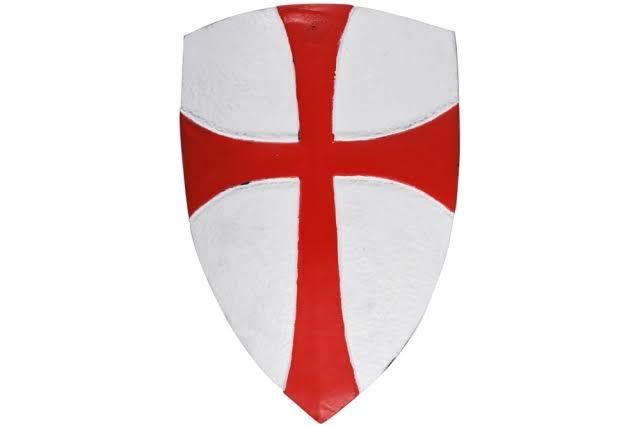
Many Christians claim to be within the just war tradition without having any idea of what that would imply if practiced seriously. They’re kidding themselves. They’re operating out of another mindset entirely. A crusader mentality that sees God behind their every war.

On the flip side it has become clearer to me that claims that the just war tradition is more pragmatic than the pacifist tradition are seriously over-exagerated. Both require a rejection of unqualified pragmatism.

8 responses to “Just War: just what most Christians practice?”

  1. Steve Hayes Avatar

    “They buy into the glorification of war, they never question the state, they elevate national security above other moral considerations. There is nothing just about that.”
    Not only is there nothing just about it, it is idolatrous. It is saying, in effect, “We have no king but Caesar”.
    I can’t think of any war in the last 30 years that could be described as “just” within the traditional Western Christian “just war” criteria (Orthodox Christianity doesn’t have the “just war” concept, which is rather legalistic).

    Like

  2. Matt Stone Avatar

    Yes, well legalistic or otherwise I personally think the just war concept is just plain theologically deficient and find pacifism far more Christologically grounded. But even the just war concept is better than what is actually practiced, which is not in line with just war theology at all. As you say, confusing Christ and Caesar is idolatrous.

    Like

  3. Alex Fear Avatar

    Plenty of non-Christians support the theory of a ‘just war’ (they may not call it that), for example, Christopher Hitchens.
    As for me I was originally for Iraq war, but only because the government of the time told us we were in immediate 45-minute danger.
    When it turned out they had lied, when the truths started to come out and there were more questions than answers, a lack of morality and justice in the leadership of both America and the UK, I became strongly against it.
    I never supported war in Afghanistan and I had reservations about George Bush becoming President. I wanted Al Gore, but since Al Gore started his global warming crusade I can’t stand the guy.
    I guess you could simply say I don’t align myself with any particular ideology. I’m more pacifist than I used to be but I can still see justification for some wars if I look at it from a national level, I can’t if I look at it from the true nation I consider myself to be a part of – Heaven.

    Like

  4. andii Avatar

    Basically, the just war theories function as ideologies or mythologies (cf Barthes): they allow a group of people to think about some aspect of social-political life in a way that hides the realities particularly of oppression and injustice. It’s a form of collective self-deception if not outright denial. Rather like ‘free market economics’ which tends to hide from its proponents the lack of consistency their own ‘markets’ and governments have with the ideals which are imposed on others.
    That said, it may be a worthwhile project to encourage just war theories to be taken seriously and applied properly by Christians.
    The Orthodox may not have a just war theory, but more worryingly, this may make it even easier for national churches to bless national wars: witness the Balkans over the last 20 years.

    Like

  5. Steve Hayes Avatar

    I’m inclined to be pacifist, but I recognise that most people are not.
    But can anyone show that ANY of the wars of the last 30 years have been “just” according to the traditional “just war” criteria?
    The continuing US-Iraq “mission accomplished” war was a war of pure naked aggression; I am sure that this could be justified on the grounds of racism, imperialism or Realpolitik, but not on any Christian grounds. It is idolatry, selling one’s heavenly birthright for the pottage of this sinful world.
    And most of the other wars that have been fought in the last 30 years have not been much better.

    Like

  6. Matt Stone Avatar

    Andii, you know I think that’s just what John Howard Yoder is attempting to do in “When war is unjust”. He’s exposing the gap between just-war mythology and just-war reality, insisting that people who call themselves just-war proponents either (a) actually take it seriously or (b) admit they’re actually committed to a different ethic entirely.
    And in answer to Steve, I have not subjected all the wars of the last thirty years to just war analysis, but yeah, there is no doubt in my mind that the last war in Iraq failed the tests miserably. In contrast to Alex, I was acutely aware how deeply it contradicted just war criteria in the lead up to the war, before it even started. There was no just cause, and to be honest I am not at all sure there was just authority either given the way the UN was circumvented. At the most basic though, pre-emptive war is forbidden by the just-war tradition outright, so Iraq never cut it.

    Like

  7. Steve Hayes Avatar

    Andii:
    “The Orthodox may not have a just war theory, but more worryingly, this may make it even easier for national churches to bless national wars: witness the Balkans over the last 20 years.”
    I’m not aware of national churches blessing national wars in the Balkans over the last 20 years.
    There were the wars of the Yugoslav succession, started by unreconstructed communist warlords (like Milosevic, Tudjman and Izetbegovic), aided and abetted by external powers (Germany, Italy, Vatican, the USA and finally NATO). It was essentially a civil war with external participation and encouragement.
    I don’t see how having a “just war” doctrine would have made any difference. It certainly didn’t deter any of those who, at least in theory, did have such a doctrine.

    Like

  8. Matt Stone Avatar

    You know, one thing that strikes me about the just war tradition is the principle that “a just war can only be waged as a last resort. All non-violent options must be exhausted before the use of force can be justified.” I think it would take a lot to exhaust the non-violent options, given the example of Martin Luther King and all.

    Like

Leave a reply to Alex Fear Cancel reply