Curious Christian

Reflections on culture, nature, and spirituality from a Christian perspective

Talking about Hell

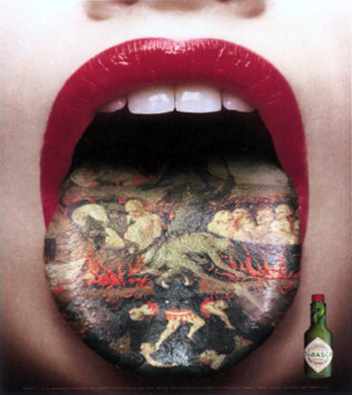
tongue 2

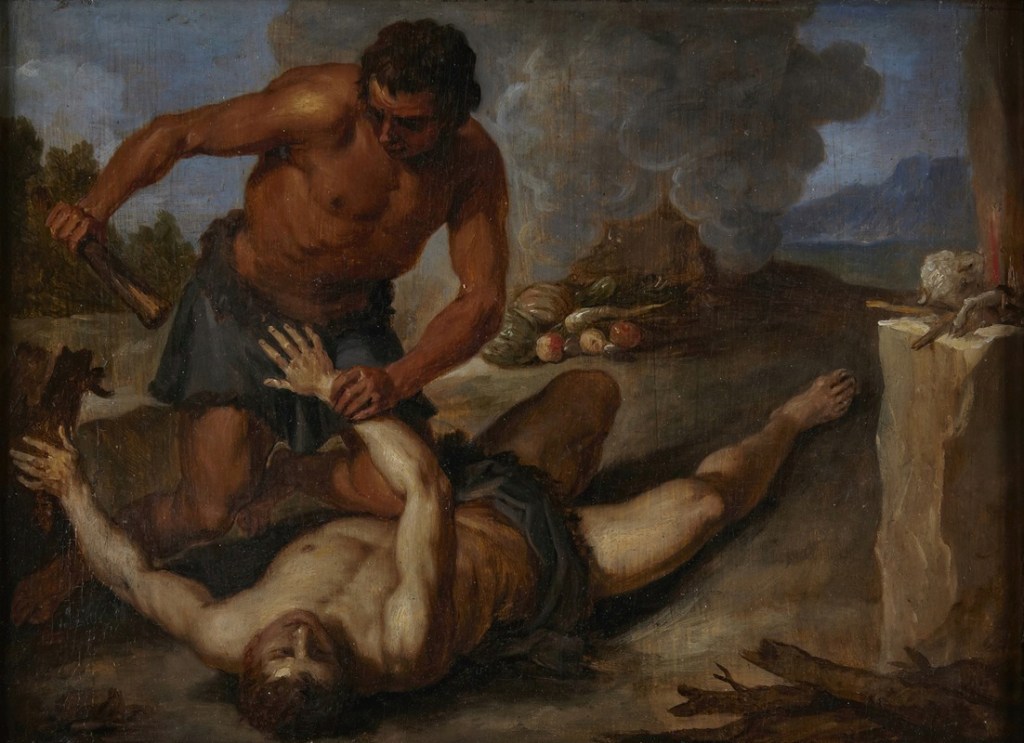
I was asked about hell again last week, about what I thought, and about other religions. To be honest I am always very wary about talking about hell, not least because there are so many Dante-esque myths floating around that its virtually guaranteed that people will here me saying what I am not saying. So it prompts me to ask, what are some of the hellish myths you’ve come across?

15 responses to “Talking about Hell”

  1. James Avatar
    James

    In addition to hellish myths, I’d also be interested in some clear understanding of hell. The biblical references to hell seem scattered and somewhat vague to me. It’s hard to ignore the myths and focus on what is accurate.

    Like

  2. Kalessin Avatar

    I think the recent Evangelical case for annihiliation has it all over the case for eternal suffering, metaphorical reading or for that matter, the ameliorating Catholic solution of pugatory.
    The classic treatment is ‘The Fire That Consumes’ by Edwin Fudge, but Clark Pinnock’s biblical argument for Conditional Immortality in ‘Four Views on Hell’ in the Counterpoints series is certainly the best short introduction, and has the merit of being a four way discussion.
    http://www.amazon.com/Four-Views-Hell-William-Crockett/dp/0310212685/ref=sr_1_1?ie=UTF8&s=books&qid=1243779226&sr=1-1
    I’m putting my thoughts together into an article at present, but that won’t be done for a while. It begins:
    “I once met a non-Christian Ph.D. student who felt that Hell was one of the best things going in Christian theology: it meant that justice would be served, and that injustice in this life was not the end. His view of Hell was unambiguously positive, and he wanted it to be real.”

    Like

  3. alouw Avatar

    I read Mclaren’s A new Kind of Christianity trilogy and well this article from my blog was a result from the second and mainly the last books.
    http://www.bebo.com/BlogView.jsp?MemberId=2735279777&BlogId=6506256974
    I put it together a while ago and it is fairly long

    Like

  4. alouw Avatar

    I wrote an article on something similar to this once you can read it here:
    http://www.bebo.com/BlogView.jsp?MemberId=2735279777&BlogId=6506256974

    Like

  5. alouw Avatar

    Hell is really quite complicating and if you have read the article that last posted, I tried to balance it out by adding comments.

    Like

  6. Matt Stone Avatar
    Matt Stone

    James, I think the very fact that the biblical references are scattered and vague should tell us something. Namely, that hellish metaphysics is a peripheral concern that should not take center stage in our teaching or practice. To understand what Jesus was intending to say when spoke of God’s coming judgement I think it’s important to understand the genre of Jewish Apocalyptic. As with N T Wright, I understand ancient Jewish apocalpytic as being a way of poetically speaking of this-world events using other-worldly language. So when Jesus speaks of God’s coming judgement as being like a volcanic eruption (fire in the sky, lakes of burning sulpher, etc) or like being cast on a rubbish tip beyond the walls of the city (smouldering mounds, rotting bodies, lots of worms, etc) I ask, what is this poet saying?
    I think he is giving us a veilled but urgent warning. I interpret biblical talk of the Whore of Babylon the same way I interpret New Yorker talk of the Big Apple. It is not meant to be taken literally, but it is no less real world for that fact. I would translate it like this: the empire of this world is idolatrous. Just as an adulterous wife has been unfaithful to her husband, so the empire of this world has been unfaithful to God. If this wife turns back, her husband will welcome her with open arms, but if she continues in her adultery, her husband will have no option but to cast her out of the house. And consider, when the home represents the secure life, consider the consequences of that. God is life. Rejecting God means rejecting life. Choose life, abandon injustice, choose justice. Hell is the world we create for ourselves when love and justice is absent. Hell is the consequence of our actions, hell is karma given full reign.

    Like

  7. alouw Avatar

    My blog, nowhere near this one, has an article I wrote after reading the third book of Mclaren’s A New Kind of Christian Trilogy. I highly recommend them, but here is the link:
    http://www.bebo.com/BlogView.jsp?MemberId=2735279777&BlogId=6506256974

    Like

  8. alouw Avatar

    I am having difficulty linking to this page from my blog so I have googled it and here is the link, hpefully this will work. Now my blog is the second entry. Just look for the Adam Louw, Perpetualbebo entry.
    http://www.google.co.uk/search?client=firefox-a&rls=org.mozilla%3Aen-GB%3Aofficial&channel=s&hl=en&q=The+Last+Word+and+the+Word+after+That+perpetualbebo&meta=&btnG=Google+Search

    Like

  9. alouw Avatar

    Forgive me, my blog is nowhere near in quality as Matt’s blog is. LOL

    Like

  10. Matt Stone Avatar
    Matt Stone

    Here is the direct link
    http://s.bebo.com/BlogView.jsp?MemberId=2735279777&BlogId=6506256974
    And don’t apologise for you blog. Mate, have you seen my first one? Its not the graphics that matters, its how you add value to the conversation.

    Like

  11. Matt Stone Avatar

    A p.s to Kalessin, I haven’t read the book but I wouldn’t have thought the metaphorical view and the annihilationist view are necessarily mutually exclusive.

    Like

  12. Matt Stone Avatar

    Adam (didn’t realise your name was Adam before) I especially picked up on your comment about gloating. I am inclined to suspect that those who gloat most about nonbelievers going to hell are those most likely to end up in hell.

    Like

  13. James Avatar
    James

    I fully agree with you, when you say that hell is the world we create for ourselves when love and justice are absent. However I’m not yet sure that the Bible agrees with that concept or definition. I really need to dig out all the biblical references to hell and afterlife, and see what’s there.

    Like

  14. alouw Avatar

    John Howard Yoder has been recorded saying, “There are two kinds of people in the world, the good and the bad, and it is usually the good who determine who is which.” I dont think that it is our place to judge the eternal destinies of not just nonbelievers, but believers that do/dont judge nonbelievers. It is up to the believers who have passed on judgement to seek correction to repentance on passing judgement on nonbelievers in my opinion.

    Like

  15. Matt Stone Avatar
    Matt Stone

    James, much of it comes down to my understanding of Jewish apocalyptic. Being cast into the lake of fire, being cast onto the rubbish heap beyond the city, these are all metaphors for what God’s coming judgement looks like from an earthly perspective. It means that evil and injustice will be sent packing, it means they’ll be exorcised from the Creator’s creation. What that means metaphysically, what it means from the perspective of the hell bound, whether this points to anihilation or another realm, I am happy to sit with the vagueness of not knowing for sure. The crucial point for me is that death is the inevitable consequence of rejecting life. If we choose the ways of judgement and death, we shouldn’t be surprised at the way that pans out, we shouldn’t be surprised when some of that future reality starts leaks into the present. We have chosen it for ourselves.
    The truth is the Bible has very little to say of hell beyond these metaphors. One motif seems to be that there is some sort of holding cell while the dead await God’s final judgement. Beyond final judgement though, little is said. Once the tempter is cast into the lake of fire nothing more is heard.

    Like

Leave a comment