Curious Christian

Reflections on culture, nature, and spirituality from a Christian perspective

Resurrection?

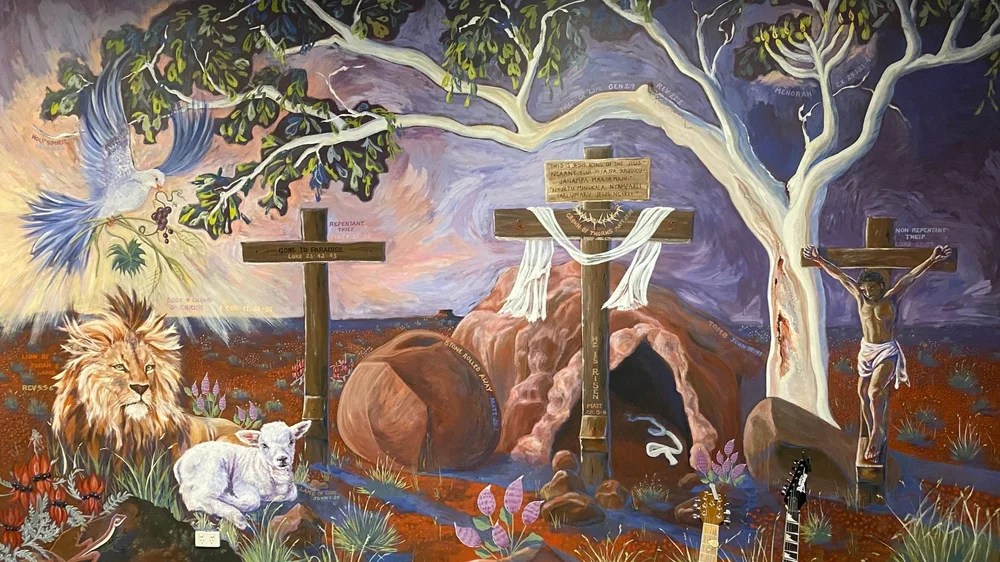
What is resurrection? What did the apostles mean when they spoke of resurrection? Were they simply referring to life after death? Or by using the word resurrection were they referring to something beyond even that?

I raise this question because there still seems to be a lot of confusion out in the blogosphere, and elsewhere, as to what resurrection actually means. Here is what N T Wright had to say about the resurrection of the dead in “What St Paul Really Said”:

“Resurrection is not simply resuscitation; it is transformation, the changing of the present mode of physicality into a new mode, of which Jesus in his risen body is the only prototype, but for which the transformation of a seed into a plant can function as a general analogy. This is the Creator’s plan for the future of his human creation.” (Wright, 1997, 140)

So, not simply resuscitation, but not simply dematerialization either. Resurrection is far more holistic. Whatever else it involves, it involves leaving an empty tomb behind. 

As such, resurrection is discernably different from Homeric Paganism with its myths of dying and rising gods who, generally speaking, died again and again in endless cycles. It is also discernably different from Platonic Paganism with its notion of soul survival. For the apostles, disembodiment was at most a transitional state prior to resurrection, it was not resurrection in and of itself. This raises some interesting questions about the importance of the body in ancient Christian teaching in comparison to ancient Pagan teaching, particularly in terms of Platonic and Gnostic style afterlife. Which path valued the body more?

5 responses to “Resurrection?”

  1. Kalessin Avatar

    Resurrection seems unusual when lifted out of context. In Rom 8:18-39 it’s the whole universe remade and perfected, though; it’s the problem of evil and suffering resolved. Human resurrection is just one admittedly pertinent example of perfect re-creation. That’s rather a different perspective to the usual disembodied-harpists view of things.

    Like

  2. alouw Avatar

    I do like the post and the previous comment, but is resurrection something that we should deconstruct? i am torn between the empty tomb being literal or metaphorical. take the stories of tombs that have been thought to belong to Jesus. what would happen to the empty tomb if they do find Jesus’ actual burial place one day? it has been said that the theology of the emerging church is conservative, but would it be a good idea to maybe look at being theologically innovative rather than following convention because the future may necessitate that?

    Like

  3. Matt Stone Avatar

    I am not attempting to deconstruct resurrection so much as the cosmological dualism of the Westernized church. Demythologize the resurrection and we risk disconnecting the transformation Jesus offers from the sensory world. I want to affirm: God acts in history. I want to affirm: the body and the earth are eschatologically significant. Yes, the resurrection is scientifically problematic, but dematerializing it is eschatologically and ethically problematic.

    Like

  4. Janet Avatar

    Well… there would be no possible way to “prove” you had found Jesus Christ’s tomb… even if you found a tomb labelled “Jesus” with a body in it… so what? It wasn’t an uncommon name. And Jesus Christ didn’t leave a named DNA sample behind.

    Like

  5. alouw Avatar

    Forgive me, I did not mean to imply that you are deconstructing the resurrection, Matt, I meant it as a suggestion, just throwing it out there, but dont worry about it your last comment answered it already. In much Evangelical thought the resurrection is basically marginalised and the crucifixion is emphasized, which i think stems from Paul’s I preach Christ and Him crucified. In contrast with Catholics that emphasize the Resurrection.
    What do you mean by the cosmological dualism of the Western church?

    Like

Leave a comment