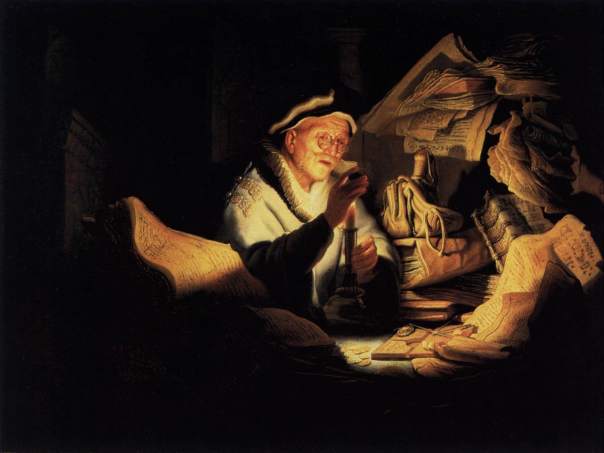
Parable of the Rich Man by Rembrandt (1627)
I’ve been thinking about Rembrandt’s Parable of the Rich Man (1627), and it really pulls me in, every time I look at it. It’s not a massive painting, but it speaks volumes. There’s this sense of quiet greed that fills the scene. You see the rich man, hunched over a table, meticulously counting his coins by candlelight. It’s almost like the whole world has faded away for him—his face lit up, but not with joy, more like a mix of obsession and anxiety. The soft glow of the candle draws your eye to his hands, his focus completely locked on the money, as if that’s all there is.
Rembrandt’s use of light is incredible, right? He has this way of showing how the light doesn’t just illuminate the room—it reveals something deeper, a spiritual contrast. Outside that tiny pool of candlelight, everything is shadowed, almost swallowed by darkness. It makes you think about what this man is missing, what he’s blind to. I mean, here’s a person who has wealth, plenty of it, and yet the scene feels lonely. There’s no warmth, no sign of family or community. Just him and his treasure.
It’s fascinating how Rembrandt chooses to capture this moment. He doesn’t show the man in extravagant robes or a mansion; instead, we get this intimate, almost claustrophobic look at the inside of his mind. You can almost feel the weight of the parable from Luke’s gospel—the warning about storing up treasures on earth but being poor toward God. The painting makes you ask yourself, what are we focused on in our own lives? What’s filling our light, and what’s getting lost in the shadows?
That’s what sticks with me most—the contrast between the richness of the scene and the emptiness it portrays. It’s a powerful reminder of how easy it is to be consumed by what we think matters, only to miss what’s truly important.







 Curious Christian
Leave a comment