Curious Christian

Exploring life, art, spirituality, and the way of Jesus

Reconsidering the Soul

I think I need to reconsider theologies of the soul as part of my general explorations into theologies of the unseen dimensions of creation.

During a short break at the career management workship in North Sydney yesterday, two fellow participants struck up an interesting conversation about ghost encounters.

One, a non-Christian female, was relating her repreated experiences with a ghost in her house. The other, a Christian male, was, I am pleased to say, listening attentively and offering intelligent comment. I attribute this sensitivity mostly to the fact that he was a muso, but, semi-serious speculations about musicians aside, I note this was the second occasion ghosts have come up in conversations around me this week. And it had nothing to do with the funeral! It suggests to me once again that this is an area of folk spirituality that I need to explore deeper.

In a way this dovetails with my reading on “Inner Christianity” which explores, amongst other things, esoteric Christian theories about the relationship between body, mind, soul and spirit.

Questions which emerge for me are:

  • How contingent is the soul? How might Christian understandings
    of biblical references to the soul be reframed by viewing them against
    a background of western Buddhism rather than ancient Neo Platonism?
  • How plausible is astral travel travel as a real phenomena? Rather
    than viewing the apostle Paul’s journey to the ‘third heaven’ as a
    trance experience could we reconceive it as an example of soul travel? Is there a phenomenological difference between the two when its all said and done?
  • What challenges to technological advances present to our understanding? How, for instance, do we understand the soul in
    reference to heart transplant operations. Do receivers inheret part of the donor’s souls – don’t laugh, it’s a real issue for some people Ive spoken to. And with advances in biotechnology and nanotechnology scientists are starting to talk seriously about chimeras with human DNA and spiritual machines with manufactured ‘godspots’ in their neural nets. A bit speculative, granted, but what about the even more realistic prospect of clones? Shouldn’t Christians at least discuss it?
  • Last but not least, I think their is need for constructive dialogue
    between pantheists (both Hindus and Wiccans) and monotheists (both Christians and Muslims) on the relationship between the soul and divinity. For instance: to what extent does the soul ‘reflect’ divinity
    and to what extent is the soul ‘indistinguishable’ from divinity?

These sorts of conversations make me wonder, how come some people are more conscious of ghosts and other phenomena? Is it a gift or a curse?

Postscript: One of the pagan women at this evening’s drumming session revealed she is attuned to faeries. She clarified my understanding of faery wicca by advising faeries appeared more like nature sprites of bark and leaves than the tinkerbells of childrens faery tales. I have ssssooo far to go in all this theological decontextualisation business.


3 responses to “Reconsidering the Soul”

  1. Whitewave Avatar

    I’m boggling at our current convergence…
    !!!!!!!!!!!!
    I noticed that you don’t have a link to this website (yet?):
    http://www.hypnos.co.uk/hypnomag/
    Lemme know what you think of it. I was Googling “Shadow Therapy” and came up with that. Thank you Dana! Again!
    Now! One of the helpfull things about Wilber’s work is that he separates out the Soul and Spirit in some useful ways for me. This, of course, does not do away with their integration (seeing as how integral is his middle name), but it actually makes integration easier because their functions are a product of holonic nesting.
    According to his cosmology (yes, this is a subject for the “Theology of Meditation” section…) the Gross realm is nested inside (has emerged from) the Mind, the Mind is nested inside the Soul, and the Soul is nested inside the Spirit. I’m sure you’re familiar.
    But that places the Soul in the pre- or sub-rational realm. This is good. Since its source is not the body or the mind, but rather it is the source of them, then there isn’t a problem with it being active even when the mind and soul are dissolved.
    Even though the words we use to transport these ideas are highly charged with the investment of ancient tribal warfare, it still behooves us to figure out what the hell is goin’ on. I like Ken because he seems to be mostly immune from the tribal agendas so he can actually get something done about it.
    I need to learn more about what neoplatonism is.
    The heart transplant issue is cute. I’m not laughing, honest. But just because we feel something contract in our chest when we are deeply moved in our “soul” (‘ts a good thing they didn’t have spleen transplant operations way back when…), doesn’t mean the emotion is coming from the contraction of our heart muscle. It’s probably the other way ’round, in which case it doesn’t matter if we have a pig heart – the nervous system will still carry the message to the muscle and cause a contraction. I’m guessing. Cute querry.
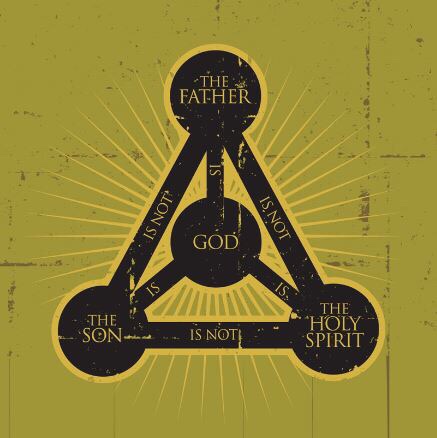
    That last question is going to be good. Ken is making a big deal about what he calls the “pre/trans fallacy” over just this issue. The Soul is invested and carries or contains the concerns for the drama in the Gross realm. For me, the Jury’s out on whether God (The Father and Holy Spirit) even has soul-like qualities. Clearly Something was invested in the drama of this world before the Incarnation. Eternally-existent Christ? Prolly. Jesus carries “our burdens”. All the tears of God’s people have been bottled and kept for a Day when this Drama will be concluded. Apparently, that is the work of Jesus.
    But what then do we make of the rest of the Godhead? If we are indwelt by that part of God that offers no traction to the Dualities and manipulations of this realm, then what does that do to our expression here? Now? Is that basically what being Christlike is since Jesus clearly was indwelt with that Holiest of all Spirits, and had a soul with which to weep over our dead?
    Juicy!

    Like

  2. Whitewave Avatar

    I should prolly preview before I punch the button.
    I think I’m confusing nesting … that might be the other way ’round.
    And by this:
    “Since its source is not the body or the mind, but rather it is the source of them, then there isn’t a problem with it being active even when the mind and soul are dissolved.”
    …I meant:
    Since its source is not the Body or the Mind, but rather it is the source of them, then there isn’t a problem with it being active even when the Mind and Body are dissolved.
    Bother.

    Like

  3. andii Avatar

    Have to say I’m skeptical about a lot of ‘soul’ talk. I think ‘soul’ is probably an emergent property of human beings and to that extent sit with Aristotle and Aquinas. I’m more skeptical than I think Aquinas was about the ability for a soul to survive a body or exist meaningfully beyond it.Though I do think that inasfar as soul relates positively to the Divine it may partake in the everlivingness of the Divine.But that would be with a view to embodied existence and therefore to reembodiment in a new-creation ‘bodily’ existence. However that involves another space-time continuum and we have to wonder how that could relate to ours aside from the divine will….
    I guess for me the issue comes back to the resurrection and the very materialistic path that it seems to set us on.
    For me the most plausible avenue of enquiry wrt ghosts and the like is the idea of place memory or somesuch. That’s for the cases where suggestion and infra-sound are not more likely and I suspect that doesn’t leave much.

    Like

Leave a reply to andii Cancel reply