When it comes to practical spirituality, surely the search for guidance must rank as one of the most important topics for discussion.
Where can I find spiritual guidance for real life issues? Whom can I trust? What does quality guidance look like? How can I apply it? These questions are what drives people seek out gurus, psychic mediums, trance channellers, self-help books, angel guides, ascended masters and divinatory tools like astrology, runes, palmistry and tarot. It’s what drives Charismatics to seek words of knowledge and contemporary prophecies and what drives others to seek out what the scriptures have to say about discernment.
For the Christian, I think one of the immediate practical questions is: what do we ‘divine’ as divination? This is a practical question that has two dimensions.
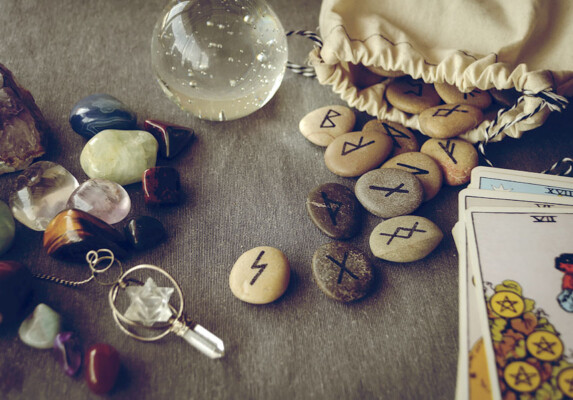
Firstly, are Christians sometimes calling things divination which as not in fact divination? Most Christians would immediately recognise tarot as a divinatory tool. Yet tarot is used in non-divinatory ways as well. It can also be used for meditation. The potentiality exists, therefore, for Christians to mistake tarot use as divination when it is actually being used differently. In such cases, should tarot use be condemned as anathema for new disciples? Or might we be open to recognising such condemnations as a subtle form of gentile circumcision / cultural imperialism? I for one think the harder road of critical contextualisation needs to be considered.
Secondly, are Christians sometimes failing to recognise things as divination which actually are divination? Close to home, what do we have to say about stichomancy: the practice of throwing open a book and selecting a random passage for the purpose of divination? Or augury: the art of interpreting signs and omens. Are there any Christians who haven’t done this once or twice? Further afield, how do we interpret alternative health psycho-technologies such as iridology, enneagram profiling, energy based allergy testing, etc, etc, etc? Are they so different from palmistry? If so, in what way? If not, then what should we say to Christian dabblers? Widespread dabbling in enneagram use in Catholic and Emerging Church circles raises a number of thorny issues. Yet, on the other hand, there is a thin line between the enneagram and secular Myers-Briggs profiling, other esoteric tests and accepted scientific practice. Is the line between science and metaphysics always clear cut? In what ways is science a form of divination, when it is done without reference to God?
To talk about ‘divining divination’ sounds so self-referential. But I have deliberately worded it this way. I ask, in what ways are we blinded by our own circular thinking? In what ways should we be critically reassessing our own theology of guidance as we interact with the commodified spiritualities and new religious movements of post-modernity?




 Curious Christian
Leave a reply to Andii Bowsher Cancel reply