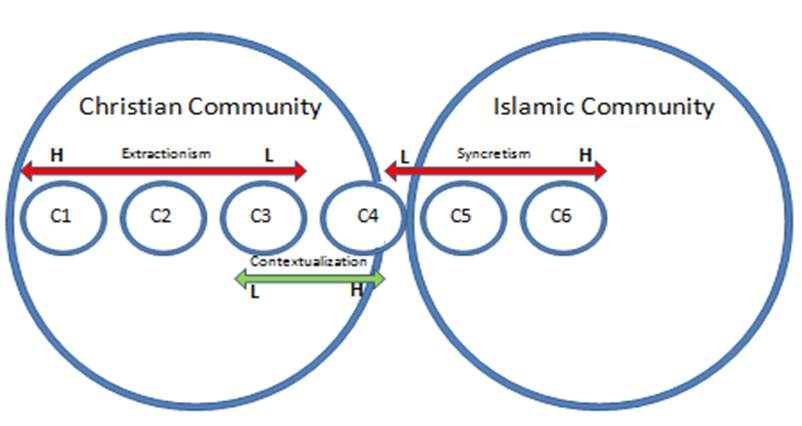
What would C4 contextualisation look like in a Western context?
Hamo raised this question in an article some time ago and I thrashed out a few issues with him on his blog at the time, but I’d like to raise the specter of it again given recent discussions on chi, ki, prana, pneuma, etc, etc, in relation to practices like Tai Chi and Yoga which have become commodified for Western consumers.
For those not familiar with the contextualisation scale, C4 equates to “contextualized Christ-centered communities using insider language and biblically permissible cultural and religious forms.” For the other types see the article.
Here’s a translation of the bible to ponder over:
Therefore,
I urge you, fellow sanyasins, in view of God’s compassion, to offer your bodies
as living sacrifices, sacred and satisfying to God—this is your pranic act of
worship. Do not conform any longer to the pattern of maya, but be transformed
by the renewing of your mind. [Romans 12:1-2]
How comfortable are people with that?
What if you had a serious yoga devote in your cell group?
Would you back away from C4 contextualization even if she was having difficulties with your in-house language?
What might stop you from diving in?
Or what if we try and translate things the other way
“Use the Holy Spirit Luke!” – Ben Kenobi
Doesn’t that sound a whole lot more problematic theologically?
I was recently re-reading a book on Fung Shui which went into elaborate detail about the art of arranging your home to attract Ch’i. Now, once you realise that the author is actually taking about the Spirit of God in creation you have to ask yourself just how uncritically we can sample from consumer culture. There are some hard core issues masked behind the language gap.





 Curious Christian
Leave a reply to Matt Stone Cancel reply