There is an interesting discussion going on at The Forgotten Ways on Changing The Story.
I was asked by one commenter, “My question is how do you perceive yourself, or how do you expect listeners to see themselves, as you tell the story of the exilic hero? How do you see the function of the exilic hero in the process of change?” I thought I would reproduce my response here as these are some pretty core issues for me:
Some time ago I wrote a piece called The Hybrid as Chosen One, noting that many of the heroes of ancient mythology, modern cinema and real life are ‘hybrids’ of one sort of another – people who stand between worlds – of neither one nor the other, yet strangely of both. They are people who stand in the gaps as few others dare, acting as catalysts for transformation.
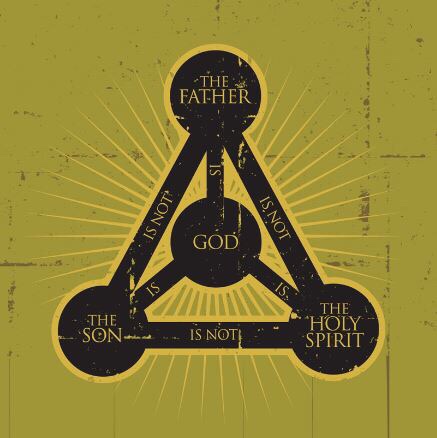
Jesus was the ultimate example of this – both God and Human – and calls us to a live life his way, to be in this world but not of this world. I trust you can see where I am going with this.
Exiles are likewise, called to stand between worlds. They cannot call home where they are or where they have come from, they can only forge a new way ahead. I see myself in this vein. I am spiritually Christian but culturally New Age. That’s the hand I have been dealt and my calling. I teach others living between worlds that we are called to worship Christ in our own cultural context, not convert to an insular Christianese subculture. I hope that eventually the tentative networks we are forging across Australia and the world can birth into something more substantial. I draw inspiration from heroes who did the same, like the Apostle Paul, like Saint Patricius. People cannot be told how to live like this, they have to see it for themselves; they have to take the red pill, not just try to imagine it. I find it’s most effective to just invite others to travel with me for a while and tell stories along the way so that they can slowly orientate to all of this.
We cannot expect ALL Christians in the West to take the path of the exile, of the change agent, of the Western missionary. We must remember that Paul considered both Jewish Christianity and Gentile Christianity as legitimate paths. But for us NeoGentile Christians who find the village atmosphere too reified and need to strike out in new directions, well, we need these exile heroes and their exile stories. They feed our imaginations and our memories as scholarly essays and expositional preaching never can. And it’s in these exile stories that we begin to discover the exilic threads in the Christian metastory.
It’s this commitment to living between worlds that inspired me to rename my blog Journeys In Between to tell you the truth. I think those of us who wish to catalyze new kinds of Christianity are called to journey in between worlds and tell stories of cultural gestalt, to tell stories of world-bridging heroes both ancient and not so ancient.
The original comment I made that provoked these questions was this:
I think James had an excellent point when he talked about how the ‘heroes we hold up’ have a powerful shaping effect.
Heroes are an important element of any story and in talking about alternative stories I think we need to give serious consideration to invoking alternative heroes and alternative ways of looking at established heroes.
It is my observation that a Christendom focus and a Jerusalem focus tend to go hand in hand. Many who still dream of revival (as opposed to mission) and speak of our Christian nation (as if that still had a shed of plausibility) wax lyrical of the glory days of David, offer shrill warnings in the manner of Elijah, and pepper their songs with references drawn from the temple focussed psalms. As more of an exile type myself such stories and symbols often fail to connect at as deep a level as alternative stories.
I prefer to tell stories of the heroes of exile, of Daniel amongst the Magi, of Joseph and of Esther, of the dreams of Ezekiel with the Shekinah of God leaving the temple and heading east into Pagan territory. When I speak of Paul, I am fascinated by his journeys amongst the people of Athens and Lystra more than his troubles amongst the Jews. When I speak of Peter, I am fascinated by his trance visions that led him to Cornelius’ house. When I meditate of the life of Jesus, I am continually drawn back to his experiences amongst the Samaritans – the woman by the well, the healed leper and his story of the good samaritan.
Moving into more contemporary times – are your heroes the revivalist American preachers or the Chinese martyrs? Do you speak of Spurgeon more than Desmond Tutu? What stories do you tell others? Christians? Non-Christians? I recently blogged on an early church father called Mathetes. A very missional bloke. How many have even heard of him? Is he a forgotten hero?
What is your BIG story? A tale of escape from earth to heaven, of cosmic escape? Or a tale of heaven in-breaking on earth, of cosmic exorcism? Are your heroes disembodied forever or awaiting resurrection in the wake of Jesus’ return? How do you think of them when your guard is down?
I find that the stories I embrace can have a profound effect on how I act out the Christian life, how I read the Bible, how I approach organisation.



 Curious Christian
Leave a comment