Curious Christian

Reflections on culture, nature, and spirituality from a Christian perspective

I haven’t written on my personal journey for a while so I thought it was time I offered some of my current theological explorations up for dissection.

In a nutshell, the aspect of the New Testament story that is gripping my attention at the moment is the ascension of Jesus. And the reason why, is that I have been confronted once again with unresolved tensions between my Cosmology and my Christology, tensions that come to a head in that event.

The problem is this: I affirm the resurrection of Jesus. I affirm that in their original Jewish context, the writers of the New Testament could only have had one thing in mind when the used the word resurrection, and that is, the transformed continuity of Jesus in this world. I agree with N T Wright that there were far more appropriate words and phrases they could have used if ghostly survival was what they “really” meant to talk about. I also agree with N T Wright that the origin of the New Testament emphasis on the uniqueness of Jesus is hardly explainable if ghostly survival was what was “really” in view.

In line with this I also affirm the writers of the New Testament had transformed continuity in this world in mind when they spoke of the resurrection of Israel, when they spoke of the return of Jesus, when they spoke of the coming of the Kingdom of God. Again, I do not accept that the earth was to be left behind in their view.

But tension arises when I come to the gap between physical resurrection and physical return, when I come to the intermediate state. For it is one thing to speak of us experiencing a ghostly intermediate state (for we have not yet been resurrected), but it’s another thing altogether to speak of Jesus experiencing it (for he has been resurrected). And it seems that I am left with one of two choices when I get to this point. Either (1) the ascension of Jesus amounts to temporary disincarnation or (2) the ascension of Jesus amounts to continued incarnation in heaven. And while the first option conflicts with my Christology, the second conflicts with my Cosmology.

This doesn’t overly bother me. I have learnt from past experience that apparent paradoxes often dissappear once looked at in the right way. But I am still in that space where I have not yet learnt to look at it in the right way. So the tension remains.

Interesting eh? Anyway, I think a hint of the resolution lies in the appearance stories of Jesus. For when I look at the narratives afresh the thing that jumps out for me is that Jesus did a lot of phasing in and out even before the ascension. But I am still not seeing clearly and this space some related questions pop up. For instance, what does it mean to speak of “Our father in heaven” when God is everywhere and cannot be contained by the heavens? I realize some of that is poetic but I feel pulled to re-examine it again in light of my current explorations.

I imagine some rather interesting insights await me at the end of this process. Not least because the question in focus here is, what is Jesus doing now, in between.

8 responses to “Cosmology and Christology in Conflict”

  1. kalessin Avatar

    Well, since it’s question time this evening, I direct the following to the honourable member for Pendle Hill…
    Resurrection bodies are only the most obvious element of the tranformation and perfection of the entire cosmos in New Testament eschatology — becoming incorruptible, glorious, deathless, powerful, ‘spiritual’-but-physical, a la Rom 8, 1 Cor 15.
    But does their transformation, and the analogous transformation of nature, involve a change in basic physics, or only in biological systems?
    If Jesus’ resurrected body could interact with others then that suggests it has a normal existence at the physical level: same atoms, same or similar DNA; but perfected, and possessing extra capabilities.
    So biological perfecting seems most probable. Does this then tell us anything about spiritual reality in addition to physical-reality-plus-God? To pose the question in Sci-Fi terms…
    Is the resurrection most analogous to ‘The Fifth Element’ in which Leeloo, the ‘supreme being’, is distinguished by vastly more sophisticated DNA?
    This would link well with Nancey Pearcey’s proposal for an entirely physicalist anthropology in Christian theology, though I haven’t read her latest and have no comment on that.
    Or is this idea more like Tolkein’s elves, who are immortal, but their physical qualities reflect the supervention of a spiritually dualist existence — think of Frodo’s perception of Glorfindel at the Fords of Brunien (or see the backstory in the Silmarillion).
    I expect working this out will only require us to resolve whether our current state of being is dualist or not, and in what manner. No rush — an answer tomorrow will be fine.
    The question reminds me of the saying — I’m not sure from where — that Christianity is a spirituality/experience/event in search of a metaphysic.

    Like

  2. espiritu_paz Avatar

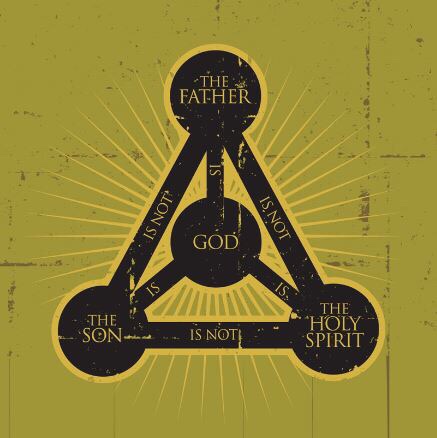
    I like that you notice this. Jesus also says repeatedly, I must go so the comforter can come and be with you always. As much as the trinity is a part of evangelical doctrine, the paradigm works for some things but I do notice when the trinity doesn’t seem to be the best paradigm. I’m wondering if the Coptic church has a useful paradigm for the being of God. I just encountered it recently. God is one, they maintain. But God became something he was not previously in the person of Christ. I’m wondering how they place the Holy Spirit in their “evolving” God.

    Like

  3. Peggy Avatar
    Peggy

    Interesting, indeed!
    I agree with kalessin that what’s being talked about here is the “transformed” body–the body that will be able to live physically in the spiritual realm, if you follow me. The angels have bodies that live in the spiritual realm in heaven, but when the come to earth, they have to “put on raiment” of some sort.
    More than the elves, I think of the Valar–who, after helping sing the song of creation with Eru-Illuvitar, left his presence to descent into the Ea in order to bring the vision into reality. And so they were clothed in the likeness of the “children of Illuvitar” so that they may interact with them. And yet they could, at times, be in their “natural” state, such as Ulmo in the waters or Ariel (a maia) as she guided the sun across the heavens.
    That suggests to me that in the local realies that we call “heaven” and “the spiritual realms”, the “spiritual” inhabitants do not require “earthly physical” embodiment in order to be seen and interacted with.
    To continue with this line, when the spiritual enters the physical realm of our universe/planet, they may continue in spiritual form or they may take on physical form, depending on how they want to interact with humans.
    Hmmm…this is an interesting line of thought….
    Humans, however, do not yet have their “third” essence. They have the reality of spirit, but it does not have a bodily manifestation–yet (some of the already/not yet theme continued, eh?). They have only the physical body and the spiritual awareness.
    But Paul tells us in Thessalonians that there will be a moment–a twinkling of the eye–when we will be changed, having bodies like Jesus’ resurrected body–that was suprahuman.
    God went so far with the amazing creation of “their” image that Jesus took that form on earth and hallowed it and brought it back to heaven.
    This reminds me of the times when mortals–men, dwarves and hobbits–were allowed to pass into the West in reward for their deeds in the war against Morgoth…
    So what does that do with the whole concept of the trinity? I think it gives God the ability to be seen in relation to each of the manifestations–God as transcendant creator/Father and immanent Holy Spirit presence and Jesus as spiritual being-then human-then suprahuman.
    This suprahuman is the firstborn, elder brother to all of us adopted an children of God. We will still have these human bodies, indwelt by God’s Holy Spirit who is transforming our minds spiritually before we are to be transformed into spiritual bodies that will be able to move readily in both physical and spiritual realities. In that day we will be like Jesus-finally.
    …all of this is a little mind-blowing to even say outloud!
    Whatever our thoughts, this is one of those areas where we will just not be able to truly comprehend the reality until it happens!
    Hmmm….

    Like

  4. Matt Stone Avatar

    “Christianity is a spirituality … in search of a metaphysic.”
    I like that. To be honest I think its my metaphysic, my cosmology, which is most in trouble here.

    Like

  5. Sun Warrior Avatar

    Yes, it is very hard to construct a spiritual cosmology from Christianity. It doesn’t really offer much because much of its history has been battling the cosmologies of its rivals. So, Protestantism in particular, is left with very little to work with. The Bible in the modern context in not too much help. We have far too few experiential reference point from which to give authority to. And there is a subconscious taboo against going outside of the singularity of putting all your faith just in three spiritual entities: God, Jesus and souls.
    Been away for awhile. Some great posts, Matt. Love your journey.
    Sun Warrior

    Like

  6. Matt Stone Avatar

    You must have heard my telepathic call. I was thinking of you yesterday.

    Like

  7. Andii Avatar

    You might like to check this out with the debate between Lutherans and Calvinists over the ‘extra Calvinisticum’ …

    Like

  8. Matt Stone Avatar

    Ok, I found this:
    Extra Calvinisticum: The Calvinistic Extra. The Lutherans believed in the ubiquity (omnipresence) of Christ’s human body and nature, whereas the Calvinists have believed the historic view that Christ’s human body-and-soul is not infinite or omnipresent, but is only now at the right hand of the Father. Calvinists hold to the principle Finitum non Capax Infiniti, or the finite is not capable of the infinite (the finite human nature of Christ is not capable of containing His infinite divine nature in its entirety).Thus, ever since the Incarnation, there is still infinite deity beyond Christ’s human nature. The beyond is “extra” or outside, infinite.
    Interesting, thanks mate, given me something to think about.

    Like

Leave a reply to Andii Cancel reply