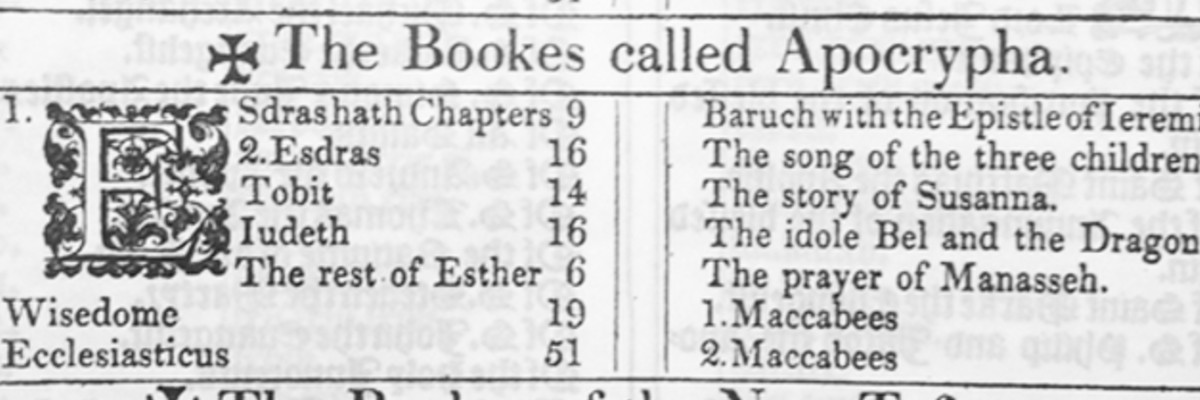
Have you ever wondered what to make of the Apocrypha? Today I was asked, “Is it true they are not in the standard bible cos they were written in Greek not original Hebrew language?? What bible has them? How many books r there & r they bona fide??”
Now, I wouldn’t call myself an expert on the Apocrypha but this is what I know.
Firstly, when discussing texts, any texts, it’s always good practice to go to the primary sources and see for yourself, and not to rely exclusively on secondary sources (like me). So, with that in mind here are two sites where you’ll find the books of the Apocrypha available for reading. I personally found one read of “Bel and the Dragon” was all that was required for me to appreciate why that’s considered non “bona fide” by evangelicals. Why not read Bel (it doesn’t take long) and see what you think?
Sacred texts Archive: The Apocrypha
Secondly, when discussing controversial texts, it’s also good practice to explore each side of the argument and not just rely on one side. I’m a Protestant so you’re going to get a Protestant response from me. But I’m a thinking Protestant so I’d insist that you also familiarise yourself with Catholic, Orthodox and alternatives perspectives, and again, make up you’re own mind, not accepting what I say without testing it. So, here is some wider reading:
Wikipedia: The Apocrypha and Deuterocanonical Books (a mishmash view)
Catholic Encyclopedia: The Apocrypha (a Catholic Christian view)
Manachos.net (an Orthodox Christian view)
The Old Testament Canon and Apocrypha (a Protestant Christian view)
Now for my own opinion. I do not consider the Apocrypha to be inspired or authoritative. But, given the place of the Septuagint in Christian history, it can be helpful to have access to it. As for Catholic acceptance of the Apocrypha as deuterocanonical, well, though there are obvious doctrinal differences between Protestantism and Catholicism I think the more important causes lie elsewhere.






 Curious Christian
Leave a reply to Matt Stone Cancel reply