The holy wars of Israel present a major objection to Christianity for many people these days, particularly in the wake of the religious terrorism of 7/11.
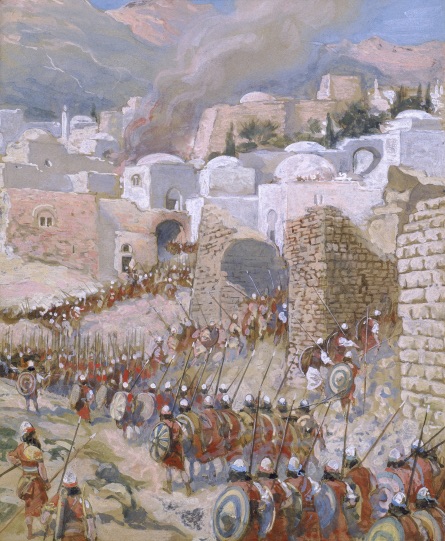
Now, regular readers would be aware that I interpret scripture Christocentrically, and hence question the discipleship value of any Old Testament interpretation that does not have Christ in view. Nevertheless, it is worth exploring the Old Testament on its own merits, for sometimes we even get the ancient Israelites wrong.
With this in mind, I would like to draw your attention to an article on the Canaanite Genocide by Andy Woods. These quotes in particular:
Israel never engaged in holy war beyond the land that God had given them in the Abrahamic Covenant. Genocide was to be limited only to the consecrated land (Deut 20:16). According to Lohfink, “The war of Deuteronomy 20:1-18…limits the chērem strictly to the situation of occupation and the inhabitants of the promised land.” In fact, Israel was specifically forbidden to conquer adjacent territories since God had already given them to other peoples (Deut 2:4-5, 18-23).
Holy war as expressed in Deuteronomy, therefore, would not have been intended to “propagate the faith,” the commonly assumed purpose of holy war envisioned in the West. It was not outward looking and had no interest in seeking converts, either through physical force or through persuasion…The concept of deuteronomic holy war, then, was quite limited geographically and could only exist in relation to a particular locale consecrated to the survival of its own religio-cultural expression.
To repeat, Yahweh did not order the Israelites to exterminate all Gentiles but only the Canaanites.
That still leaves a lot of unanswered questions, for sure, but I think its important to have appreciation of the limits of the holy wars of Israel, and thus, some of the limits to their contemporary application (even leaving Jesus aside).





 Curious Christian
Leave a reply to Matt Stone Cancel reply