Curious Christian

Reflections on culture, nature, and spirituality from a Christian perspective

Unsocial Networking

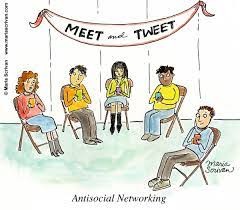
I find myself often lamenting the dearth of deep conversation on the web. In a world where we are more connected than ever, it’s ironic that social networking seems to have made the web a lot less social. The fast pace, the constant stream of notifications, and the bite-sized interactions encourage us to skim the surface of things rather than dive deep. We’ve become more superficial and less reflective, skimming headlines instead of sitting with thoughts, scrolling through updates rather than engaging in meaningful dialogue.

Yet, sometimes, I think slow is good. There’s something to be said for stepping back, pausing, and allowing room for reflection. I’m reminded of how often Jesus took time away from the crowds to focus on his closest disciples, or even to pray in solitude. He knew the value of deep connection over shallow interaction. It’s a rhythm I find myself craving, even in the midst of the noise of our digital age.

It makes me wonder: what would it look like to bring that same intentionality into our online spaces? To slow down enough to actually listen to others, to ourselves, even to God, instead of being swept away by the urgency of the next click or comment. I’ve come to believe that sometimes we have to focus to be more genuinely social, even in cyberspace. True connection doesn’t happen in the rush of constant activity but in moments of stillness where we give someone, or something, our full attention. Maybe the real challenge is learning how to create those moments in an environment that constantly pushes us to move faster and say less.

In a way, it’s about reclaiming space for depth. Taking time to ask better questions, to sit with uncomfortable answers, and to embrace the kind of slowness that allows for real conversation. Not just in person, but even here, in this digital world we now inhabit.

6 responses to “Unsocial Networking”

  1. Andrew Avatar

    me too. binary language moves conversation to the gutters of trivia and controversy.

    Like

  2. Steve Hayes Avatar

    Deep conversation is not to be found on the web. It’s the wrong medium. Social networking sites are fine for getting in touch with old friends and keeping up to date with what friends and family are doing, and can even point to places were deeper conversation can be had.
    I try, on social networking sites, to only accept as “friends” people of my and my wife’s extended family, and people I’ve phtysicially met, or online friends with whom I’ve had regular interaction through mailing lists blog comments and the like.
    I’ve seen people switch their interaction from newsgroups or mailing lists to Facebook, and the quality drops enormously.

    Like

  3. Matt Stone Avatar

    The thing is I have had plenty of deep conversations on the web over the years. Web forums, blogging, email exchanges with website owners, they’ve created spaces for conversations I would have accessed in no other way. I’ve been challenged. Ive been changed. In some cases these conversation have even translated into face to face friendships. Of course, that took things to a whole new level of richness, so I affirm the superiority of face to face communication. But, how should I put it, I think there’s a spectrum of communication possibilities and although the web is the wrong medium for the deepest conversations, I’m not ready to surrender to the opposite extreme.
    I have an image in my head similar to the food pyramid. At the bottom is face to face communication. This is the grain and fruit and vegies of the communication pyramid, the stuff we should make sure we get the most of if we want healthy relationships, both as individuals and as a society. Moving up the pyramid we get online communication that still involves a good dose of reflection. This is the meat and dairy. It’s still very useful in moderation. Moving up to the top we get Facebook and Twitter, the low nutritional fat that we should consume in very small doses. Unfortunately as the web has matured consumption has shifted to the fatty end. Without denying the need for vegies, I’m also saying we need more meat.
    Take this conversation for instance. It took me some time to think of a response. Much more time than the average I spend composing a Facebook status update. Taking this time means spending less time elsewhere online. I think there is virtue in limiting our attention.

    Like

  4. Tony Avatar

    I concur with the above. I write blog posts of an average of 3 old hard copy pages (is that soon to be an obsolete measurement?). And I read others writing of equal length or more. Then I can go away and ponder my sympathy or objections over time.
    As much as I like to deride new technology this makes for a deeper conversation than a talk over the top of each other at a dinner party. Or even the kind of face to face time most couples manage with a few kids.
    That’s tragic but theres an art and a space for conversation we need to cultivate to change this. New technology isn’t necessarily causing the problem as providing some (second rate perhaps) solution.
    But Facebook? Ive only just joined and its worse than texting for encouraging the snippet.,Handy but not conversation.

    Like

  5. Steve Hayes Avatar

    “Handy, but not conversation”.
    Exactly.
    It’s got for saying that someone is born, someone died, someone moved house, some one will be in your area so perhaps you can do lunch. But not for conversation.
    Blog posts are like lectures, with questions to tghe speaker afterwards.
    For real conversation, you need the mailing list or five people around the kitchen table. In the case of a mailing list, the five can be on different continents, if only they would say something and respond to what others have said.

    Like

  6. Matt Stone Avatar

    The best conversations I’ve had on line have been through mailing lists, I concur there. But there’s a problem with the proliferation of mailing lists. It’s too easy to create one. There’s 11 mailing lists for every 10 people who wish to talk on a topic. I think the mailing list situation would be improved if we killed off 90% of them. Our attention is too divided. What we need is focus.

    Like

Leave a reply to Andrew Cancel reply