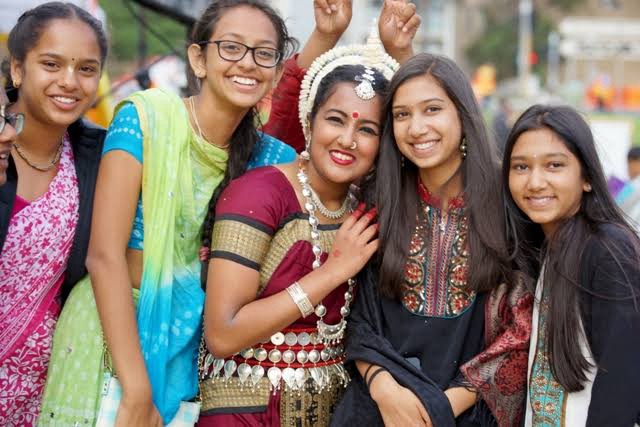
As a Christian living in a predominantly Hindu suburb, I’ve come to realize how crucial it is to understand Hinduism from the perspective of Hindus themselves, rather than solely relying on Western interpretations. This firsthand insight into their beliefs and practices has enriched my understanding of what it truly means to be a Hindu. That’s why, when a Hindu speaks or writes about topics like “What makes a person Hindu?” or “What does following Sanatana Dharma entail?” I make it a point to listen carefully.
For instance, I recently came across some insightful reflections from a person blogging as the Western Hindu, discussing the nuances of what it means to be Hindu in today’s context. One point made was that while “Sanatana Dharma” allows for flexibility in practice—citing examples like Ramakrishna including Jesus and Mary in his worship and the Arya Samaj rejecting images of God—it remains grounded in key principles. The writer highlights how Hinduism’s inclusivity can even extend to incorporating deities from other traditions, much like local village gods are accepted alongside the traditional Hindu pantheon.
However, this openness has limits. The Western Hindu emphasizes that merely adopting some Hindu practices doesn’t automatically make one Hindu. There’s a broad spectrum, from orthodox adherents to those influenced by multiple spiritual paths, and it’s up to the individual to define where they stand. But at the same time, the writer stresses that once someone abandons the universal principles of Hinduism—such as dharma, karma, and reincarnation—they are no longer following Sanatana Dharma.
This aligns with my own understanding, shaped by conversations with Hindus in my community and through reflecting on the seven dimensions of religion. Hinduism is indeed open to diversity and adaptation, yet it holds firmly to core beliefs. It embraces many divinities but has boundaries, particularly when it comes to core tenets like karma and reincarnation. There are practices that simply do not align with what it means to be Hindu.



 Curious Christian
Leave a comment