When reflecting on the Wheel of the Year, I find a good starting point for Christian reflection is Ecclesiastes 3:
“There is a time for everything, and a season for every activity under the heavens: a time to be born and a time to die, a time to plant and a time to uproot … He has made everything beautiful in its time. He has also set eternity in the human heart; yet no one can fathom what God has done from beginning to end.” (Ecclesiastes 3:1-11)
This passage reminds me that God’s work is woven into every season—Spring, Summer, Autumn, and Winter. Each change reflects Divine presence and provision, whether in the promise of new life, the growth of abundance, the gathering of harvest, or the rest and renewal of the colder months.
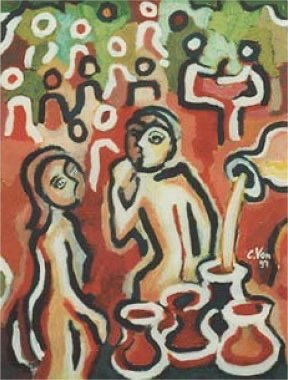
Beltane, traditionally associated with growth, fertility, and the approach of Summer, is a celebration of life flourishing around us. In Christian terms, it echoes the themes of renewal, divine provision, and the fullness of life, much like Jesus’ first miracle at the Wedding at Cana. At Cana, Jesus takes the ordinary—water—and transforms it into something extraordinary—wine. This act, symbolic of God’s abundant generosity, also foreshadows his ministry of transformation. The miracle speaks to God’s willingness to meet us with overflowing love, just as the Earth meets us in spring with an abundance of beauty and growth.
Furthermore, Beltane’s themes of union and vitality invite reflection on the idea of spiritual fruitfulness. As Paul writes in Galatians, we are called to bear the fruit of the Spirit: love, joy, peace, patience, and so on. In the same way that Beltane celebrates physical fruitfulness, we, too, are invited to bear fruit spiritually, to reflect God’s love and grace through our lives.
So as we observe the world reawakening in this season, I find it good to remember that God’s presence in the land around us and in each moment of our lives. Just as the earth gives of itself abundantly, so too does Jesus invite us into the fullness of life, flourishing in his love and sharing it with the world.



 Curious Christian
Leave a comment