
How would you characterise healthy masculinity in contrast to toxic masculinity? As I considered this question recently, I found myself reflecting on different characters from the Bible, pondering the lessons these ancient figures offer. Their lives, full of triumphs and failures, invite me to think deeply about what it means to be a man, and how I can grow into a healthier version of masculinity.
Take King Saul, for instance. I can’t help but see in him a reflection of the dangers of insecurity and jealousy. Saul started out strong, chosen by God, but over time, his fear of losing control took over. He grew so jealous of David that it consumed him, leading him to make decisions that ultimately destroyed him. In my own life, I’ve had moments when fear and insecurity led me down dark paths, whether in relationships or in my career. Saul’s story makes me wonder: How often do I let my fears and insecurities cloud my judgment?
Then there’s Samson. His strength was legendary, but it’s his lack of self-control that strikes me as so dangerous. Samson didn’t think twice about his actions, especially when it came to his relationships with women. His story with Delilah is a sobering reminder of how easily we can be manipulated when we’re driven by unchecked desires. I see how, at times, I’ve acted impulsively, taken action without considering the consequences. Samson’s downfall is a sobering reminder that strength without wisdom can lead to destruction.
And then there’s David, who is often considered a hero, but at times acted more like a villain. I admire his courage, his heart for God, and his leadership, but I also can’t ignore the deep flaws in his character. His rape of Bathsheba and the way he arranged for her husband to be killed—it’s hard to ignore how he abused his power. In reflecting on David, I can’t help but think about the times I’ve overstepped boundaries and used my own position and privileges in ways that weren’t entirely honest or pure. His story forces me to consider how easy it is to slip into a mindset where I put my desires above what’s right, and how dangerous that can be.
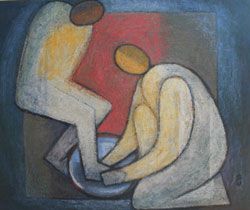
But the Bible also gives me glimpses of a different kind of masculinity, one that feels more like the kind I want to live out. Jesus is the ultimate example. From him I’ve seen that true strength doesn’t lie in dominance or control, but in love, service, and sacrifice. I think about that moment when he washed the feet of his disciples (John 13). Here was the Son of God, humbling Himself to serve those who followed him. It challenges me. How often do I try to assert my authority, instead of leading with humility and care? Jesus’ life makes me want to shift the focus away from what I can gain and instead ask how I can serve those around me.
Then there’s Joseph, a man who knew suffering, betrayal, and hardship, yet still chose to hold on to his integrity. Sold by his brothers into slavery, Joseph could have easily given in to bitterness or vengeance, but instead, he chose forgiveness. When his brothers came to him in need, he could have turned his back on them, but he didn’t. His story speaks to me about emotional strength. The kind that’s not just about holding it together, but about choosing grace even when it’s hard. I think of when I’ve held on to grudges or found it difficult to forgive. Joseph’s example challenges me to be better, to find the courage to forgive, no matter the hurt.
I can’t forget Boaz, either. His kindness, generosity, and integrity are things I deeply admire. Boaz didn’t view his strength or resources as something to use for his own gain, but as a way to protect and uplift others. He treated Ruth with respect and dignity in a world that often did the opposite. I find myself asking: How can I be more like Boaz? How can I be a man who seeks to elevate others, particularly those who are vulnerable, instead of using my strength for selfish purposes?
Finally, Daniel stands out to me as a man who showed immense courage and conviction, even when it was dangerous to do so. His refusal to bow to the king’s idol, knowing the consequences would be severe, is a powerful reminder that true masculinity is not about compromising your beliefs to fit in or avoid conflict. Daniel’s story makes me reflect on the times I’ve been tempted to compromise on my values, just to make life easier for myself. But his life reminds me that the strength to stand firm in my beliefs, especially when it’s uncomfortable, is one of the truest marks of a man.
As I think about these stories, I can’t help but see how they show me two very different ways of being a man. One is driven by fear, pride, and a need to control—traits that lead to destruction. The other is grounded in humility, love, forgiveness, and courage—traits that invite growth and healing. I’m left wondering: Which kind of masculinity do I want to embody in my own life? How do I learn from these stories and strive to live in a way that reflects the best of what masculinity can be?
Ultimately, the Bible offers me a mirror to examine my own heart. It invites me to ask tough questions about how I handle power, relationships, and my sense of purpose. It reminds me that true masculinity is about more than just strength or success. It’s about how I serve others, how I handle failure, and how I choose to love. Qualities that aren’t gendered at all when you think about it. And as I continue to wrestle with these questions, I hope to grow as a man who reflects the kind of masculinity that leads to life, rather than destruction.






 Curious Christian
Leave a comment