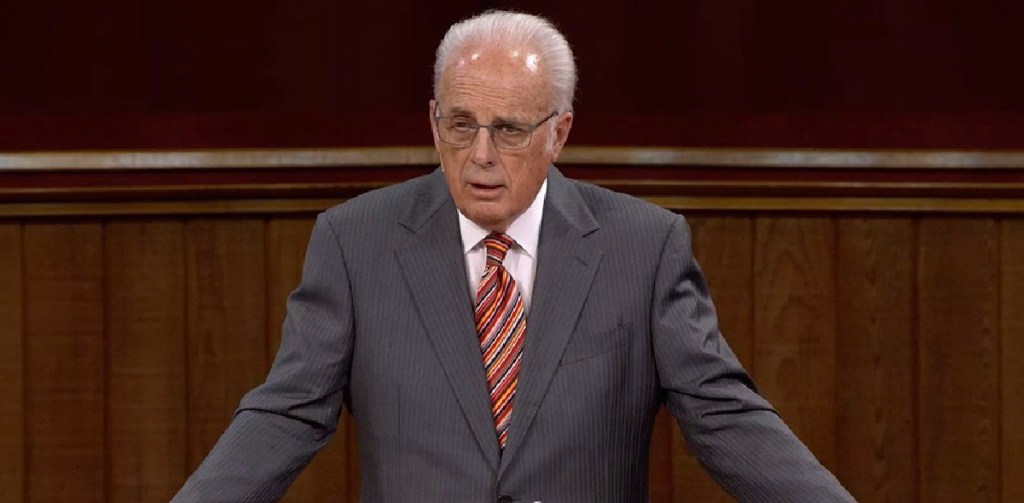
John MacArthur’s ministry has been praised by many for its doctrinal clarity and unwavering commitment to expository preaching. But beneath the surface of theological confidence lies a troubling pattern: a Christianity more concerned with control than compassion, more aligned with authoritarian power than with the liberating gospel of Jesus. His legacy is marred not only by theological rigidity, but by deeply harmful ethical stances and institutional failures that have wounded the vulnerable and upheld injustice.
1. Defense of Slavery and Racially Charged Theology
MacArthur has made deeply disturbing public remarks defending American slavery, framing it as a benign system for obedient servants under Christian masters. Rather than acknowledging slavery as a violent and dehumanizing institution rooted in white supremacy, he has minimized its cruelty and appealed to Scripture in ways that reflect the worst of colonial-era hermeneutics. His approach reinforces racial hierarchies and ignores the vast biblical witness to liberation, justice, and the full dignity of all people created in the image of God.
Furthermore, his theological framework leaves no room for structural sin, making it impossible to meaningfully engage with racial injustice today. Movements for racial equity are routinely dismissed as Marxist, divisive, or anti-gospel—reflecting a deep unwillingness to confront the legacy of white supremacy, both in society and in the church.
2. Mishandling of Abuse and Institutional Betrayal
One of the most damning public failures of MacArthur’s ministry is his church’s treatment of a woman who refused to submit to her husband—who, it was later revealed, was criminally abusive and ultimately convicted of child sexual abuse. Rather than protecting her, MacArthur and the leadership at Grace Community Church publicly disciplined her, shaming her for leaving the marriage and insisting she continue to submit to a man who was spiritually and physically unsafe.
This incident is not peripheral—it is emblematic of a theological system that prioritizes male authority over female agency, institutional loyalty over pastoral care, and doctrinal consistency over the safety of real people. It shows what happens when rigid gender roles and authoritarian ecclesiology combine to silence victims and shield abusers.
3. Hostility to Justice, Equality, and Compassion
MacArthur has been one of the most prominent voices condemning efforts to address racial and social injustice within the church. His Statement on Social Justice and the Gospel portrays any concern with systemic oppression as a threat to biblical fidelity, creating a false dichotomy between justice and theology. This position severs the gospel from its ethical demands, making it possible to preach orthodoxy while ignoring the cries of the poor, the abused, and the marginalized.
4. Doctrinal Control and Theological Gatekeeping
A spirit of exclusion pervades MacArthur’s ministry. Those who differ from his precise theological system—whether charismatics, egalitarians, Catholics, or advocates for justice—are cast as enemies of the gospel. He equates faithfulness with agreement, and truth with submission to his interpretive authority. This fosters a culture of fear and conformity rather than humility, discernment, and spiritual growth.
5. Suppression of the Spirit’s Voice and Freedom
MacArthur’s hardline cessationism dismisses much of the global church’s lived experience. His infamous Strange Fire conference caricatured the charismatic and Pentecostal movements as spiritually dangerous, with little acknowledgment of the ways God is working among communities often neglected by Western evangelicalism. His theology leaves little room for the unpredictable, life-giving movement of the Spirit—especially when it challenges his control.
Conclusion
John MacArthur’s ministry presents a stark warning about what happens when theological certainty is allowed to eclipse love, justice, and humility. The result is a system that protects abusers, defends racism, silences women, and equates authoritarianism with biblical faithfulness. Whatever good may have come from his preaching is overshadowed by a consistent pattern of defending the powerful, oppressing the vulnerable, and distorting the gospel into something Jesus would not recognize.
Faithfulness to Christ means protecting the abused, confronting injustice, listening to the Spirit, and embracing the cruciform path of love. MacArthur’s ministry has too often chosen the opposite.





 Curious Christian
Leave a reply to Phyllis Cancel reply