Since Mark Berry raises Feng Shui as an issue for suburban missional consideration I though it was worthwhile posting this excerpt from “Jesus and the Gods of the New Age” by Ross Clifford and Philip Johnson:
Feng Shui (pronounced ‘fung shway’) …is the ancient Chinese folk religious practice of placing objects in such a way as to promote good fortune in people’s lives. This is achieved by arranging environmental settings of home and office to create a harmonious space and atmosphere. Feng Shui literally means ‘wind and water’. The basic theory is that the way a building, room, window, street, mountain or hill face the water and wind has a profound effect on human well being.
Two Taoist concepts are important here: chi and yin and yang. To the Taoist, chi – cosmic energy or breath – flows throughout the natural world. If the flow is blocked, problems will occur. Yin and yang are two equal, opposite yet complementary forces (types of chi) found in everything that exists and which need to be kept in balance. These elemental forces are just two aspects of one reality, like the north and south poles. Yin represents the dark, negative principles, while yang represents the light, positive principles. So harmony with the natural order produces health, wealth and happiness.
A feng shui master will test the surrounding environment using a nine-ringed compass, known as a lo pan. Each ring contains symbols reflecting heaven and earth, yin and yang, stars and hexagrams. The master uses these symbols to interact with an individual’s horoscope. In taking bearings from the compass, the master will consider five basic categories of the landscape. A master may also delve into the heavenly elements or spirits that interact with the world. Then recommendations will be made about design or remedies described to correct the faults that affect the flow of chi.
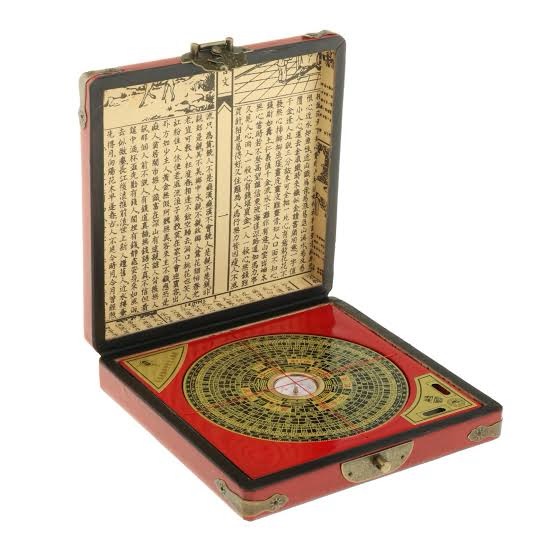
Geomancy is similar to, but not identical to feng shui. Geomancy is the western esoteric craft of ‘earth magic’. In geomantic theory, there are lines of energy – ley lines – that traverse the planet. Various sacred sites, such as Stonehenge, the pyramids and Ayers Rock, or Uluru, to use its Aboriginal name, are believed to exist on very powerful ley lines.
Geomantists show how the earth influences plants, animals and people where ley lines are identified. They believe there is a universal life force flowing throughout the cosmos. Geomantists seek to maximize the life force flowing through any given locality.
American architect Walter Burley Griffin (1876 – 1937) employed the principles of geomancy and feng shui in his work. Griffin was personally influenced by the teachings of Swedenborg and was also active in the Theosophical Society. His use of geomancy and feng shui was particularly evident in his designs for the Australian capital city of Canberra…
… there are both positive and negative sides to feng shui and geomancy. On the positive side, feng shui can serve as a catalyst to refocusing ourselves on some forgotten truths. The emphasis on cosmic harmony should remind us that God’s Spirit energizes the whole cosmos. To find harmony, we need to turn to our creator, who is the source of all harmony. We can also reflect on the presence of God’s Spirit throughout the whole earth. The sacred writings aver that God ‘is not far from each one of us’ (Acts 17:27).
As we have seen, ‘feng shui’ means ‘wind and water’. The creation narratives begin with how God’s Spirit hovered over the catotic waters and brought order and design. The Hebrew word used was ‘ruach’, which can be translated according to the context as spirit, wind or breath. We have forgotten that God gives us the breath of life, which should goad us into thanksgiving (Genesis 1:2, 2:27). The geomantic ‘universal life force’ happens to be the person of God’s Spirit and not an impersonal energy. Jesus also associated spiritual renewal by the Spirit with the imagery of both wind and water (John 3:5-8).
Aside from these spiritual reminders, we ought to be mindful of how we design and use our domestic and commercial places. Are our homes, offices and cities places where we are aware of God’s presence and experience harmony? Our use of space should prompt us to design our surroundings in ways that welcome God’s presence and keep us linked with the creation. If our minds are darkened we will forget about the creator and even erect physical barriers to shut out all truth.
On the negative side, we feel that feng shui and geomancy can draw people into a limited understanding of reality where magickal forces or alien spirits hold sway. The sacred writings instruct us to be discerning about seeking magickal powers and relying on lesser spiritual forces. There are negative forces and energies, and spiritual entrapment by dark powers is an unpleasant and undeniable reality. The sacred writings direct us to depend on and enquire after God (Isaiah 8:19-20)
(Now I’d invite any celtic revivalists reading this blog to also consider how this also relates to the celtic concept of ‘thin places’)




 Curious Christian
Leave a comment