
If part of the task of the emerging church is to deconstruct sacred-secular dichotomies in contemporary Christian teaching and practice, then surely an important starting point is our understanding of Christ.
We often hear clerics referring to Jesus as our great high priest, but do we acknowledge such statements too glibly? He wasn’t ordained – he was a layman wasn’t he? He was an enemy of the incumbent high priest and the temple authorities wasn’t he? In its original context, calling Jesus a priest in the order of Melchizedek was a way of deconstructing traditional understandings of priesthood. Maybe instead of listening to clerics interpret Jesus through their understanding of priesthood we should be critically re-interpreting priesthood through our understanding of Jesus the Galilean peasant? It’s my feeling that priests in the order of Melchizedek do not limit their spheres of operation to temples; that they do not respect the sacred-secular and priest-laity divides.
How many times have you heard ministers and missionaries saying they gave up their jobs to work “full-time” for God? I find such testimonies so disempowering as a worker. I want to be empowered to imitate Christ right where I am. Is clericalism truly the highest way of modelling Christ? I wonder if Jesus would have said that?
So, as an experiment, let’s think about Christ in the context of everyday work. Jesus didn’t shirk working. He characterised himself as a servant, as a slave, the lowliest of workers. He saw washing feet as a mode of spiritual teaching, and liked to give a hand with cooking and fishing. He was known as a carpenter in his early career and as an alternative healer and social critic in his later career. He mixed with businessmen, government officials, fishermen, animal husbandry workers, street workers, and all sorts of workers in their workplace. When religious authorities castigated him for working on a Sabbath, he characterised God as a worker. He visited temples only to upend them.
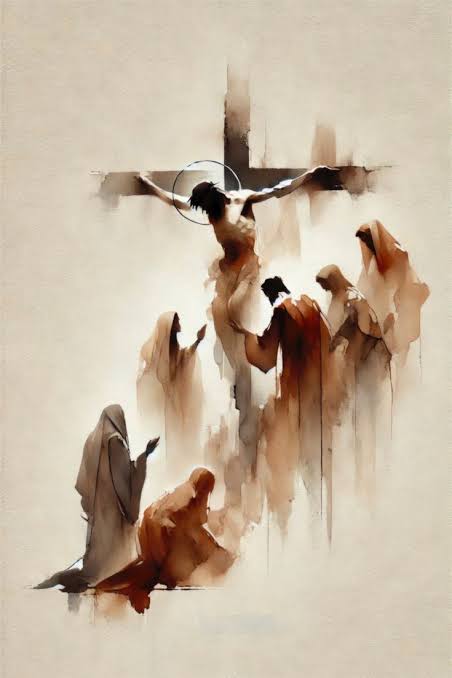
But am I missing the point? Shouldn’t a truly Christian Christology be focussed on the crucifixion and resurrection of Christ? Well it’s my belief that Christ was and is a person: fully alive, fully human. He lived and breathed and struggled and celebrated like us all. If Christ is truly the core of Christianity, then it follows that Christianity cannot be reduced to an abstract principle or proposition or eightfold path without loosing something essential. The life story of Jesus reached its climax in his crucifixion and subsequent resurrection; however any climax implies a broader narrative. His life in Galilee was not incidental to his Passover execution in Jerusalem. The sacrificial death of Jesus needs to be viewed in the wider context of his sacrificial way of life. It was the climax to a full life, not a trans-historical event. So a holistic Christology, by implication, must be grounded in Christ’s whole life. And that includes his working life.
So what is the message of the resurrection from such a perspective? It’s this: the resurrection of Jesus relativises everything, even work. The ultimate threats of temporal powers – of layoffs and homelessness, of imprisonment or even execution – have been shown to be empty. The promises of temporal powers – of wealth and status and power – have been shown up as ephemeral, as ways of selling ourselves short. And if the resurrection puts everything, including our work, into a new perspective, then we are called to work in light of this perspective.





 Curious Christian
Leave a reply to Dana Ames Cancel reply