Since I have such a huge icon collection on this blog I suppose some of you may occasionally wonder about about my own thoughts on the subject, if I have a theology of icons, how I would critique them, etc?
Then again, maybe you don’t. But in any case, after recently responding to an enquirer here I though I may as well make my thoughts a little more public. Here’s how I responded:
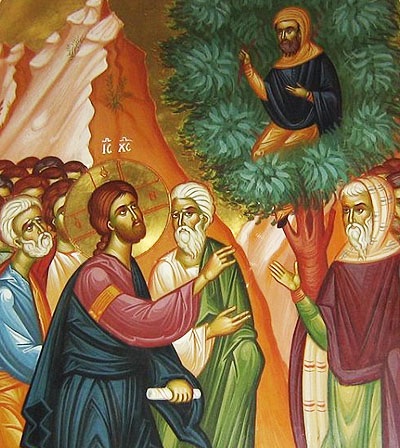
For what its worth, IMHO the iconic scenes I’ve gathered are of more value than the iconic portraits when it comes to incarnating the word.
Why? Well the scenes always bring you back to the stories. Irrespective of how culturally idiosyncratic the figures in the scenes are depicted, you can always say ‘Ahh! This one, despite its alien appearance, is actually telling us the surprising story of the woman at the well,” and do so without being an expert.

The portraits, on the other hand, can very easily degenerate into exercises of artists recreating God in their own image. This is most clearly evident with my collection of esoteric icons. Some artists have taken classic depictions of Jesus and romantically imported all sorts of Gnostic, Pagan and New Age concepts into them. What did Jesus and Mary and the Apostles really look like? Well, we don’t know. So facial features alone don’t make them authentically Christian! Not by themselves anyway. What is more important than the facial features is the subtle symbology – the colours, the hand gestures, etc, which express the understandings of the artists – and when you change those symbolic cues to express non-Christian concepts, well what you’re looking at is no longer a Christian icon even if it superficially looks like a familiar Jesus image.
In this respect my favourite artist in the collection is He Qi. His icons are a riot of colourful scenes. They always deeply reflect his culture, lending them an exotic appeal to cosmopolitan westerners like me, yet always draw me unmistakably back to the essential stories of the faith. And for those astute enough to pick up on it, there is Christian symbology woven through them which further serves the stories. This embodiment of the evangelion is what makes an icon actually incarnational.





 Curious Christian
Leave a reply to Matt Stone Cancel reply