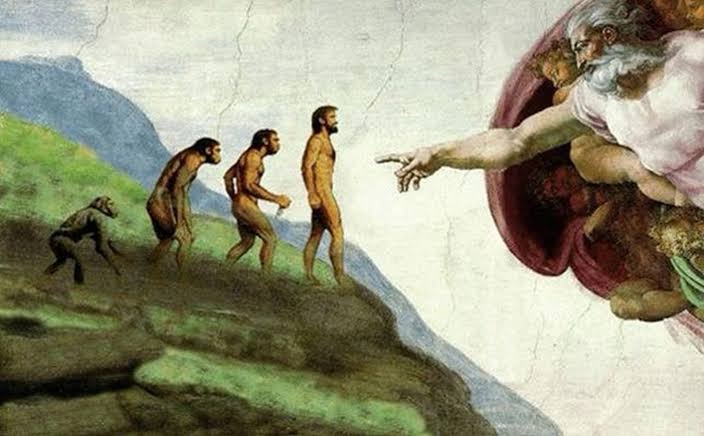
Is atheism demanded by evolutionary theory? While some biologists like Richard Dawkins seem to think so, others like Stephen J Gould aren’t so sure.
“The suggestion that the Darwinian theory of evolution is necessarily atheistic goes way beyond the competency of the natural sciences and strays into territory where the scientific method cannot be applied. If applied, it is misapplied.”
In his book, “The Twilight of Atheism: The Rise and Fall of Disbelief in the Modern World”, former atheist Alister McGrath suggests that Dawkins has shifted from popularizer to propagandist and presents some very interesting evidence “which blatantly contradicts both those who insist that the sciences inevitably lead to atheism and those who insist that they throw people into the arms of God.”
“The two major surveys of the religious beliefs of scientists, carried out at the beginning and end of the twentieth century, bear witness to a highly significant trend. One of the most widely held beliefs within atheist circles has been that as the beliefs and practices of the ‘scientific’ worldview became increasingly accepted within Western culture the number of practicing scientists with any form of religious beliefs would dwindle to the point of insignificance. A survey of the religious views of scientists, undertaken in 1916, showed that about 40 percent of scientists had some form of personal religious belief. At the time, this was regarded as shocking, even scandalous. The survey was repeated in 1996, and showed no significant reduction in the proportion of scientists holding such beliefs, seriously challenging the popular notion of the relentless erosion of religious faith within the profession. The survey cut the ground from under those who argued that the natural sciences are necessarily atheistic. Of those questioned, 40 percent had active religious beliefs, 40 percent had none (and thus can be legitimately regarded as atheist), and 20 percent were agnostic.”
“The stereotype of the necessarily atheist scientist lingers on in Western culture at the dawn of the third millennium. It has its uses, and continues to surface in the rehashed myths of the intellectual superiority of atheism over its rivals. The truth, as might be expected, is far more complex and considerably more interesting.”
How do you like your truth?
This post is part of an interfaith synchroblog on “Religion and science”.
Here are links to other synchronised blog posts on this general topic:
- Liz Dyer (Christian) of Grace Rules on Dreaming Quantum Dreams
- K.W. Leslie (Christian/Pentecostal/Assemblies of God) of The Evening of Kent on How I taught science instead of “Christian” science.
- Matt Stone (evangelical Christian) of Glocal Christianity on Is Evolution Atheistic?
- Fr Ted (Orthodox Christian) of Fr Ted’s blog on Post-modernism: A Challenge to Science?
- Steve Hayes (Orthodox Christian) of Notes from underground on Reality isn’t what it used to be
- Jarred Harris (Pagan/Vanic Witch) of The Musings of a Confused Man on Faith, Reason, and Unreason








 Curious Christian
Leave a comment