I have mentioned my Anabaptist influences on a number of occasions but now realise, having been asked to explain what the Anabaptist tradition is by one of you, that I really haven’t explained what that means much before now, that I have presumed too much.
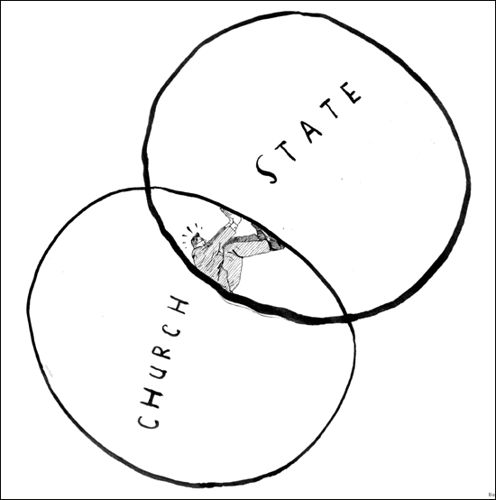
In summary then, the Anabaptist movement of the sixteenth century was the radical wing of the Protestant Reformation. Going much further in their protest than the Lutherans and Calvinists, the Anabaptists rejected the Christendom alliance of church and state outright, affirming voluntary baptism and pacifist commitment as outworkings of that.
When I embraced the way of Jesus in my mid twenties I quickly gravitated towards this tradition, and one book in particular had a major impact on me. That book was The Politics of Jesus by Mennonite theologian John H Yoder. Prior to reading Yoder I struggled to reconcile the Father of the New Testament with YHWH of the Old Testament. I was very Gnostic in some ways. In particular, I struggled intensely with the book of Joshua, with the wars of God. Yoder opened up the Old Testament for me, allowing me to see it in a new way, allowing me to see the wars in a new way. In the process I also came to understand the political implications of the crucifixion and resurrection of Jesus, and indeed, his call to the crucified life.
This goes some way towards explaining why I shifted from the Sydney Anglicans towards the Sydney Baptists within a few years of becoming a Christian. The Sydney Anglicans, well the hierarchy at least, are deeply Calvinist. And though Australia has no state religion, it is difficult to get past the fact that within Anglicanism the British monarch is styled the Defender of the Faith. I sought a church that was much less tied to the state.
Now I realise at this point that a few words should be said about how the Mennonites and Baptists relate to the Anabaptist movement. Basically, Mennonites stand alongside the Amish and Hutterites as institutional descendants of the Anabaptist movement. The Baptists, Brethren and some streams of the Emerging Church are more in the way of spiritual descendants. Though these traditions are very different in many ways, what they share is this rejection of the Christendom alliance of church and state as a corrupting influence. Of course there has been drift over time but in recent times some have called Anabaptist influenced Christians like myself neoAnabaptists. I gather what is being implied is that we are related to the older movement similar to how Charismatics are related to Pentecostals. I can live with that.
So, as the missional movement searches for ways of being Christian beyond Christendom, I say learn from those who’ve trod that road ahead of you, learn from their mistakes and from their wisdom.
Now, in the process of writing this I came across a summary of the Politics of Jesus, called the Politics of Jesus Simplified. Still pretty complex if you ask me but it does give you a bit of a window into the book.






 Curious Christian
Leave a reply to Matt Stone Cancel reply