Curious Christian

Reflections on culture, nature, and spirituality from a Christian perspective

This week there has, unsurprisingly, been a lot of talk in Australia about whom Christians should vote for.

Some have suggested Christians should vote socialist, given the commitment of Jesus to the poor. Others have suggested Christians should vote Tony Abbott, given Julia Gillard’s atheism. Others have suggested Christian Democrats given their explicit stance against eco-feminist Greens.

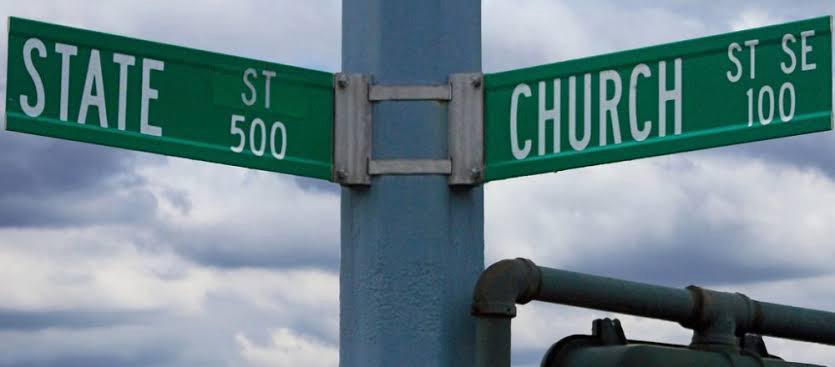
So, where do I stand? Well, I won’t say which way I’m voting (for in truth I haven’t 100% decided yet) but I will say a few words about the separation of church and party.

Separation of church and party? What do I mean by that? Simply this, as I see it Christendom has gone through three phases in the centuries since Constantine.

1/ In the first phase we had imperialistic Christianity, where church was confused with empire.

2/ In the second phase we had nationalistic Christianity, where church was confused with state.

3/ In the third phase, now, we have partisan Christianity, where church is confused with party.

I have to reject all three. In the same way that my Baptists commitments lead me to insist on separation of church and state, I am similarly led to insist on separation of church and party. No party, left or right, should command my unquestioning allegiance. No party, left or right, should be exempt from scrutiny. And it’s precisely because of my Christ-first loyalties.

6 responses to “The separation of church and party”

  1. Brian Pember Avatar

    Good post Matt. Both wise and timely.

    Like

  2. Arthurandtamie.wordpress.com Avatar

    Hear, hear. This election strikes me as extremely important — not so much in terms of politics, but in prompting Australian Christians to be more awake to the mission and responsibilities of the church!
    I’ve just finished up blogging about stuff like a Christian Greens vote and the ACL policy survey.
    Arthur

    Like

  3. emily Avatar
    emily

    Could you define your terms? What exactly is the difference between “nation” and “empire”?

    Like

  4. Matt Stone Avatar

    Answers.com defines an “empire” as “a political unit having an extensive territory or comprising a number of territories or nations and ruled by a single supreme authority.”
    Specifically I am thinking of (1) the Holy Roman Empire and (2) the religio-political arrangement we call Christendom, which existed under the Pope before the reformation.

    Like

  5. Jarred Avatar

    Personally, I think the three are quite interrelated anyway. To be honest, history suggests that nationalism more often than not leads to imperialism (see: 1940’s Germany and 21st century United States). And bipartisanship (at least here) tends to quickly couch itself in terms of nationalism.

    Like

  6. Kalessin Avatar
    Kalessin

    Why not define the levels as:
    1) Theocracy: church and government of nation/empire are tightly intertwined. We inherited this from the Roman Empire, e.g. when within 150 years we went from Christians being criticised by Porphyry for refusing to serve in the army, to Christianity being a prerequisite for military service. We had all the raw materials for secularity, but no-one had ever joined the dots at that point in time. And the Empire was in no state to experiment. 😛
    2) National/Imperial churches. After the Reformation both Catholic and Reformed theology put church and government in separate boxes in a kind of division of powers, though only the Lutherans might have agreed with that anachronistic phrase. Then as global consciousness and the demands of industrializatiojn arrived, the national governments all pursued Imperial ambitions, with the Vatican sometimes arbitrating between the Catholic nations.
    3) Partisan churches. After disestablishment got underway (internally or externally driven) mainly from 1760-1900, the tendency was for churches to pursue their social agendas against each other by democratic means. Initially this was largely progressive, advocating social reforms (esp. slavery, penitentiaries, poverty), though that is largely forgotten now. I think in the U.S. the statistic is that what we now call conservative Christians voted Democrat before the 1960s and Republican afterward. (Not sure where I’m remembering that from however…)
    4) Is there a next, ostensibly correct development?

    Like

Leave a reply to Brian Pember Cancel reply