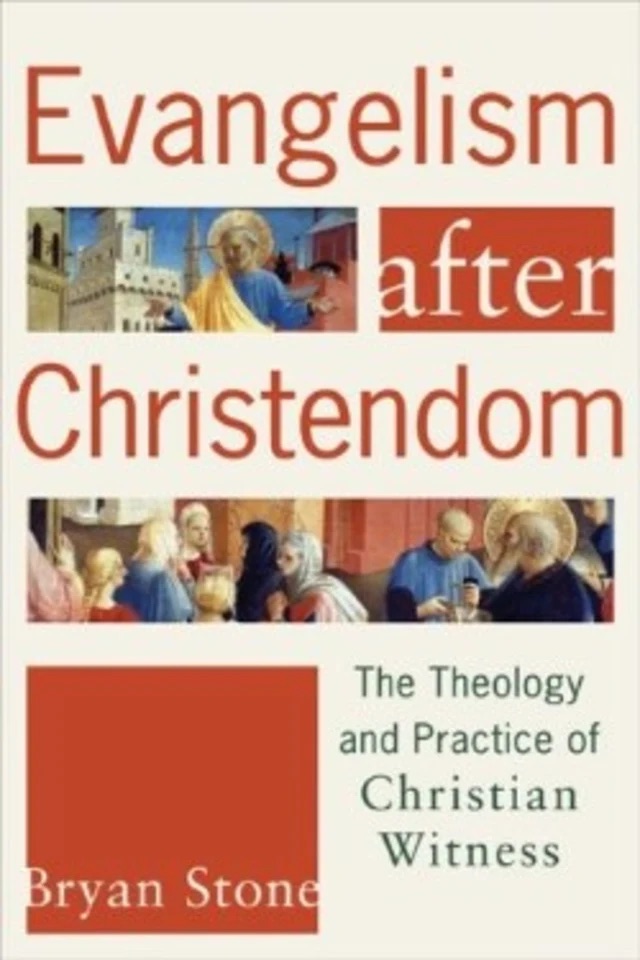
In the wake of the Christocentric universalism controversy sparked off by Rob Bell, I am reminded of these comments from Bryan Stone in his book, Evangelism after Christendom:
“One of the persistent features of Constantinianism … is that, by diminishing the distinction between church and world, the church refuses to allow the world to disbelieve. One way of accomplishing this refusal, of course, is the crusade, the conquest, or the imperial edict. A second way is the perpetuation of a cultural Christianity into which one is born, baptised, and thereby a member for life. In neither case is it necessary to evangelise – or rather; evangelism is reduced to whatever mechanism will effectively transfer persons into the ‘in-group.’ In all its forms, Constantinianism refuses to allow that there could be any genuine obstacle to belief; and again, what is lost thereby is the possibility of witness.”
“But rejection can never be construed as failure on the part of Christian evangelism in a post-Christendom context. In our world and given our times, it may be considered a success. In fact, with adequate clarification, one could well define evangelism in a post-Constantinian context as the practice of offering the gospel in such a way that it can be rejected responsibly.”
I am reminded of these comments because I have a number of Pagan friends who, as far as I can ascertain, do understand the good news, understand it better than some Christians in fact, yet reject it nevertheless. What what would Rob Bell say to them? Would he grant them true freedom of religion? Or is his Christocentric universalism just the second Constaintinian way dressed up in postmodern garb?







 Curious Christian
Leave a comment