In talking about churches commissioning people into every sphere of life — business, education, government, the arts — it’s important to clarify what kind of sending I mean. Not every theology of influence is the same.
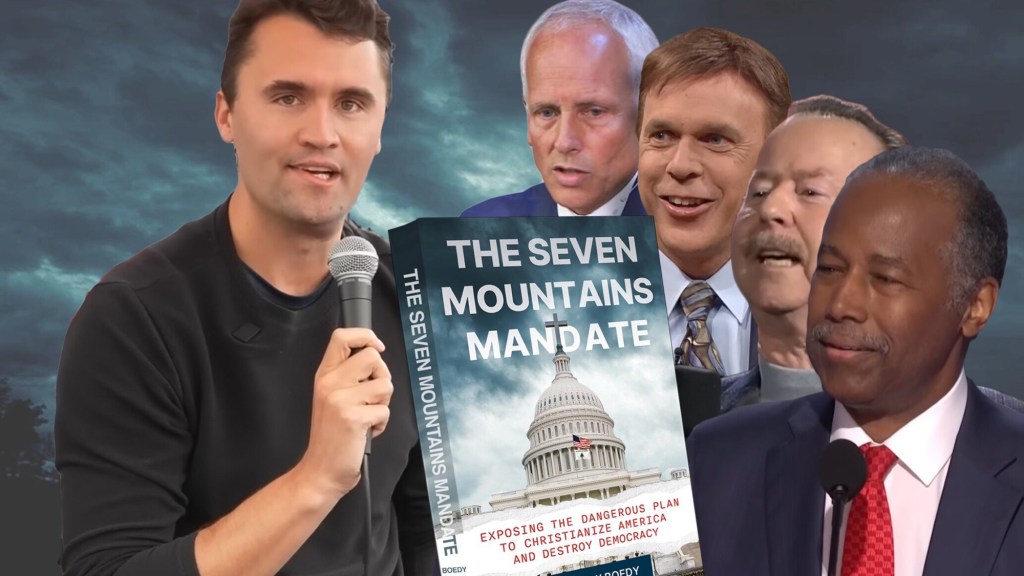
There’s a big difference between a missional approach and the dominionist agenda promoted by movements like the Seven Mountains Mandate.
Neighbour-loving churches send people out not to seize control, but to bear faithful witness — to live like Jesus wherever they are, even if it costs them. It’s about presence, not power. Service, not supremacy. Salt and light, not empire.
The Seven Mountains Mandate, by contrast, is built on a belief that Christians are meant to take over these seven “mountains” of culture — to gain influence in media, business, government, and more, so that society can be shaped according to Christian values from the top down. It sounds bold and strategic. But beneath the surface, it often reflects anxiety about cultural loss and a desire to regain control, not a humble posture of Christlike mission.
That’s not what Jesus taught.
Jesus didn’t tell his followers to storm the palace. He formed them in hidden places, withdrew with them, walked with them among the poor, and then sent them out as sheep among wolves — vulnerable, non-coercive, radically dependent on God. He refused the devil’s offer of “all the kingdoms of the world” and called his followers to take up a cross, not a throne.
So yes, let’s send people into the world. Into politics, art, economics, technology, and more. But not to dominate those spaces. Not to baptize nationalism or idolize influence.
Let’s send them to serve, to speak truth with love, to pursue justice and mercy, and to live the gospel in ways that are both contextual and cruciform.
The difference is subtle, but essential:
Mission-minded Christians asks, “How can I be faithful here?”
Culture-war Dominionists ask, “How can we be in charge here?”
One is shaped by the towel and basin. The other by the sword and the scepter.
Let’s be clear about the difference.




 Curious Christian
Leave a comment