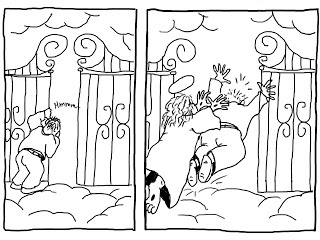
Both Calvinism and Universalism share a similar weakness: they minimise human freedom. In each, salvation risks being reduced to an inevitable fate rather than a gift freely received through faith. Calvinism tends to frame this fate in terms of an elect few chosen from the beginning, while Universalism extends it to all without distinction. But in both cases, the drama of human response is diminished. The scriptures, however, consistently portray salvation as a living relationship with God—one that calls for trust, repentance, and obedience. Grace is indeed God’s initiative, but it is meant to be received in faith, not imposed as inevitability. To minimise this is to risk hollowing out the very heart of discipleship, where love must be freely received and freely returned.




 Curious Christian
Leave a comment