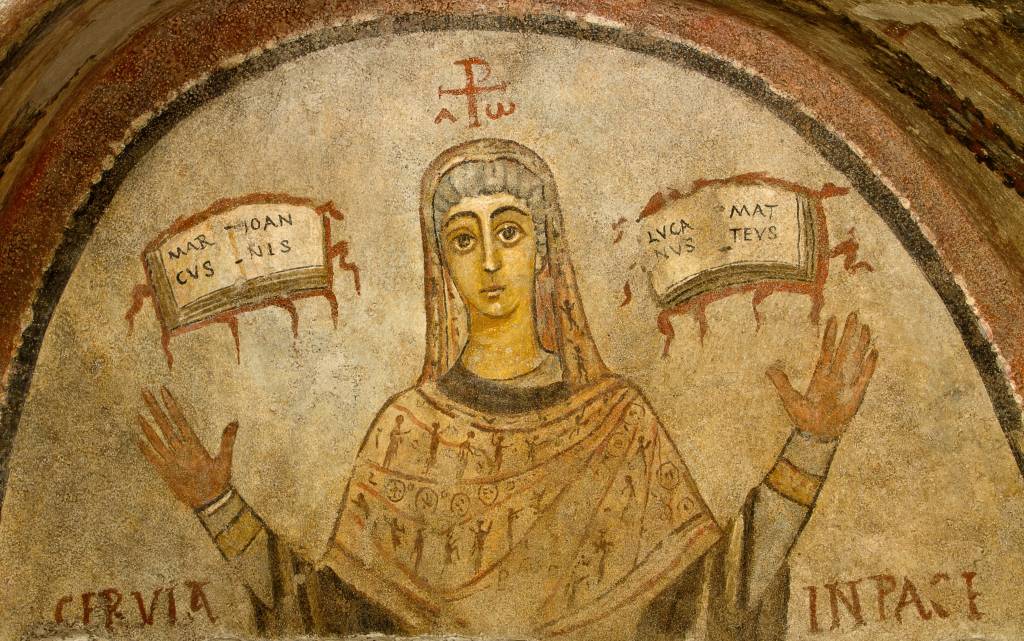
The story of women in ministry is far older, richer, and more intricate than the modern debates often allow. We tend to imagine a direct line from the New Testament to the present, with long stretches of silence between. But the real history looks more like a tide—ebbing and flowing across centuries—shaped by mission, culture, politics, and the Spirit’s surprising work.
From the start, Scripture offers a pattern that keeps resurfacing. Paul commends Phoebe as a deacon and patron (Romans 16:1–2). He names Junia among the apostles (Romans 16:7). He speaks of Priscilla teaching alongside her husband, shaping leaders like Apollos (Acts 18:26). Jesus Himself welcomed women into the travelling ministry team, those who “provided for them out of their own resources” (Luke 8:1–3), a description of practical leadership as much as generosity. The early church remembered women as prophets, teachers, deacons, and patrons. This wasn’t an anomaly. It was part of the fabric of a missionary movement where the Spirit distributed gifts “as he wills” (1 Corinthians 12:11) and not as society expected. And all of this resonates with the ancient promise God made through Joel, that the Spirit would be poured out on “sons and daughters” alike, empowering them to speak and lead (Joel 2:28; Acts 2:17–18).
What followed was not silence but a long, complicated conversation. As Christianity spread across the Roman world, communities tried to stabilise their leadership structures. Clerical offices became more formal. And as often happens, centralisation narrowed what had once been fluid. Yet even here, the story resists simplification. The fourth and fifth centuries saw not the disappearance of women’s ministry but its redirection. Deaconesses in Syria, Asia Minor, and Greece continued baptizing, catechizing, and visiting the sick. Female monasticism flourished. Abbesses sometimes exercised authority even over local clergy. Holiness, wisdom, and spiritual maturity opened doors.
The medieval centuries, far from being barren, produced remarkable women whose ministries shaped the church. The Celtic and Anglo-Saxon worlds embraced leaders like Hilda of Whitby, who formed bishops and guided councils. Brigid of Kildare’s memory blended pastoral leadership with sacramental imagery so strong that later writers described her with language reminiscent of a bishop. Missionary women travelled across Europe carrying the gospel into Germanic and Nordic lands, because frontier spaces always value giftedness over convention. Whenever the church turned outward into mission, gifts mattered more than gender.
Even in times of institutional tightening, the Spirit refused to be contained. Medieval mystics like Hildegard of Bingen, Catherine of Siena, Bridget of Sweden, Julian of Norwich ministered through visions, letters, counsel, and song. They spoke to popes and princes because their authority came not from canon law but from spiritual credibility. When the hierarchy closed pulpits, the Spirit opened other doors. It is the same dynamic Peter saw at Pentecost when he recognised the fulfilment of Joel’s prophecy: God empowering voices that would otherwise be sidelined.
The Reformation only deepened the complexity. The magisterial reformers mostly limited preaching to men, yet the radical movements—Anabaptists, early Baptists, Quakers—reopened space for women to preach, evangelise, and shepherd. Persecution often produced a kind of spiritual equality. In house churches, prisons, and secret gatherings, whoever had faith and courage stepped forward. It is striking how much this echoes the ministry of the early Christian women who hosted and led house churches in the first century.
Then came Pietism, Puritanism, and the evangelical awakenings. In small groups, prayer bands, and missionary societies, women led naturally because these forms of church life depended on gifts rather than hierarchy. The Methodist movement produced female preachers; the Holiness movement nurtured evangelists and church planters; global missions depended so heavily on women that whole regions of Christian expansion would simply not exist without them. All of this long before the cultural revolutions of the 20th century.
Looking across these centuries, a pattern emerges. Women’s ministries rise where the church lives on the margins — in mission, revival, monasticism, house churches, and renewal movements. They are restricted when the church aligns with empire, bureaucracy, or the need to control. It is the very dynamic Paul warns against when he insists that the body of Christ cannot say to any member, “I have no need of you” (1 Corinthians 12:21). And it stands in tension with the prophetic vision that God’s Spirit is poured out on daughters as much as sons, calling and empowering them to speak God’s word (Acts 2:17–18).
When you see the whole arc, the gaps vanish. The church’s history is not an unbroken rule of exclusion, nor a steady march toward inclusion, but a recurring cycle: charismatic emergence, institutional tightening, renewal, tightening again, then renewal again. Women have ministered whenever the church has been closest to its missional, Spirit-dependent roots, and their ministries have been curtailed when the church has mirrored the power structures around it.
This makes the present moment less an innovation and more a return. A return to the ministry of Phoebe and Junia. A return to the leadership of Hilda, Brigid, the medieval mystics, the Anabaptist leaders, the Methodist preachers, and the missionary pioneers. A return to a church shaped by the Spirit rather than by scarcity, fear, or convention.
The question, then, is not whether women can minister. History shows they always have. The question is whether we will trust the God who keeps fulfilling the ancient promise to pour out the Spirit on all flesh, and whether we will make room for the daughters who are still prophesying.


 Curious Christian
Leave a comment