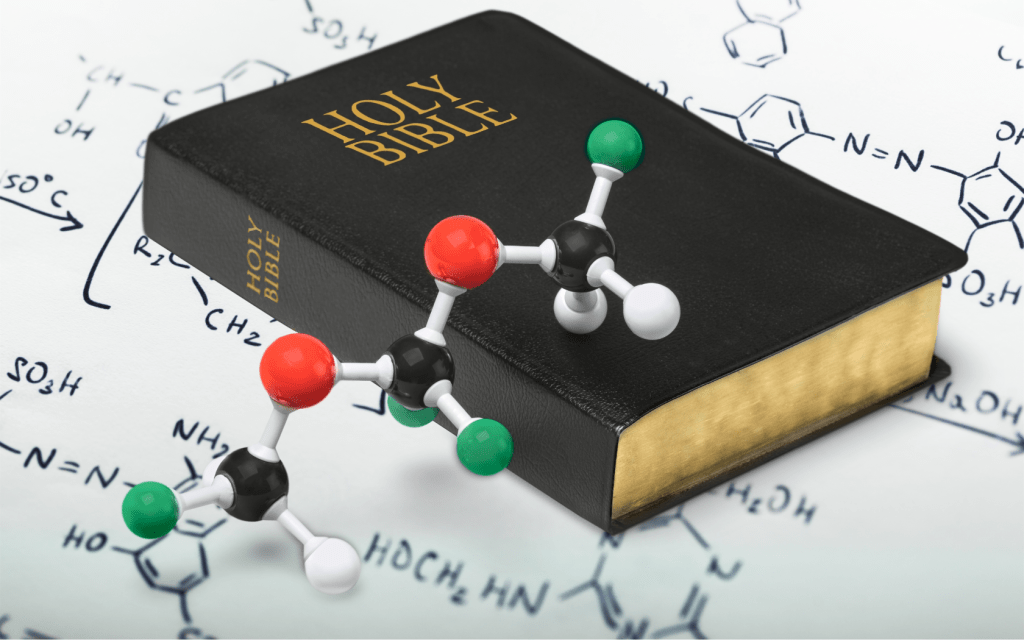
The idea that science simply overrides the Bible wherever they appear to conflict often rests on a misclassification of what the Bible is actually doing. Many supposed conflicts are not discoveries of error, but results of reading ancient texts as though they were attempting to answer modern scientific questions in modern categories.
For example, when Genesis describes creation, it is not obviously functioning as a scientific account of cosmological mechanism. It is making a theological claim about dependence, order, and meaning in reality. In the same way, when the Psalms speak of the “sun rising” or the “foundations of the earth,” this is ordinary phenomenological and poetic language, not an attempt at physics. We still speak this way today without implying a scientific theory.
If those genre differences are ignored, “conflict” is often created where none was intended. The issue is not that one side defeats the other, but that they are answering different kinds of questions.
There is also a symmetry worth noticing. Science can itself be misread when it is stretched beyond its proper method. For example, when psychological explanations reduce love or moral responsibility purely to neurochemistry, or when evolutionary accounts are used as if they alone determine what human meaning or purpose is, science is no longer just describing mechanisms—it is being turned into a total explanation of reality. At that point, it begins to carry philosophical weight it cannot justify from within its own method.
A similar attentiveness to limits is needed in both directions: science is powerful in explaining mechanisms, but it does not, on its own, determine meaning, value, or ultimate reality. Scripture, meanwhile, communicates truth through a range of genres—historical narrative, poetry, prophecy, wisdom, and theological reflection—each requiring faithful interpretation on its own terms.
This is why reading the Bible carefully in context often unsettles both liberal and conservative assumptions. The Old Testament’s sustained critique of power and empire, for example, does not fit neatly into modern political categories. Likewise, the Gospels’ portrayal of kingship through suffering and self-giving love resists both political triumphalism and purely private spirituality. Even texts assumed to be “primitive” or straightforward often carry a sharper ethical and theological edge than either side initially recognises.
So the real issue is not whether the Bible loses to science in principle, but whether we are reading both Scripture and science well enough to avoid category errors—so that genuine conflicts, where they truly exist, can be seen clearly, and false conflicts are not created by forcing either into the wrong kind of question.





 Curious Christian
Leave a comment