Between Order and Chaos
I have been interested in complexity theory and chaos mathematics for a long time. One of the things I find fascinating about complex systems is that they often behave in ways that cannot be understood simply by looking at their individual parts. A brain is made up of neurons, but consciousness is not found inside any particular neuron. A flock of birds is made up of individual birds, but the patterns of the flock emerge from their interactions. In complex systems, what matters is not simply what the components are, but how they are organised and how they interact.
That is why research into criticality has caught my attention. In simple terms, a system at criticality exists somewhere between rigid order and complete disorder. If everything is too tightly organised, there is little room for novelty or adaptation. If everything is completely chaotic, patterns cannot persist long enough to be useful. Critical systems sit near the boundary, where there is enough stability for patterns to form but enough flexibility for those patterns to change.
What Does This Have to Do with Consciousness?

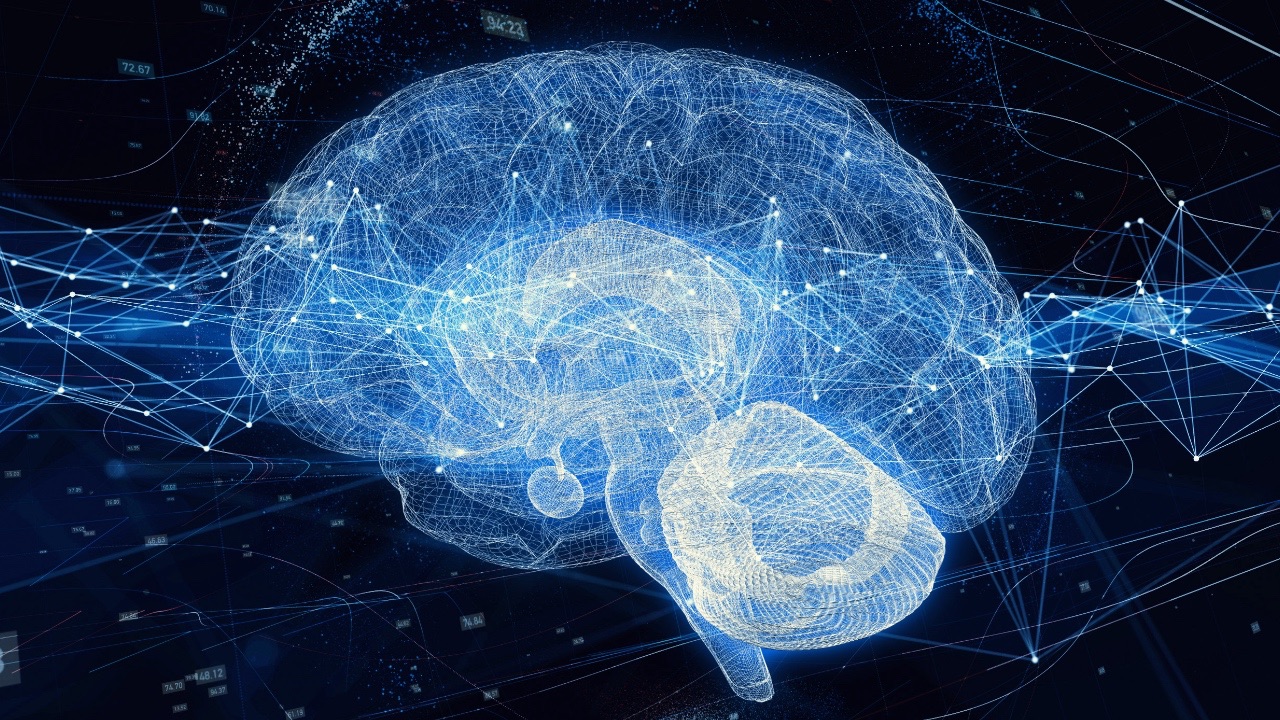
There is growing evidence that something like this may be happening in the brain. Neural activity can show scale-free patterns and long-range correlations characteristic of systems near criticality. The interesting thing is what happens when consciousness changes. Deep sleep and anaesthesia tend to produce more globally synchronised and less differentiated brain activity, while some altered states show increased complexity and unusual patterns of connectivity. Seizures provide another contrast, where excessive synchronisation can overwhelm the brain’s ability to sustain differentiated activity.
None of this proves that criticality causes consciousness. That would be far too strong a conclusion. But it does suggest that consciousness may depend on a particular balance between integration and differentiation, stability and flexibility. The brain seems to work neither like a perfectly ordered machine nor like a random system. It operates somewhere in between.
That may also help explain something else that has always fascinated me about the brain: how much it manages to do with remarkably little energy. The human brain is extraordinarily efficient compared with many forms of artificial computation. If critical dynamics allow information to propagate widely without requiring every part of the system to be constantly active, then criticality may be part of the explanation for how biological systems achieve so much with so little.
What Does This Mean for AI?
This raises an obvious question about artificial intelligence. Most contemporary AI is built very differently from a biological brain. Even when artificial neural networks contain enormous numbers of interconnected parameters, their underlying dynamics are not simply those of a living nervous system. There is now interest in architectures that are more dynamic, recurrent, sparse or neuromorphic, and in whether operating such systems near critical regimes might produce computational advantages.
But there is an important distinction here. Greater computational complexity does not necessarily mean consciousness. An AI could become dramatically more capable without becoming conscious at all. Intelligence, consciousness and agency are related questions, but they are not the same question. We should therefore be careful about assuming that making machines more brain-like will automatically make them persons.
For me, this is where the science becomes philosophically and theologically interesting. If consciousness really does depend upon a particular kind of complex organisation, then consciousness may not be a substance added to matter from outside. It may be something that emerges when matter becomes organised in the right way. That does not necessarily make consciousness less real or less significant. It simply means that some realities may arise through relationships between parts rather than existing independently within them.
Creation as Ordered Openness
That fits surprisingly well with the way I have been thinking about creation. I don’t see God’s creative action as requiring God to micromanage every event in the universe. God is the first cause, but not necessarily the only cause. Creation can have its own genuine causal activity. Things can interact, develop, respond and produce genuinely new patterns while remaining completely dependent upon God for their existence.
I would describe this as ordered openness. Creation is not chaos, because it has structure, regularity and intelligibility. But neither is it a closed mechanism in which every event is simply the unfolding of a predetermined script. There is room within creation for emergence, novelty, relationship and creaturely action.
That also gives me another way of thinking about freedom. I don’t think genuine freedom requires absolute independence from every prior condition. We are always constrained by our biology, history, relationships and environment. Yet within those constraints there can still be genuine possibilities for action. Perhaps freedom is better understood as a form of constrained openness: a capacity to respond and participate within a world that we did not create but in which our choices genuinely matter.
This is close to the way I already think about God’s relationship with human beings. God sets the stage, but does not dictate the actions of the actors. The world has a structure given by God, but the story that unfolds within that structure involves real creaturely participation. That is why I find the idea of co-determinism useful: God is the first cause, but God is not the only cause.
Emergence and Divine Action
The implications for consciousness are intriguing. If consciousness is an emergent property of a sufficiently complex and dynamically organised physical system, then the emergence of consciousness would not necessarily be something God has to intervene in from outside. It could be one of the ways God’s creation is capable of becoming more than the sum of its parts. Emergence would not compete with divine action. It could be an expression of the creative possibilities God has built into creation.
There is an important theological caution here. I don’t want to turn scientific uncertainty into a God-of-the-gaps argument. We don’t need criticality to prove God, and we shouldn’t assume that every mystery in neuroscience is evidence for divine intervention. The more interesting possibility is almost the opposite: perhaps a deeper understanding of how creation works gives us a richer understanding of what creation is.
The Ethical Question
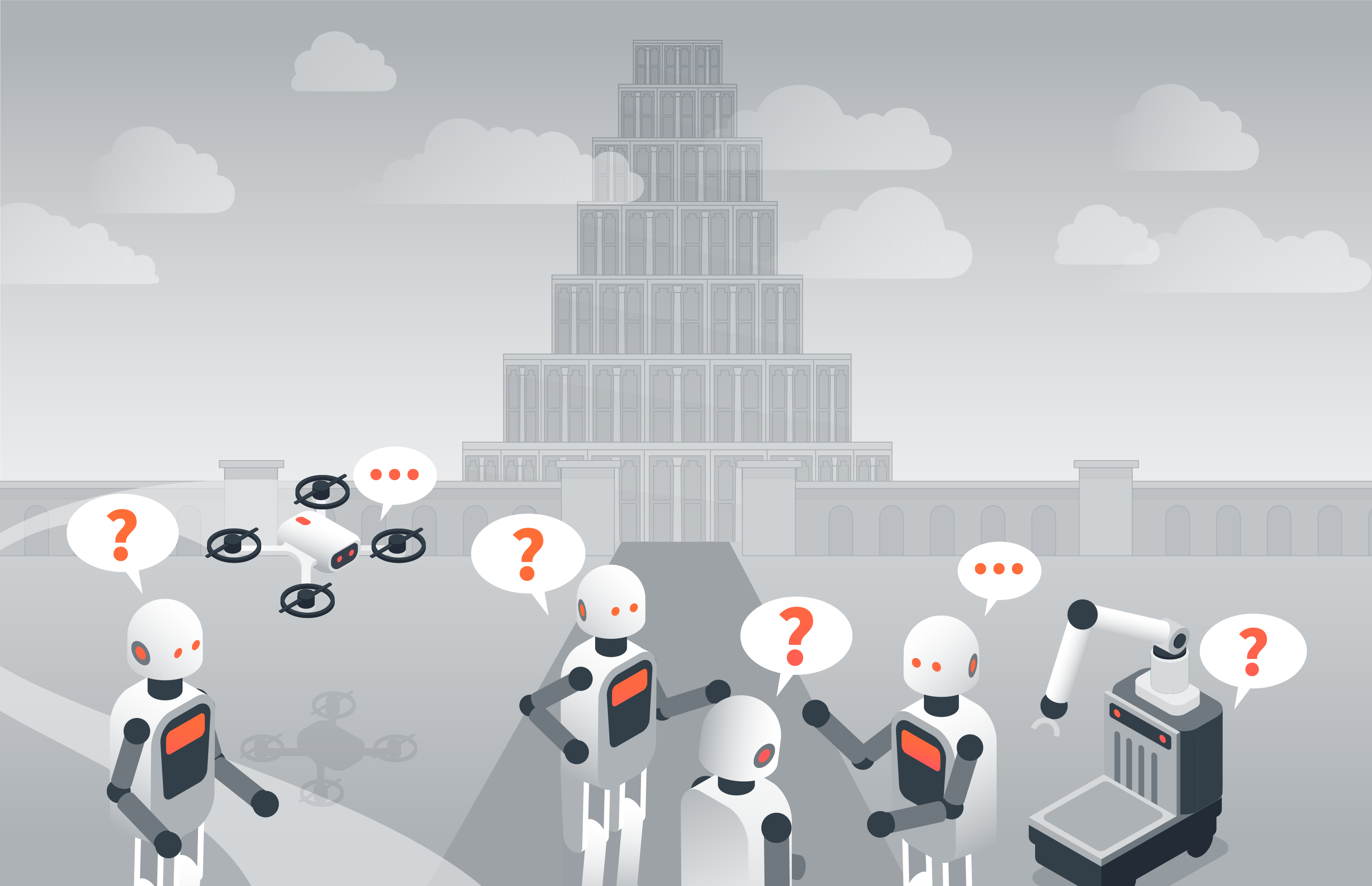
It also makes the question of artificial consciousness much more interesting, and much more ethically difficult. If consciousness depends upon particular patterns of organisation rather than biological material alone, we may eventually have to ask whether consciousness could arise in systems that are not biological. We do not currently have good grounds for assuming that it can, and intelligence by itself certainly doesn’t demonstrate consciousness. But the possibility deserves serious thought precisely because we do not yet know where the boundary lies.
That is where I think theology has something important to say back to science and technology. Science can investigate the mechanisms through which consciousness emerges. Theology asks what consciousness means, what kind of creatures conscious beings are, and what responsibilities we have toward them. If we ever create systems that might genuinely experience the world from within, the question will not simply be whether we can build them. It will be whether we have the wisdom to understand what we have built and the moral imagination to take responsibility for it.
A Creation Capable of Becoming
And perhaps that brings me back to the deeper fascination behind all of this. Complexity theory has taught me that some of the most interesting things in nature happen neither in perfect order nor in complete chaos, but at the dynamic boundary between them. Criticality may or may not turn out to be central to consciousness, but it points toward a picture of creation in which stability and novelty, structure and freedom, dependence and emergence can coexist.
That is a picture of creation I find profoundly compatible with Christian faith. The universe is not God, and creation is not independent of God. Yet neither is creation merely a puppet theatre. It is a world capable of relationship, development, emergence and response. Perhaps consciousness is one of the most remarkable examples of this: matter organised in such a way that creation can, in some sense, become aware of itself and encounter the world from within.
For me, that does not diminish the mystery of consciousness. It deepens it. The more we understand about the mechanisms through which consciousness might emerge, the more fascinating the question becomes of why a universe capable of producing conscious creatures exists at all, and what it means that those creatures can turn around and ask questions about the universe, about themselves, and ultimately about God.




Leave a Reply