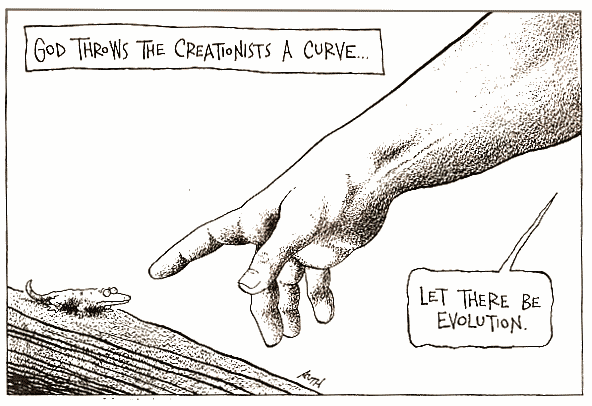
Can a Christian believe in evolution? For many, there seems to be a binary choice between accepting Scripture or accepting evolution, but not both. If Genesis tells us that God created the world in six days, that Adam and Eve were the first humans, and that biological death entered the world through their sin, then evolution must be rejected. For others, the choice is reversed. If evolution tells us that life developed over billions of years, with extinction and biological death long before humans appeared, then Genesis must be laid aside. I think both arguments can begin with the same assumption: that Genesis 1–3 is intended to give us a scientific account of how biological life came to exist. I don’t think it is.

How I read Scripture
I believe Scripture is authoritative, but biblical authority does not mean that every passage has to be read as though it were written to answer modern scientific questions. The Bible uses different literary forms, and understanding Scripture requires us to pay attention to its genre, its historical and cultural context, and what the writer is trying to communicate. I have come to understand Genesis 1–3 as mythopoetic theology. By that I don’t mean that it is simply fictional; I mean that it communicates profound truths through story, imagery, symbolism and literary patterns. The question is not simply whether Genesis is “literal” or “not literal”, but what kind of literature we are reading and what it is actually trying to tell us.
Genesis and creation
Genesis 1 has a carefully constructed pattern. The first three days involve God forming creation, while the following three involve God filling what has been formed. Day and night are filled with the sun and moon; sea and sky are filled with fish and birds; and the fertile land is filled with animals and humans. That structure suggests that the account is doing more than giving us a chronological list of things that appeared. It is presenting creation as something God forms, orders and fills with life.
The ancient context matters too. Genesis belongs to a world in which creation stories were closely connected with gods, kingship, and political power. The Babylonian Enuma Elish is a prominant example. Genesis engages that wider world but tells a very different story. There is one Creator rather than a pantheon of competing gods, the heavenly bodies are created things rather than gods, and all humanity is made in the image of God rather than some king alone bearing that status. I therefore find it helpful to describe Genesis 1 as counter-imperial mythology. It challenges the idea that the world belongs to the gods and their earthly representatives, placing both creation and human authority under the rule of the one Creator. The climax is not imperial conquest but God’s rest.
None of this requires Genesis to function as a modern scientific account of biological origins. Its primary concern is theological: who God is, what creation is, what humanity is for, and how we are to understand our place within God’s creation.
Evolution
This is where I find the distinction between evolution and creation helpful. I accept evolution over vast ages as the best scientific account of the development and diversification of life, including common ancestry, extinction and biological death long before humans appeared. But evolutionary biology describes biological processes. It doesn’t, by itself, tell us why there is something rather than nothing, how human beings should live, or whether life has any real meaning.
So I don’t see evolution as an alternative to creation. I see it as an account of a process through which life in the universe most likely unfolded. Genesis and evolutionary science can therefore be asking different questions without being enemies. Evolution describes a process; Genesis interprets the meaning of life, the universe, and everything.
The choice
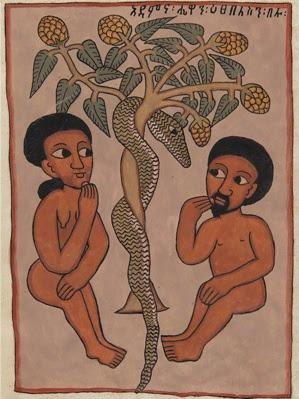
Genesis 2–3 then moves from creation to humanity’s relationship with God. Two trees stand at the centre of the garden: the tree of life and the tree of the knowledge of good and evil. God prohibits Adam and Eve from eating from the latter, but the text never says that they had been eating from the former. In fact, after they eat from the forbidden tree, God prevents them from reaching out and taking from the tree of life and living forever. I therefore see the two trees as presenting two mutually exclusive choices that humanity has not yet made.
The choice is ultimately between trusting God and receiving life and guidance from him, or grasping the right to determine good and evil for ourselves. The temptation is not simply to break a rule; it is to determine good and evil on our own terms rather than trusting God’s wisdom. The movement of the story is from seeing and desiring to taking and eating. Humanity chooses grasping over receiving, autonomy over trust, and the relationship with God is broken.
This also changes how I understand the Fall. Genesis does not say that Adam and Eve were already biologically immortal; it does not say they had already eaten from the tree of life. Instead, after their choice they are barred from it, so that they cannot “live forever”. I therefore don’t think Genesis 3 requires us to believe that biological death began with Adam and Eve. Evolution can include millions of years of life, death and extinction before humans without contradicting the theological claim Genesis is making: that humanity’s rejection of God results in alienation from the source of life.
The deeper question
This is why I think the Bible’s defenders and its critics can sometimes make the same mistake. A Christian may argue that evolution must be false because Genesis teaches that death for all creatures entered the world through Adam, while an atheist may argue that Genesis must be false because evolution shows that biological death existed long before humans. But both arguments assume that Genesis 3 is trying to explain the beginning of biological death. If that isn’t what the text is doing, then neither argument has actually engaged the central claim of Genesis.
That doesn’t prove Genesis true, and it doesn’t prove Christianity true. It simply means that we need to ask a better question: What is Genesis actually trying to tell us? Its concern is with God as Creator, the goodness and ordering of creation, humanity’s vocation and dignity, and the choice between trusting God and grasping autonomy.
And then there is Jesus
As a Christian, I ultimately read Genesis through Jesus. If humanity’s fundamental problem is choosing autonomy from God instead of trust in God, Jesus calls us back to a different way of being human: trusting God, receiving rather than grasping, and following rather than making ourselves our own ultimate authority. The biblical story that begins with humanity losing access to the tree of life eventually returns to the the end of Revelation with access to the tree restored and the fruit of the tree finally received.
For me, then, the story is not primarily creation versus evolution or even science versus Scripture. It is creation, choice, lost opportunities and broken relationships, followed by God’s work of reconciliation and restoration. Evolution can describe something about how life developed within creation. Genesis tells us something about what creation means and what went wrong in our relationship with its Creator.
Perhaps the question isn’t whether we have to choose between Genesis and evolution. Perhaps we first need to let Genesis ask the question it has been asking all along: Will we trust the God who gives life, or will we grasp for the right to determine good and evil on our own terms?





Leave a Reply