-
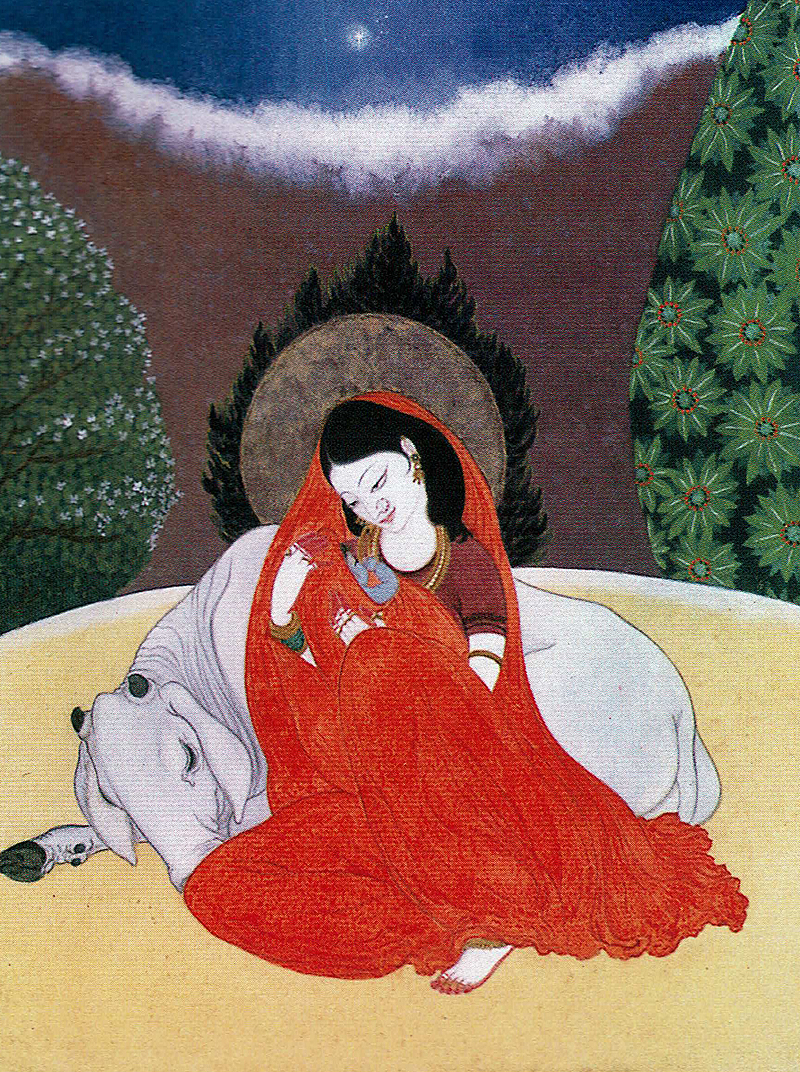 Continue reading →: The Nativity From An Indian Perspective
You’re probably used to nativity scenes where Mary wears blue and sits in a tidy European stable. Frank Wesley doesn’t do that. In his Nativity, Mary is dressed in an Indian red. She sits on the earth, curved around her child in a posture that feels intimate and warm. Behind…
-
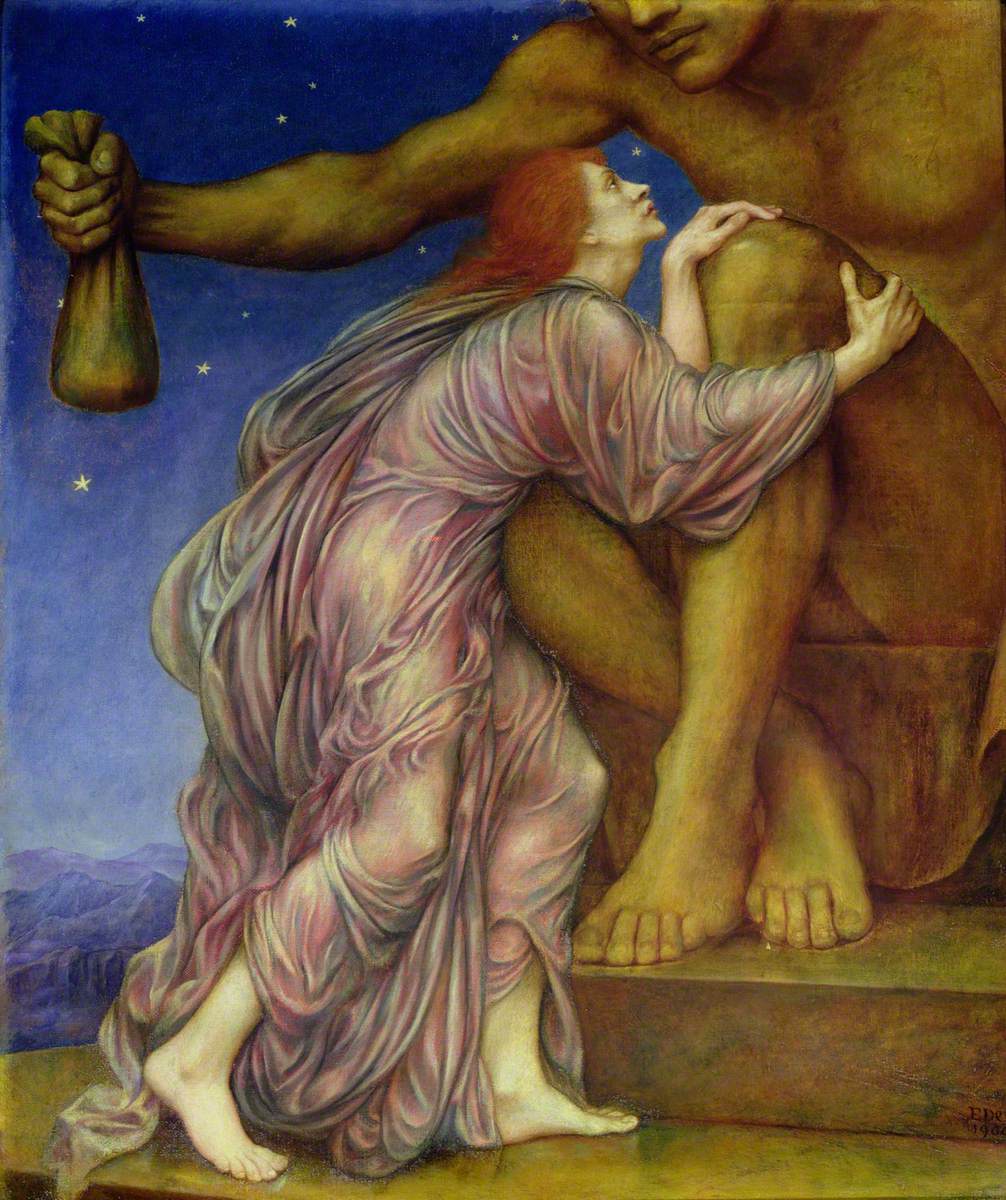 Continue reading →: The Worship of Mammon by Evelyn De Morgan: An Allegory of Wealth and Idolatry
The Worship of Mammon (1909) by Evelyn De Morgan brings me back to the passage from the Gospel of Matthew where Jesus warns: “No one can serve two masters. Either you will hate the one and love the other, or you will be devoted to the one and despise the…
-
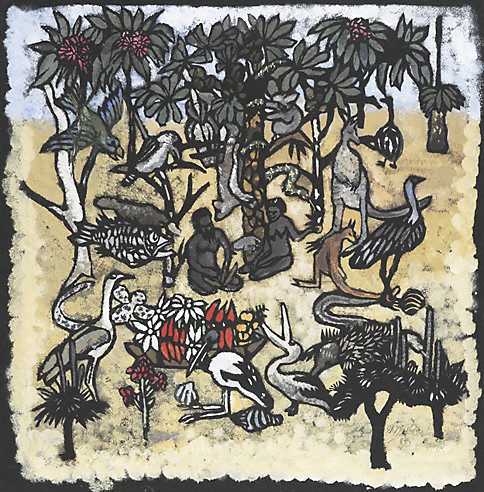 Continue reading →: Adam and Eve Through the Lens of Australia’s First Peoples
The biblical story of Adam and Eve in the Garden of Eden is often imagined through a Middle Eastern len, or filtered through European artistic traditions. But what if we payed more attention to world’s oldest continuous living cultures, those of the Aboriginal and Torres Strait Islander peoples of Australia?…
-
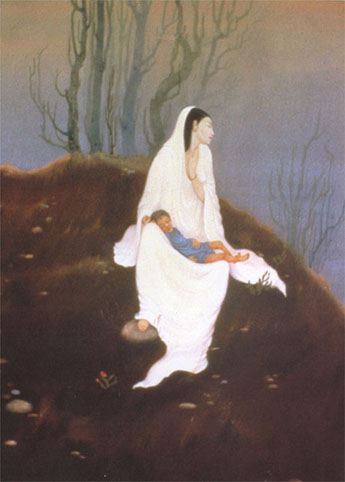 Continue reading →: Hagar and Ishmael Through Indian Eyes
“Son of Hagar” is a painting by Indian-born Christian artist Frank Wesley (1923–2002) depicting the biblical story of Hagar and her son Ishmael in the wilderness. The work illustrates the narrative from Genesis 21, where Hagar and Ishmael are sent away by Abraham and Sarah but comforted by God.
-
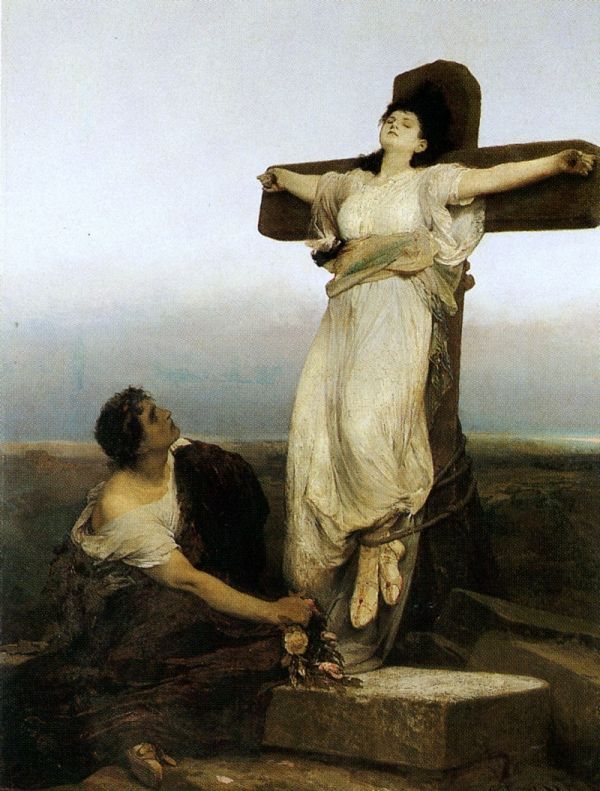 Continue reading →: Image of a Crucified Woman
You’re used to seeing a man on a cross, right? But Jesus wasn’t the first or last to suffer that fate. This painting, by Gabriel Cornelius von Max, pictures Saint Julia of Corsica. A young Christian woman traditionally said to have been crucified for refusing to renounce her faith. Von…
-
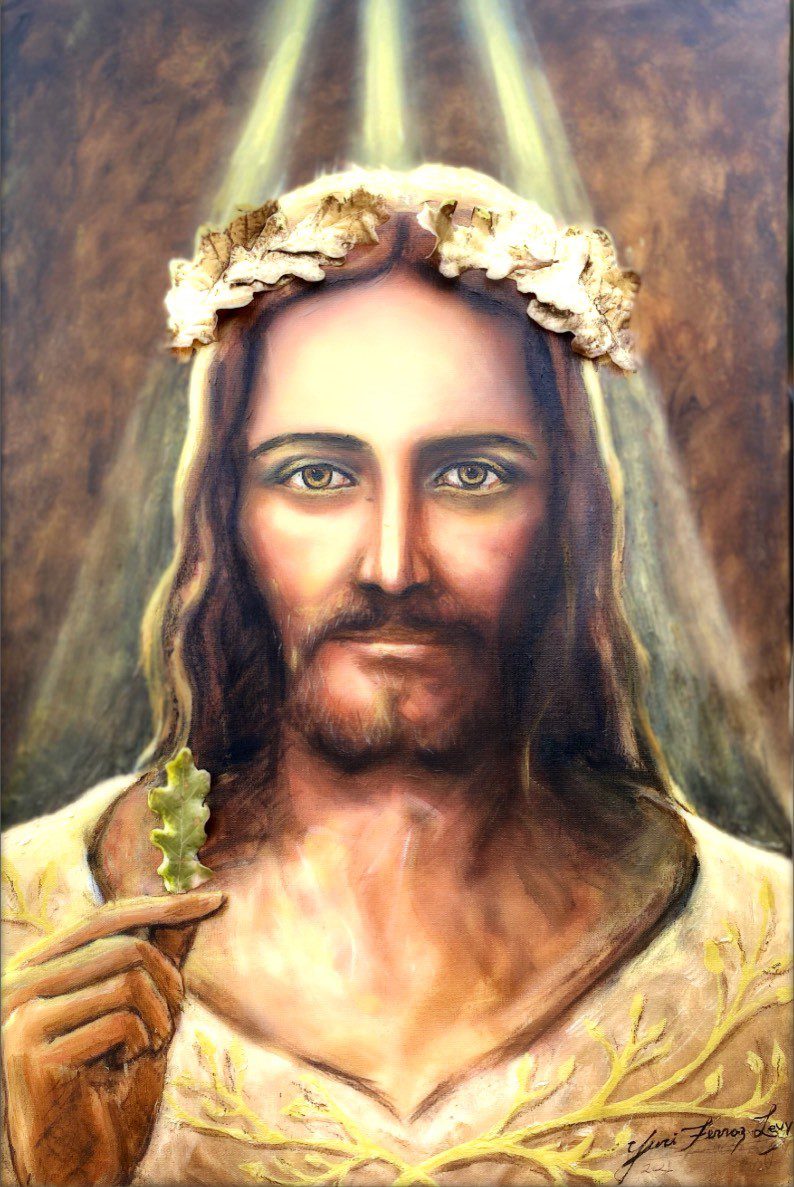 Continue reading →: Jesus Among The Druids
Yuri Levi, the artist, is a member of the Order of Bards, Ovates, and Druids (OBOD) was inspired by the question: what it would have been like if Jesus had been born among druids? In describing his creative process he says, “I used real leaves from an Oak tree that…
-
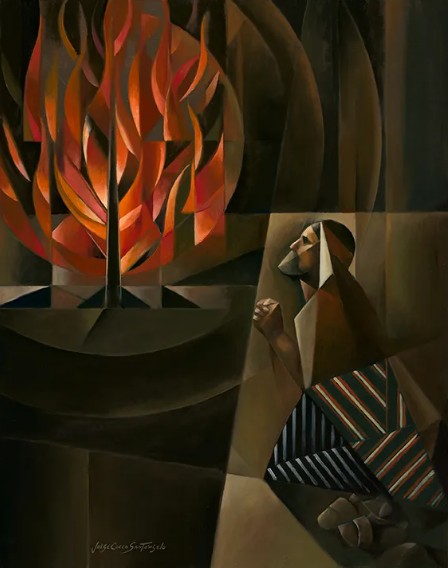 Continue reading →: The Myth Of A Variable God
I find it odd when Christians speak of God’s presence in ways that imply it is variable. As if God could be more present in a church building than in a living room, or more present during Sunday worship than during a Tuesday morning commute. Scripture consistently points to a…
-
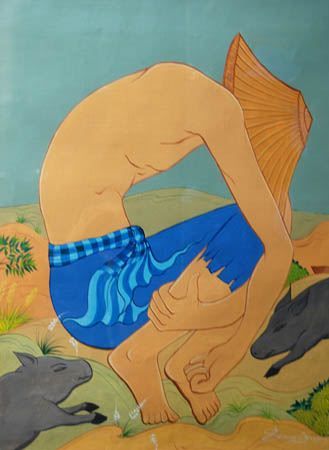 Continue reading →: The Lost Son – Illustrating the Parable Thai-Style
The painting of The Lost Son, by Sawai Chinnawong of Thailand, shows the prodigal son at rock bottom, hunched among pigs, capturing shame, emptiness, and the first stirrings of return. It’s a very human moment of despair, that makes forgiveness and restoration that he later finds with his father all…
-
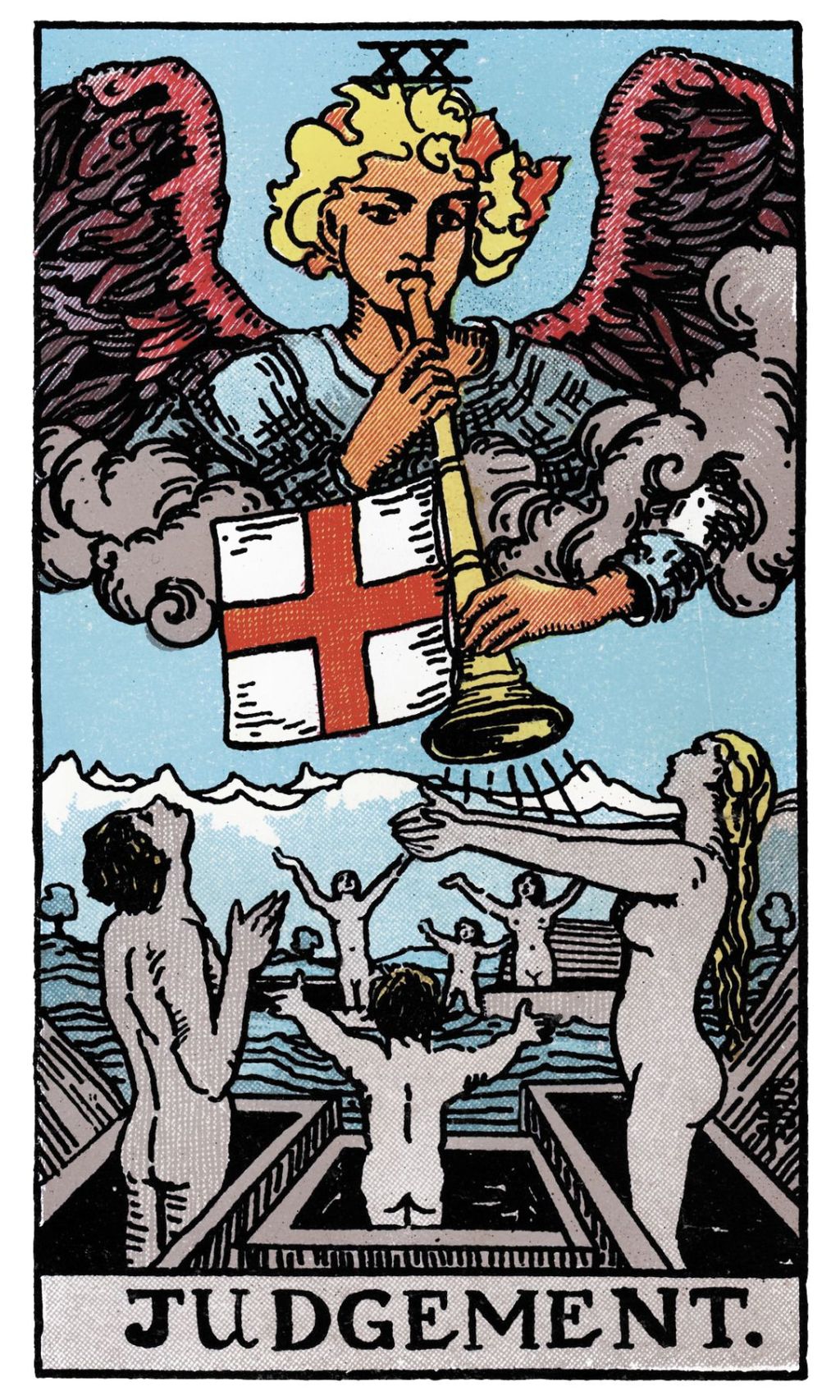 Continue reading →: When Judgment Is Good: Naming Injustice and Speaking Truth
Without judgment, injustice is never truly named. Jesus warned against hypocritical and self-righteous judgment, yet he sounded wake-up calls that exposed harm and abuse, especially where power hides behind religion. True judgment sees and speaks the truth, sides with the vulnerable, and opens the way for repentance—showing that courage and…
-
 Continue reading →: When Arguing For Innocence Isn’t Enough
I am seeing a lot of Christians on the left spending a great deal of energy arguing for the innocence of Alex Jeffrey Pretti. I understand why. Bearing witness to innocence matters. Truth matters. The refusal to let lies be perpetuated by authorities is a profoundly Christian instinct. But I…
Curious Christian
Exploring life, art, spirituality, and the way of Jesus
Let’s connect


Art Atheist Australian Bible Books Buddhist Celtic Christian Christmas Church Contextualisation Diversity Faith Gatherings God Hindu Jesus Justice Leaders Love Magic Meditation Mission Money Movies Muslim Mystery Nature Pagan Peace Poetry Politics Prayer Psychology Revelation Salvation Seasons Sexuality Sin Symbols Technology Violence War Women Worship
 Curious Christian