 One criticism that has been levelled against Christianity fairly consistently by the earth religions is that YHWH is a sky god who distances himself from the earth.
It’s one of the glaring unpaid bills of the church that few Christians even try responding to this. Many from NeoCalvinist and Dispensationalist traditions would probably even agree with the charge! However, even when we have responded, emphasising the immanence of God in nature, generally our responses have been highly theological – drawing on a few verses from Genesis and/or Psalms we’ve weaved dense intellectual arguments for YHWH as immanent creator of all creation. Rarely, however, have we interacted with this mythologically. I’ve been guilty of this myself.
Teaching my son, though, has reinforced for me the importance and power of narrative. At 3 years old he’s hardly going to remember a theological expose. If it’s going to be digestible, it’s got to be in story form. Yet, is it so much different for most adults – particularly those inclined towards retro-romanticism?
Normally we’re used to thinking about the biblical narratives as focused on the covenant, not creation; on humanity, not the ecosystem; and on a God of the clouds, not an earthy deity. It would seem we have little to draw on. No stories of nature cycles. No stories of YHWH as earth god or sea god which could balance out the popular image of him as sky god.
Or is there?
Looking at the narratives afresh, it is becoming more and more apparent to me that YHWH is constantly interacting with the gods of earth and sea as well as the sky, right throughout the Old and New Testament narratives.
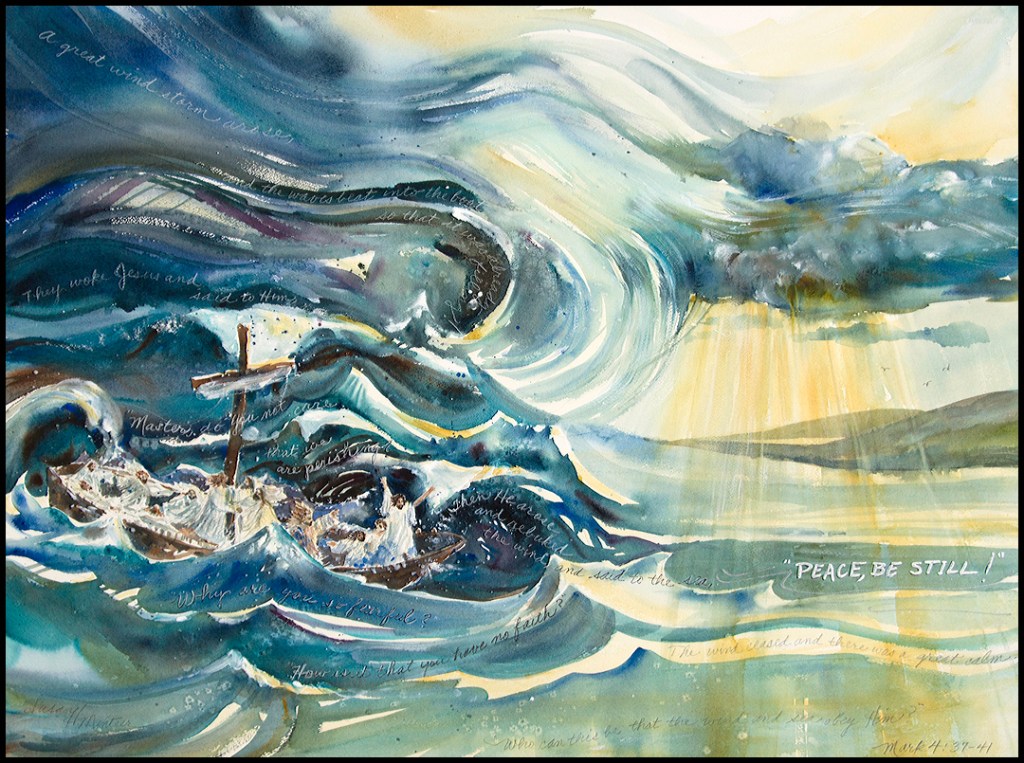
Historians have previously noted that the plagues of Exodus could be read as a power encounter with the Egyptian gods (See here and here for variant synopses), that on a mythological level they can be read as a series of interactions with Hapi, Heqt, Geb, Khepfi, Apis, Thoth (Imhotep), Nut, Anubis, Ra and Osirus. What I am wondering about more and more though is why bracket that sort of realisation to one book of the Bible? The Greeks and Romans were just as pagan as the Egyptians. How might the gentiles of the first century, Christian and non-Christian, have originally interpreted Jesus’ calming of the lake, of the shaking of the earth at his death, of his cursing of the fig tree? Could they not conceivably be viewed as power encounters with Poseidon and Zeus, Gaia and other fertility gods and goddesses? Is it so inconceivable ancient pagans may have seen it that way?
And what about the rising of Jesus from his earthen tomb? Revelation explicitly talks of resurrection as a power encounter with Hades, the Greek god of the underworld and brother of Zeus, that Jesus undermines the sovereignty of Hades in his own domain. Is it conceivable that we have de-paganised these narratives too readily, and that in this post-Christendom age we need to deconstruct our readings of these texts, allowing for the excluded middle zone of gods and goddesses?
When we come to the gods and goddesses appropriated by popular culture, such as Nike, the goddess of victory, and Morpheus, the god of dreams, consider how this might relate to the resurrection stories, of the counter cultural vindication of Jesus over and against pagan authorities, and with the exile stories, with Daniel’s mastery over dreams in his encounters with the Babylonian magi.
What we see in these narratives is YHWHs mastery of the energies of earth, sky and sea, a mastery of far greater scope and depth than that of Zeus, Posidon and Hades. In understanding the relationship between YHWH and the earth, I wonder whether we focused too myopically on YHWH as ‘Creator’ and the earth as ‘creation’? Should eco-theology be so narrowly conceived of as to label it ‘creation theology’? Shouldn’t we go well beyond the Genesis narrative for our eco-stories?
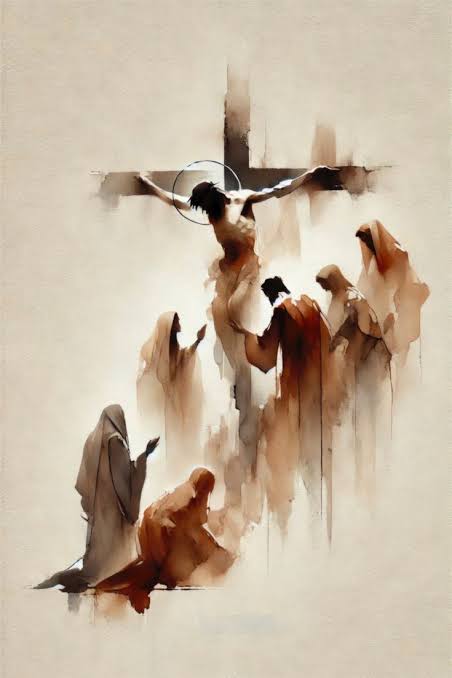
What begins to emerge for me is a new, more holistic cosmology. Instead of a two (or three) tiered medieval cosmology of unearthly God in conflict with an earthy Satan, what emerges is a God of earth, sky and sea through whom the entire cosmos will be renewed (new heaven, new earth) and before whom the lesser gods and goddesses, angels and demons, are relatively powerless. But what sort of power are we actually talking about? The paradoxical weakness of Jesus nailed to the cross! The power that dethrones the gods, goddesses and governors is found in the complete vulnerability of a Galilean peasant. There is a psychic and political potentiality in Jesus/God that transcends all archetypal energies in our psyches and social forces in the world around us. In the narratives of scripture we can see shadows of Gaia and Kronos bowing down to Jesus.



 Curious Christian
Leave a comment