Curious Christian

Reflections on culture, nature, and spirituality from a Christian perspective

Heaven and Hell

What are your thoughts on heaven and hell?

Here are a few quotes to stir the creative juices:

The door to hell is locked from the inside
– James A Pike

A guilty conscious is hell on earth and points to one beyond
– Francis Beaumont

Hell is nothing but self-will, and if there be no self will there would be no devil and no hell…
– Theologica Germanica

It is humility alone that make the unpassable gulf between heaven and hell…
– William Law

If you are not allowed to laugh in heaven, I do not want to go there…
– Martin Luther

10 responses to “Heaven and Hell”

  1. Kalessin Avatar

    Hell is other people.
    — Jean Paul Sartre
    Hell is Jean Paul Sartre.
    — other people

    Like

  2. Kalessin Avatar

    OK, time for a good old ramble — Sorry Matt, it’s MY blog now!
    — %< —
    Heightening my brow for a moment, I note that Harper's Magazine had, as a recent cover headline, "Are Christians Evil?" It indexed a very disappointingly short opinion piece, but this, apparently, is how you sell magazines to intellectuals.
    The author argued that hell, if real, would represent a divine evil, and that to the extent Christians align themselves with the idea, real or not, they are themselves evil (and specifically hateful, if my impression of the article is correct; this is a rough synopsis).
    The concept of 'divine evil', is of course either rhetorical or incoherent: to convict God of evil would be to demonstrate an inconsistency in the concept or existence of either God or evil.
    So the article raises three basic questions: (1) what in Christian understanding is hell, (2) which concepts of hell are compatible with the Christian understanding of the nature of God, and (3) have the views variously held by Christian people been consistent with the nature of God (as opposed to being evil)?
    — %< —
    To my mind the contemporary debate on this issue is being won my advocates of conditional immortality. To select an illustrative evangelical dialogue, in the Counterpoints book 'Four Views on Hell' (my copy has been through a house-fire and is now aesthetically singed around its edges), I found Clark Pinnock's argument to be a clear and convincing winner on biblical grounds. He held that a hellenistic dualism which required souls to be necessarily indestructible had affected the tradition of interpretation since the mid-second century, causing some of the age-long or epochal connotations of 'aionios' to be simplified down to the idea of endless time.
    To give an example of the significance of this (my example, not Pinnock's, AFAIK), Revelation ends with the casting into hell of everything that will not inherit the creation of the new heavens and earth: evil people, the powers which oppose God, and even death and hades, symbolically it seems. Then the heavens and the earth pass away and are remade.
    This, to me, well illustrates the difference between the Hebrew/Christian and the Hellenistic view of eternity: the Greek view is principally that the better, spiritual part of the person does not die; the Christian view is that humanity and the entire cosmos are remade in incorruptible perfection; Jesus' resurrection is the first transformation of this kind, the beginning of a new order. One 'age' leads to another; metaphors of learning and choice are usually applied to the two-stage process.
    Obviously there are many other pertinent passages; I'm discussing their framework here, though. The critical question is whether hell survives the reconstruction?
    To my mind there is a critical parallel one chapter earlier (19:3). When the city of Babylon (symbolizing the city of Rome, representing the early persecution of Christians) is destroyed — so, "Yay!", the reader is supposed to say — it's smoke is noted to rise 'for ever and ever' (lit. "into the age of the ages"), the same phrase used for torment in hell in Rev 20:10. Since the smoking ruins of Rome are obviously not meant to endure into the new creation, the phrase there is clearly to be understood in the sense of being 'age-long' rather than simply eternal. If hell is similarly age-long, then it could exist as long as as just punishment called for, but still entail annihilation.
    This kind of argument for conditional imortality seems to do justice to the scriptural metanarrative, since it doesn't invoke metaphor or hyperbole — the old standbys in such discussions — it simply looks at how the writer uses his terms.
    It also has the merit of more theological coherence, resolving at one stroke the central philosophical objection that the finite wrongs of any human life could justly require the infinite punishment of eternal suffering.
    — %< —
    But returning to the original question: Are Christians evil if they adopt a view of eternal punishment that involves eternal conscious suffering?
    Some, I think it's fair to say, have been: The 'childrens horror' genre exemplified by Father James Furniss (I kid you not, that was his real name) from the 1800s was a particularly odious attempt to terrify the very small by elaborately detailing the travails of the damned, and drawing out helpful moral instruction for daily living.
    It should be said that this was part of a larger Victorian concern that any loss of hell-fear would destroy the civil order and doom evangelism. But still, plenty of others argued for precisely the opposite results. After the rise of the new global consciousness since 1750, many flatly refused to affirm the damnation of the heathen when the Oxford movement reintroduced the Athanasian Creed into Anglican churches in the Victorian period.
    It was in this climate of opinion that Hell, biblical criticism, and natural selection prominently collided in England in the early 1860s and had a decisive shaping influence on modern Christianity, almost at one stroke creating both liberalism and fundamentalism. Oddly, the long-term effect of this may have been profoundly for the betterment of theology and the church, by freeing it of its supposed role in running a state or society.
    — %< —
    But returning AGAIN to my question: What of all the Christians who have held to the idea of eternal punishment? We can exclude many Catholics (for whom it was modified by purgatory and limbo) and liberals (by metaphor) and so on. It's largely been evangelicals, the reformed churches, and fundamentalists in this camp.
    On the one hand the basis for believing in hell has been an understanding of the gospel and a conviction concerning the perspicuity of scripture — but that also exhorts them to love others unconditionally and do work for their welfare.
    When the two are held together, love seems to neutralize the hellishness, so that eternal judgment is spoken of in terms of God's mysterious purposes, inscrutable judgments, and hope in his mercy. I think that for this reason it is likely that most sincere Christians have not been guilty of hatefulness in affirming the traditional idea of hell. Ad astra per aspera, though ("a rough road leads to the stars"): the love criterion sorts the sheep from the goats, but it's a tough examination.
    When the love motivation vanishes, so that faith becomes a barren outer shell, or worse, is rationalized into a social or dogmatic necessity, that is when belief in hell can certainly become evil without qualification.
    Regarding hell and the appeal to mystery, though: I do think this has been a hedging and fudging maneuver.
    It is to be hoped that 'eternal conscious suffering' may eventually — and on precisely evangelical grounds — be cast with death into destruction.
    — %< —
    As an endnote, the meta-issue here is the clearly the basic premise of the recreation of the heavens and the earth: the resurrection of the whole cosmos into incorruptible life.
    Perhaps that's a good way to reframe Matt's lazy-blogger-101 "what do you think of X" question… heh, just seeing if anyone's still reading…

    Like

  3. Peggy Avatar

    Well, Matt…I’ve just this morning finished reading William P. Young’s book “The Shack”, and I’d have to say my brain is still swimming in different images. Have you read this book yet…or even heard of it?
    The Abbess will be saying something on her blog about it, but it resonates with this post, in an abi-normal kind of way… ;^)

    Like

  4. Jeff M. Miller Avatar

    The safest road to hell is the gradual one – the gentle slope, soft underfoot, without sudden turnings, without milestones, without signposts.
    C.S. Lewis

    Like

  5. Matt Stone Avatar

    Good set of questions Kalessin. I have long questioned the popular interpretation of intrinsic immortality myself, and whether hell is not better viewed as being cut off from eternity, once placed in its original Hebrew context. Pinnock’s approach sounds quite intriguing. Similar to my thinking in some ways (I too place much emphasis on the new creation) but going off in different directions (such as looking deeper at aionios) which may be worth exploring further.
    One thing I have spent much time on is re-examining Genesis with continent immortality in view. Did the fall introduce death into the world or did it merely cut us off from receiving the gift of eternal life. Could it be that the two trees in the Genesis story actually represent MUTUALLY EXCLUSIVE choices? It would solve a lot of thorny issues regarding extinction of dinosaurs before the creation of humanity and similar sort of stuff which is otherwise hard to reconcile. Once we relax the Platonic assumptions (Pagan imports!) this alternate begins looking more and more plausible.
    As for my “lazy blogger” question, hey,it worked and got you talking! Has to be your most extensive reply yet ;-D

    Like

  6. Matt Stone Avatar

    Peggy, no I haven’t read it or even heard of it. Tell me more.

    Like

  7. Matt Stone Avatar

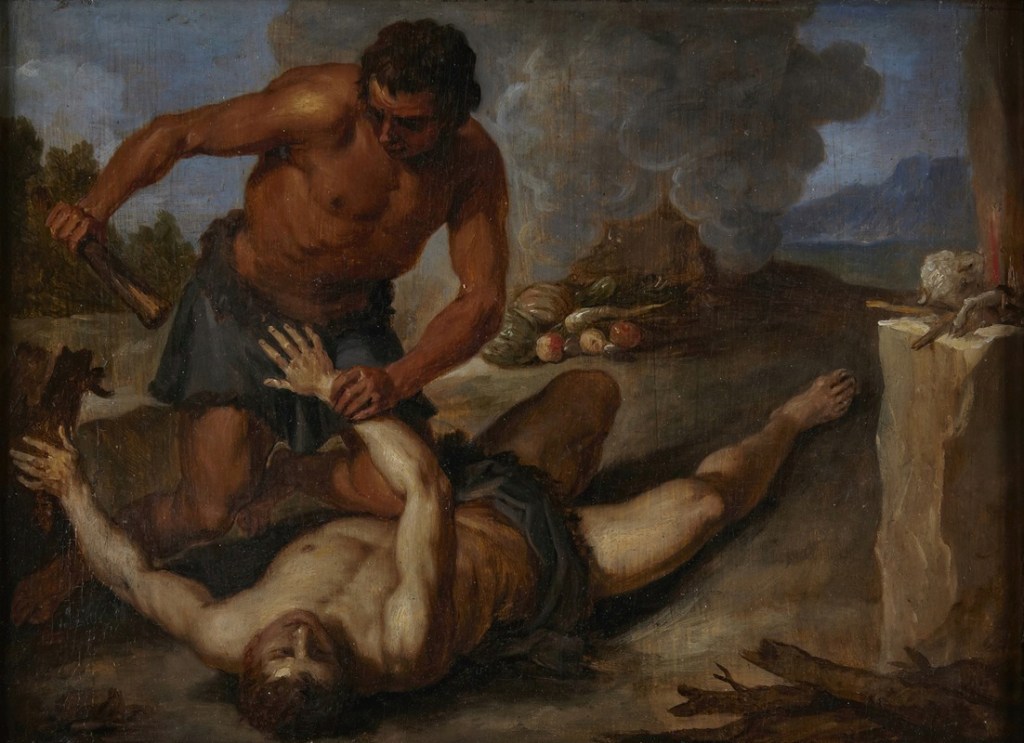
    Jeff, I’d have to say that’s a good description of the process of deconversion too. I wonder at times if renaissance art hasn’t done us a great disservice in depicting hell as some sort of horrific torture chamber. I wonder if hell might not be better depicted as the superficial pleasures that trap us in an apathetic and unfulfilled life. Just as the Bible affirms Satan masquerades as an angel of light could we not say the path to hell masquerades as a journey of light?

    Like

  8. craig bennett Avatar

    I tend to believe that hell is eternal destruction / extinction as being an opposite to eternal life.
    In the book of revelations it says that those headed for eternal destruction have their names blotted out from the book of life.
    Therefore I think our emphasis on mission should not be so much in trying to keep people out of hell, but reminding them that their names are written in the book of life,that God knows them, that he wants to have a real relationship with them, and that our mission is to bring others into relationship with the living God through Christ.
    Hell then means that if they reject the message, which is to reject Gods relational invitation to man to join him in the trinitarian dance then it is their actions of turning their back on God, that caused their names to be blotted out of the book of life.

    Like

  9. Sun Warrior Avatar

    Hell is not knowing where you really are.
    Then you don’t know who you are.

    Like

  10. Steve Hayes Avatar

    From the Paschal Homily of St John Chrysostom:
    By descending into Hell, He made Hell captive. He embittered it when it tasted of His flesh. And Isaiah, foretelling this, did cry: Hell, said he, was embittered, when it encountered Thee in the lower regions. It was embittered, for it was abolished. It was embittered, for it was mocked. It was embittered, for it was slain. It was embittered, for it was overthrown. It was embittered, for it was fettered in chains. It took a body, and met God face to face. It took earth, and encountered Heaven. It took that which was seen, and fell upon the unseen.
    O Death, where is your sting? O Hell, where is your victory? Christ is risen, and you are overthrown. Christ is risen, and the demons are fallen. Christ is risen, and the angels rejoice. Christ is risen, and life reigns. Christ is risen, and not one dead remains in the grave. For Christ, being risen from the dead, is become the first fruits of those who have fallen asleep. To Him be glory and dominion unto ages of ages. Amen.

    Like

Leave a reply to Steve Hayes Cancel reply