Curious Christian

Reflections on culture, nature, and spirituality from a Christian perspective

I often come across people talking about Gnosticism and Christian mysticism as if they are the same thing, or at least essentially compatable. But this is to ignore deep differences in how the two paths understand God and creation.

In responding to one Gnostic blogger I replied:

You said, “I mean much of the works attributed to the Demiurge and archons serve essentially the same purpose as the Devil and demons. In fact the two seem to be the same in the early writings.” I disagree and would say any resemblance is purely superficial.

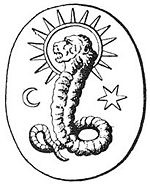
The Gnostics identified the Demiurge with YHWH, not Satan. For them there was a fundamental dualism between YHWH of the Old Testament and the Father of the New Testament. They distanced themselves from Judaism and the Old Testament in a way Christian mystics never did. At it most extreme this even led them to rewrite Genesis with the snake (the Father) as the hero instead of YHWH (the Demiurge). If that’s not a fundamental conflict I don’t know what is. Ultimately it led them to an emanationist understanding of creation, with multiple godforms involved, rather than creation by one and only one Creator. Christians, mystics and otherwise, have always rejected such Gnostic teaching which denies YHWH and the Father are one.

I do not know what your experience is with Gnosticism, but the deeper I explore Gnosticism the deeper the differences between Gnosticism and Christianity seem.

For more on Christianity and Gnosticism see:

Gnostic Churches
Decronstructing Jesus: Gnostic myth and the end of revelation

11 responses to “Gnosticism versus Christian Mysticism”

  1. Kay Avatar

    I don’t know if I’ve gotten mysticism and gnosticism mixed up, but it’s certainly possible. I know one thing I’ve been guilty of convoluting is esoterica and mysticism.
    I guess it gets confusing because one could be a Christian and a mystic, and one could be a Gnostic and a mystic. One could also be Christian and not a mystic, or Gnostic and not a mystic. Throw in the fact that one can be a Gnostic Pagan (not professing Christ at all), and things really get confusing.

    Like

  2. Sallys-Journey Avatar

    There is ahuge difference between gnosticism and Christian mysticism, for a start gnosticism is dualistic- i.e divides body and spirit, the body seen as temporal and therefore expendable, there is also a tendency towards a dualistic lifestyle.
    Mysticism is often sensual in its expression, many of the female mystics used a lot of bodily expressions.

    Like

  3. Matt Stone Avatar

    Kay, I think the problem is where people use the language of mysticism and gnosticism indescriminately with no reference to historical context. Then it can refer to whatever … and when it comes mean anything it comes to means nothing. When historical context is taken serious though I think the differences become quite distinct.

    Like

  4. Matt Stone Avatar

    Sally, I agree, but in discussions with Gnostics I have learned to be more precise with what I mean by dualistic.
    N T Wright defines a number of different types of dualism, some which I see as characteristic of Gnosticism, others of which I see as characteristic of Christianity.
    For instance, I think we must acknowledge that within Christianity there is a theological dualism between Creator and creature, an eschatological dualism between this age and the age to come and a moral dualism between right and wrong), and acknowledge that these dualisms are often denied by Gnostics. But, and this is where I agree, Gnosticism contains dualisms that Christians have always historically rejected, and which serious commentators on Gnosticism should acknowledge, and that is the theological dualism between Old Testament God and New Testament Father, the metaphysical dualism between (good) eternal spirit and (bad) transient matter that you speak of, and the consequent dualism between the crucified Jesus (who was fleshy) and cosmic Christ (who is not).
    And I think a key point, and this marries both our comments, is the importance of the Song of Songs within Christian mystical literature. Gnostics, being so anti Old Testament, do not grant this sensual text anywhere near the same significance as Christian mystics do. It is interesting to observe how infrequently, in all the Gnostic commentaries on Sophia and the sacred marriage, the Song of Songs is acknowledged as an important Christian mystic text. I think that speaks volumes.

    Like

  5. Kirtanman Avatar
    Kirtanman

    Interesting blog; thanks for the content — and specifically, the interesting thoughts on Gnosticism & Mysticism. Pragmatically, the two terms are connected: gnosis, knowing (of the truth, that sets you free) is the objective of both the gnostic and the mystic. A gnostic church that overtly discusses the mystical practices of its members can be found here: http://www.sophian.org/ – The Sophian Fellowship is led by Tau Malachi, who us also an author; a very clear, straightforward and awakened author. I am not affiliated with Sophian.org in any way; I recently learned of Tau Malachi, and have read all his books in recent weeks. I am not Christian, though am aware of Christed levels of consciousness, attained via different (non-Christian) paths. Tau Malachi’s books, while very non-orthodox, are consummately Christian, and have me feeling far more Christian than I have in years, or than I ever thought I would again – so the gnostics certainly have some good things going! Basically, if you can’t know the truth, it can’t set you free- and if you are rely on anyone outside your own experience for “the truth”, you may just be blocking yourself off from the truth, via prejudicidial beliefs and creeds. Gnosticism, often aka Mysticism can offer you the tools and the community, so that you can open, via your deepest practices and devotion to the reality of gnosis in your life.

    Like

  6. Matt Stone Avatar

    Glad you found it interesting Kirtanman. I have heard Tau Malachi, but have not read his writings in any real depth so I’ll limit my comments to what I know of Gnosticism more generally (a risky prospect I know, given the diversity, but hopefully what I have to say is reasonably representative).
    I agree that orthodox mysticism and unorthodox gnosticism have a lot of things in common, that they both place a high value on knowing and both involve an inward search. But I would have to challenge the claim that they share the same objectives, at least in the way they prioritize them.
    I think Paul’s letter to the Corinthians draws out a number of the issues, particularly where he says, “For the message of the cross is foolishness to those who are perishing, but to us who are being saved it is the power of God. For it is written: ‘I will destroy the wisdom of the wise; the intelligence of the intelligent I will frustrate.’ Where is the wise man? Where is the scholar? Where is the philosopher of this age? Has not God made foolish the wisdom of the world? For since in the wisdom of God the world through its wisdom did not know him, God was pleased through the foolishness of what was preached to save those who believe. Jews demand miraculous signs and Greeks look for wisdom, but we preach Christ crucified: a stumbling block to Jews and foolishness to Gentiles, but to those whom God has called, both Jews and Greeks, Christ the power of God and the wisdom of God. For the foolishness of God is wiser than man’s wisdom, and the weakness of God is stronger than man’s strength.” Later in that letter Paul builds to this conclusion, “If I have the gift of prophecy and can fathom all mysteries and all knowledge, and if I have a faith that can move mountains, but have not love, I am nothing.”
    For the orthodox mystic there is an awareness that love transcends knowledge, that gnosis begins with understanding grace.
    That’s very different with from the Gnostic position as I have come to understand it. It leaves orthodox mysticism in a very different place to unorthodox gnosticism, despite some initial similarities. And as I said earlier, there are some critical differences between orthodox mystics and unorthodox gnostics in how they understand God, particularly in terms of the Old Testament (I recently wrote some more on this here http://mattstone.blogs.com/glocalchristianity/2009/03/god-of-the-old-testament-christian.html which hopefully fleshes this out some more). If orthodox mystics identify YHWH with Jesus and unorthodox gnostics identify YHWH with an evil Demiurge I think its reasonable to question whether they’ve actually got the same focus.
    An orthodox understanding is that truth comes to us in human form, in Jesus. That while Christ was and is an inner experience, he was and is more than that. Truth you can touch. An orthodox mystic understanding is that inner truth is only half the truth.

    Like

  7. www.google.com/accounts/o8/id?id=AItOawll1wughAGg7qQsTxQcrIPOvxBfAwfEjd0 Avatar

    The original Roman Catholic Church had no room for mysticism. You may find what I have to say rather displeasing, but there never was a Jesus Christ. The Christian religion was created during the 60s to subvert the spread of the true Gnostic religion of the Messianic Jewish Movement which was the fastest growing religion at that time in the Roman Empire. The Romans considered people like Yeshu (Jesus) to be no more than idiots wasting their time on non secular issues like creation and spirituality. They therefore nailed thousands of them to the cross. The Church was created to subvert the religion of these Jewish Gnostics by creating an attractive alternative. Ironically the person entrusted with this deed, by Roman General and future Emperor, Vespasian, was none other than the Pagan Christ Apollonius of Tyana. Paul to you and Christianity.
    Yahweh was considered the demiurge by the original Gnostic sect of Yeshu, the Nazoreans. A tidbit the Church has tried to hide for a few millennia by calling Jesus the Nazorean, Jesus of Nasareth a city which did not exist in those days. If you do not believe that Jesus also was a Nazorean try finding any mention of Yahweh or Jehovah in the gospels. Save your time they don’t exist.
    Along comes ‘Paul,’ a mythically conflated character created during the second century by Marcion, and he purportedly writes 9 epistles (letters) to various Mediterranean cities. These writings represent the first Christian writings in the New Testament and make no mention of Jesus of Nazareth. They speak of a cosmic Christ Jesus and someone who was crucified or maybe hung from a tree, but the author is not sure which.
    These writings were originally brought back from Taxila in India by Apollonius of Tyana in 39 CE who also brought with him the concept of Christ to Israel some 9 years after Jesus (Yeshu), a Jewish Messianic figure, was crucified. Apollonius (Apollos in the epistles) then visited far India where he received 4 texts which represented 4 stages of life of the Indian Christ of the Tamil people, Sanat Kumara. It was these texts which formed the basis for the canonical gospels. But, even ‘Paul’s’ writings were considered Gnostic by the Early Church Fathers. Strange, here you have Gnosticism which the Church claimed to be a second century heresy alive and well living in the first century.
    These texts were then translated and interpreted to be about the life of a Jewish savior who they called by the esoteric term Jesus Christ for Sananda Kumara. The names represent the polarity of the base Chakra, Sanat or its anagram and the crown Chakra, Sananda. So, in John where it is written the way to God is believing in Jesus, it really means that the only way to exit the body to return to the Father is through the Crown Chakra. To learn more about how ‘Paul’ and the Romans subverted the teachings of Yeshu and the Nazoreans and proclaimed them the revelations of their godman Jesus Christ visit: http://www.nazoreans.com

    Like

  8. Kalessin Avatar
    Kalessin

    To an anonymous Nazorean…
    Could you perhaps discuss why you think:
    1) That Rome would have needed to suppress any form of Gnosticism.
    Gnostics weren’t militant, since their position was quite compatible with performing the outward requirements of Emperor worship; and if they were Jewish then they were exempt from even that requirement (at least before the war with Rome).
    2) That Rome had any history or interest in creating religions.
    These take hundreds of years to get going, giving very slow and uncertain returns on one’s political investment. Seriously, imagine G.W. Bush taking that tack in Iraq, and assigning the task to a general! Difficult to see a political figure thinking that far ahead, esp. when, to the Roman mind, the most commending virtue of Roman and Jewish religion was it’s venerable antiquity.
    3) That Paul’s Christ was solely (and not just most-importantly-for-his-gentile-followers) heavenly…
    Cf: “born of a woman”, “descended from Abraham” and “son of David”; “James the Lord’s brother,” who Paul locates in Jerusalem; the Lord’s other brothers (and their wives) who are known as far off as Macedonia; Paul’s churches commemorate the meal Jesus held “on the night he was betrayed/handed-over”; Jesus was killed by the same groups of Jews who also persecuted Paul and his movement. I presume if you’re familiar with Paul on this subject you’ll know the references for these passages, but if you wish I can provide them when I get home later.
    Best,
    Kalessin.

    Like

  9. Matt Stone Avatar

    Anonymous, You may find what I have to say rather displeasing, but for a religion supposedly created in the sixties, it’s amazing how many New Testament texts have been conservatively dated to the fifties – Romans (ca. 55-58 AD) Philippians (ca. 52-54 AD) Galatians (ca. 55 AD) Philemon (ca. 52-54 AD) First Corinthians (ca. 53-54 AD) Second Corinthians (ca. 55-56 AD) First Thessalonians (ca. 51 AD).
    Furthermore, before concluding the Roman Empire was secular, you may want to consider how well that squares with their acclaimation of their Emperor as a god.
    Moreover, from my reading of ancient literature it was the Gnostics that were fixated on creation accounts, not the Christians. After all, the Gnostics wrote the bulk of them. Take the Apocryphon of John for example. Modern creationist fixations says more about the Gnosticization of Evangelicalism than anything about ancient Christianity. The apostles were more interested in resurrection accounts.
    But your own account here is inconsistant. In one breath you say there never was a Jesus, in the next you say there was a Jesus but Christians have misunderstood him. So what was it? Did he exist or not? Did we make him up completely or only partially? Also, if it was invented in the 60s why are you then invoking a transmission date from the 30s? If you want to convince me of anything you’re going to have to be a little more consistant and a little less rhetorical than that.
    Finally, if you insist on calling Paul’s writings Gnostic, by implication the New Testament is Gnostic, and thus we’re all Gnostic. So we really have nothing to argue about. Christianity itself is a figment of our imaginations.

    Like

  10. Matt Stone Avatar

    Anonymous, actually you’ve intregued me with this claim that Paul was really Apollonius of Tyana. I’m interested to know where that came from? What your sources / inspirations are I mean? Because if you believe Theosophists like C.W. Leadbeater and Alice A. Baileye Apollonius of Tyana was the reincarnation of Jesus. Which, if you tried to reconcile the two claims, would suggest that Paul is the Reincarnation of Jesus. Except that Apollonius was born before Jesus by all accounts. In which case he’d be a pre-incarnation of Jesus rather than a re-incarnation of Jesus. So I’m just wondering what you make of the Theosophist claims.

    Like

  11. Chaser27 Avatar

    Will leave this brief as this question of concern entered my mind more intrusively today. Understanding the roots of Gnosticism, and understanding what Christian Mystic actually means for one. One need, only as noted by Messiah Christ Jesus, fulfilling the Law the Psalms and the Prophets. Proverbs1 1-7
    “For learning what wisdom and discipline are; for understanding insightful sayings; 3 for receiving wise instruction in righteousness, justice, and integrity;
    4 for teaching shrewdness to the inexperienced,
    knowledge and discretion to a young man—5 a wise man will listen and increase his learning,and a discerning man will obtain guidance—6 for understanding a proverb or a parable,the words of the wise, and their riddles.
    7 The fear of the Lord is the beginning of knowledge;
    fools despise wisdom and discipline.” IN viewing a wide variety of gnostic writings and ‘attitudes’, I see little righteousness or integrity but rather an air of ‘specialness’. It is not that this ‘wrong’, only not fully ‘Right’. It was time to move on, as all labels segregate rather to bring the Body of Christ into One. Christ was not politically or religiously ‘correct’, at least not by man’s standards as he spoke of the Justice and Freedom and Knowledge of God with authority, so what worth are words from the minds of man bu, in comparison, foolishness? . Then further into the proverbs “Wisdom calls out in the street; she raises her voice in the public squares. 21 She cries out above[i] the commotion; she speaks at the entrance of the city gates: 22 “How long, foolish ones, will you love ignorance? How long will you mockers enjoy mocking
    and you fools hate knowledge? 23 If you respond to my warning,then I will POUR OUT MY SPIRIT on you
    and teach you my words.” This sounds too much like “Sophia” of philo-sophia (philosophy, love of knowledge) only this is referring to pre-emptive outpouring of the Holy Spirit yet to come in Christ , realizing that thes e words from from Solomon who recieved wisdom, as that was his desire which was deemed honorable by the Father. Not knowledge from the minds of men, but that of the Knowledge of God. Next, one need to understand what “knowledge of God’ actually means. “Lean not to your own understanding. His ways are not our ways”. “In all Thy was ac-knowledge Him, and He shall direct thy path”. There is more to the sacred texts than it seems people are giving credit for. Put not the cart before the ‘horse’, and consider the Source. If God is accepted in part or we seek him out in earnest, suffering will be the result, usually mental anguish in some form from dissolving of the non-existent but for words sake, EGO, which really is nothing more than self-will lost. The paradox is, to give up one’s own self will is to die, but that too is to occur. This occurs in phases and most never go there as Jesus (the letter ‘J’ did not exist in Hebrew) said, “Straight and narrow is the path, and wide is the road to destruction. Few will find it”. If we have all these labels, known can be completely right , they also segregate rather than bring the body together in the Kingdom of God on earth , as is in heaven. Forgiveness is prime. If there is nothing more, know this, “I desire mercy, not sacrifice”. IN short, Christian Gnosticism doesn’t exist and Mysticism is the willingness to remain in the Mystery of Christ to remain vulnerable in humility and always teachable. through strength in meekedness. Loving others as we were and are are Loved By God first. Nothing is as simple as it sounds, and no one ever said simple is easy, “My Yoke is Easy and my burden is Light”. Not sure why individuals have to go running hither and yon when all th e answers Lie in the Master Plan. Jesus issues? Read the prophecies going back up to 1000 years before people had a clue who he was, including while he was here in the flesh. It’s in the Milta (mlt) which one will never find today, but find rough definition in the Miltha. Either Christ is and was who he says he is and noted in the prophets of the peoples who rejected him as was also noted would be the case or he was not. And if he was, then he prophesied his own death, which was known in advance. Otherwise, one can be Mormon, Islam, or ‘whatever’ goes, the broad path forewarned about.

    Like

Leave a reply to Kalessin Cancel reply