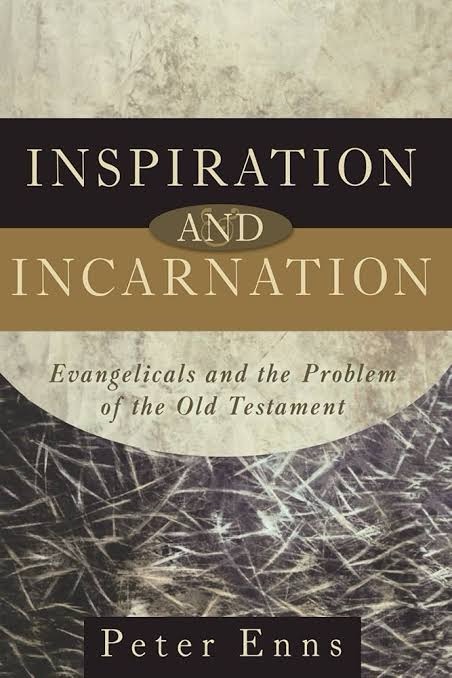
Genesis has been on my mind this weekend, so I thought I would cite a few passages from “Inspiration and Incarnation: Evangelicals and the Problem of the Old Testament,” the infamous book by Peter Enns, which I happen to really enjoy.
What I like about Inspiration and Incarnation is that it moves beyond the entrenched debate between liberals, who see the Bible as unscientific and therefore unauthoritative, and fundamentalists, who see the Bible as authoritative and therefore scientific, to instead explore a third way, of reading the Genesis text within its Babylonian context.
Enns writes:
…the degree to which Genesis might have been dependant on the Babylonian [myths] has always been a matter of debate, and there is no need to commit ourselves to one view or another. Some scholars argue, quite persuasively in fact, that the differences between Genesis and Enuma Elish are so great that one cannot speak of any direct relationship. I feel that this is essentially correct (although the stronger similarities regarding the flood story may suggest some level of dependence). But again, the point here is not one of textual dependence but conceptual similarity. The differences notwithstanding, the opening chapters of Genesis participate in a worldview that the earliest Israelites shared with their Mesopotamian neighbours. To put it this way is not to concede ground to liberalism or unbelief, but to understand the simple fact that the stories in Genesis had a context in which they were first understood. And that context was not a modern scientific one but an ancient mythic one.
Therefore, the question is not the degree to which Genesis conforms to what we would think is a proper description of origins. It is a fundamental misunderstanding of Genesis to expect it to answer questions generated by a modern worldview, such as whether the days were literal or figurative, or whether the days of creation can be lined up with modern science, or whether the flood was local or universal. The question that Genesis is prepared to answer is whether Yahweh, the God of Israel, is worthy of worship.
To argue, as I am doing here, that such biblical stories as creation and the flood must be understood first and foremost in the ancient contexts, is nothing new. The point I would like to emphasize, however, is that such a firm grounding in ancient myth does not make Genesis any less inspired; it is not a concession that we must put up with an embarrassment to a sound doctrine of Scripture. Quite to the contrary, such rootedness in the culture of the time is precisely what it means for God to speak to his people.
Of course, the next question is, if it is authoritative even so, what was and is Genesis trying to say?
Stay tuned.






 Curious Christian
Leave a reply to Tim Abbott Cancel reply