
I find it ironic that people speak of Christianity defending “Western civilisation” from Islam when both religions were born in the Near East, both transformed Europe, and both have always been larger than any one civilisation. The language says more about contemporary identity politics than about actual history.
To be clear, this is not an argument that Christianity has not profoundly shaped what we now call the West. It certainly has. Christianity has influenced European art, philosophy, law, institutions, and moral imagination in ways that are impossible to deny. The development of Christendom was one of the defining forces in the formation of Western European culture. But there is a difference between recognising Christianity’s profound influence on the West and collapsing the identity of Christianity into the identity of the West, or the identity of the West into Christianity.
Part of the difficulty is that the categories themselves are far less stable than we often assume. What do we mean by “Western” and “Eastern”? In some contexts, the West refers to Latin Western Europe in contrast with the Greek-speaking Christian East. In others, it refers to Europe as a whole. In modern political and cultural language, it often includes Europe and its descendants across the world. Likewise, the East may refer to Eastern Europe, the Middle East, or all of Asia. These categories are not fixed geographical realities but shifting ways of describing cultural and political identities.
Christianity itself does not fit neatly into these categories. It emerged in the Near East, within the Jewish world of the eastern Mediterranean, and developed across communities centred in places such as Jerusalem, Antioch, Alexandria, Constantinople, North Africa, and Rome. The Latin West became one significant expression of Christianity, but it was never the whole of Christianity. The idea that Christianity simply moved from the East into the West overlooks the fact that Christianity was always a diverse and interconnected faith spanning multiple regions.
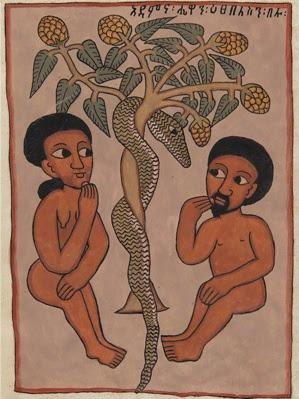
Even after Christianity became deeply associated with Europe, it never became exclusively European. The Coptic Church in Egypt, Syriac Christianity, the Armenian Church, and communities connected with the Church of the East all preserve ancient Christian traditions rooted outside Latin Europe. Christianity also expanded eastward into Persia, Central Asia, India, and beyond, creating communities that existed independently of European Christendom. The story of Christianity is therefore not the story of an Eastern religion becoming Western, but of a global faith expressed through many cultures.
It is also important to distinguish Christianity from Christendom. Christianity’s relationship with empire and political power profoundly shaped European history, but it also created tensions with the teachings of Jesus. The merging of faith with civilisation produced cultural achievements, but it also produced coercion, persecution, and the temptation to confuse the kingdom of God with the interests of a particular society. Christendom was a historical expression of Christianity, but it was never the complete identity of Christianity.
The relationship between Christianity and Islam is similarly more complex than a simple division between West and East. There were real conflicts between Christian and Muslim powers, but there was also cultural exchange, intellectual influence, and shared history. Christian communities existed throughout Muslim societies, while Muslim communities later became part of European societies. The boundaries between these traditions have always been more complicated than modern civilisational narratives suggest.
For Christians, the deepest question is ultimately theological. Jesus did not call his followers to defend a civilisation; he proclaimed the kingdom of God. He formed a people drawn from every nation, tribe, and language, not a community defined by one empire, ethnicity, or cultural inheritance. If Christianity is defined by Jesus, then it cannot finally be reduced to the identity of any civilisation, whether Western or Eastern.
So the question is not whether Christianity has shaped Western civilisation. It undeniably has. The question is whether Christianity should be reduced to a marker of civilisational identity, with Islam cast as its opposite. That language says more about contemporary identity politics than about the complex histories of these traditions. The challenge for Christians is not simply to preserve a civilisation, but to follow Jesus beyond the boundaries of the civilisations that have claimed him.



Leave a Reply